











The one minute treatment of addictions
By Richard Schaub, PhD, and Bonney Gulino Schaub, RN, MS, NC-BC
“Addiction is a mental obsession and a physical compulsion.” —Alcoholics Anonymous
There is a profound minute in the process of recovery from addictions. In that brief space of time, your patient might have the same obsessive urge to compulsively use alcohol, opioids, or heroin, but they don’t. That is the beginning of recovery, that moment of conscious choice, when your patient responds to the old urge in a new way. In doing so, he or she begins to break the obsessive-compulsive cycle that drives all addictions.
Recovery is not as simple as just saying, ”no.” It takes many new elements to strengthen that moment of choice, but, once stabilized, it is the health-giving, life-affirming goal of all addictions treatment. The elements may include self-help groups, medication, psychotherapy, stress management skills, dropping destructive and self-destructive relationships, spiritual practice, or just plain terror of what continuing the addiction will look like.
For anyone who has been trapped in the obsessive thoughts and compulsive acts cycle, you know it is a closed system: beginning with the urge to change a bad feeling, it leads to using a substance or behavior and the inevitable side-effect of using that substance (e.g., withdrawal) or behavior (e.g., self-loathing), which circles back to feeling bad and the urge to use again. The dead-end loop of addiction is based on addiction as the “answer” for changing bad feelings becomes the source of a whole new set of bad feelings.
What can the integrative practitioner do to make that readiness to change, that one minute of new consciousness and new choice, a successful reality for the patient? The first understanding is that everyone arrives at readiness for recovery in their own unique way. One person does it because one day he saw his daughter imitating his own path of self-destruction. Another does it because she can’t remember driving home from a drinking party and can’t explain the blood on the fender of her car. Another because, as they say in Alcoholics Anonymous, he or she just became “sick and tired of being sick and tired.”
Having been in the addictions treatment field for 40 years, we have seen some patients go to multiple well-established rehabilitation centers over years with no success, and others who wake up in their own vomit on Monday morning and stop “cold turkey.” When I called a colleague to ask about a rehabilitation center I had never heard of, he said, “If the place is a dump, but your patient is ready, it will work. If it’s the most beautiful place on earth, but your patient isn’t ready, it won’t work.”
Of course, that’s true, but it’s also not that simple. Patients can be sincerely committed to recovery and yet continue the cycle anyway. They don’t as yet have the elements in place of that one recovery minute where they can actually choose a new direction. False starts and “failures” are built into the early recovery process, but a problem develops for healthcare providers when they feel as if they failed along with the patient. We have seen many practitioners get frustrated with addicted patients and develop a cynical hard edge toward them. An addiction medicine specialist was sure that her patient was properly using her prescribed narcotic agonist, only to discover that the patient was obtaining multiple prescriptions from multiple physicians and selling them. Who would want to take the next phone call from that patient?
It’s a dilemma: as a professional, you have training and skills to offer, but the patient manipulates you and ignores your offering. Of course, non-compliance with treatment occurs in all healthcare fields, but some non-compliance, such as the continuation of addiction, has immediate dramatic consequences for the patient, their family, and the community.
What is the crucial organizing principle in all of this? In a study we conducted in 1997, we reviewed eleven different theories of addiction and found that, at their core, the models each recognized that the patient has an underlying emotional pain, and that their addiction is their own “medicine” for that pain. In our own conclusion, we referred to this recognition as vulnerability. But this does not mean that the vulnerability is solely a personal psychological problem. It can result from bio-chemical imbalances, genetic brain issues, fear circuitry disorders, traumatic events, family histories, and other factors.
Integrative practitioners are not going to solve the source of the vulnerability, but they can modify it with the wide range of mind-body-spirit tools available in the modern healthcare field. As only one of many striking examples, the practicality of meditation for recovery has been supported by research as far back as the 1970s. In a study of 1,862 persons, Herbert Benson, MD, and Richard Keith Wallace, PhD, found that those who used prescription and illicit drugs began reducing their intake of drugs as they learned to experience a deep state of relaxation. The investigators also looked closely at the degree of alcohol use in these same subjects. Most participants in this study, 61.1 percent, reported that meditation was “extremely important” in helping to reduce their alcohol consumption. G. Alan Marlett, PhD and Janice Marques, PhD, found that college students who were heavy drinkers were able to reduce their alcohol use by 50 to 60 percent when they meditated regularly.
There is a slogan in Alcoholics Anonymous, “The farther you are from your last drink, the closer you are to your next one.” It is a sobering insight that recovery is chosen, over and over again, on a daily and at times even on a minute to minute basis. The underlying vulnerability that drives the obsession and compulsion doesn’t magically go away when recovery becomes the new norm. Continual learning about how to be in the world in the face of this underlying vulnerability marks the recovery path. It takes many new elements to strengthen that minute of committing to recovery, and the role of integrative practitioner becomes for some patients that of a health coach or guide, for others a coordinator of services, and others a prescriber of the combinations of diet, meditation, medication, lifestyle, and nutritional supplements that stabilize the mind and body and make the old addiction answers unnecessary. Addiction does not get healed—it gets replaced.
References
- Alcoholics Anonymous. (1976). Alcoholics anonymous (“The Big Book”). New York: AA World Services.
- Benson, H. and Wallace, K. (1972). Decreasing drug abuse with transcendentalmeditation. Drug Abuse–Proceedings of the International Drug Abuse Conference, Boston. 369-375.
- Brooks, S., Lochner, C., Shoptaw, S, and Stein, D. (2017). Using the research domain criteria to conceptualize impulsivity and compulsivity in relation to addiction. Progressive Brain Research, 235:177-218. doi: 10.1016/bs.pbr.2017.08.002. Epub 2017 Sep 28.
- Marlett, G.A. and Marques, J. (1977). Meditation, self-control and alcohol use. In Eds. R. Stuart and B. Stuart, Behavioral self-management: Strategies, techniques, and outcomes. New York: Brunner/Mazel. 117-153.
- Schaub, B. and Schaub, R. (1997). Healing addictions: The vulnerability model of recovery. Albany: Delmar.
- Schaub, R. (2013). Spirituality and the health professional. Substance Use & Misuse, 48:1–6, September Vol. 48, No. 12 , Pages 1174-1179 (doi:10.3109/10826084.2013.803883)
About the Author
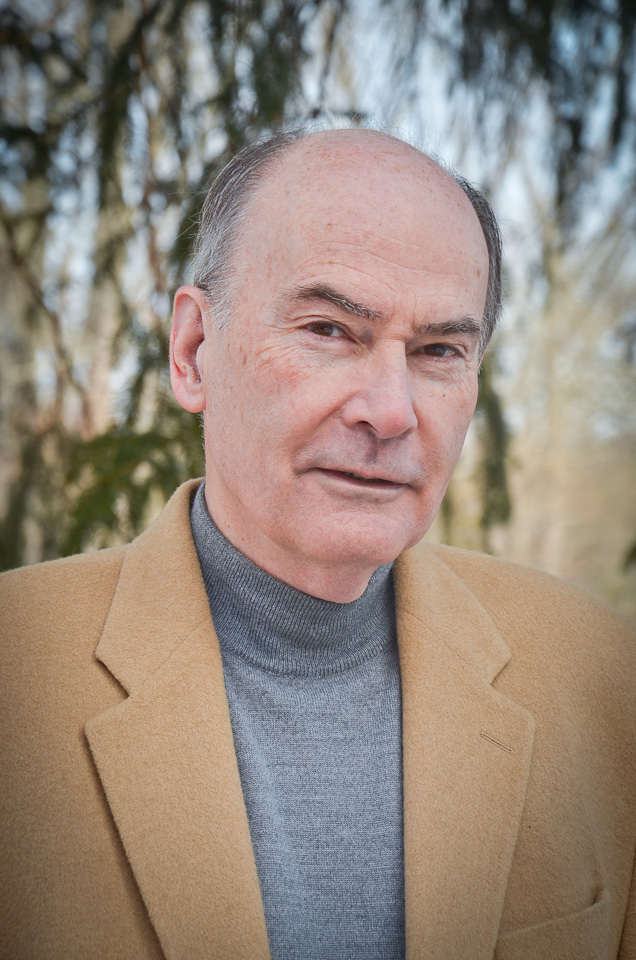 Richard Schaub, PhD, is the co-director of the Huntington Meditation and Imagery Center and the New York Psychosynthesis Institute, Richard has trained hundreds of health professionals internationally in the clinical applications of meditation, imagery and psychosynthesis. Co-author of five books: Healing Addictions; Dante’s Path; The End of Fear; The Florentine Promise; Transpersonal Development. His CD series of techniques, Transpersonal Development, was created as part of a Federal grant with the Veterans Administration.
About the Author: CJ Weber

Also on Integrative Practitioner

Dental Danger: Signs of Sleep Breathing Disorders in children and Adults, Learn the Visual Clues
Non-Member Price: $30.00 Member Price: $18.00 – 40% Off for Members Only Add to Cart Presented by: Mark Breiner, DDS,...

Integrative and Comprehensive Approach to Inflammatory Bowel Disease
Non-Member Price: $30.00 Member Price: $18.00 – 40% Off for Members Only Add to Cart Presented by: Ronald Hoffman, MD,...

Measuring Biology vs. Symptomatology: The Fully Integrated Functional Wellness Program
Non-Member Price: $30.00 Member Price: $18.00 – 40% Off for Members Only Add to Cart Presented by: Dane Donohue, DC...

Change Your Genes, Change Your Life
Non-Member Price: $30.00 Member Price: $18.00 – 40% Off for Members Only Add to Cart Presented by: Kenneth Pelletier, PhD,...
Guided Imagery – Efficacious, Portable, Scalable, User-Friendly, Self-Administered
Non-Member Price: $30.00 Member Price: $18.00 – 40% Off for Members Only Add to Cart Presented by: Belleruth Naparstek, ACSW...