






Naturopathic solutions for menorrhagia and dysmenorrhea
By Carolina Brooks, BA, IFMCP
During their reproductive years, women experience many changes in their menstrual cycle. Inconsistent duration, frequency, and amount of flow can cause a great deal of confusion, making it hard to understand what a “normal” cycle is. For female patients, it is important to distinguish a healthy cycle from what may be an underlying imbalance.
Menorrhagia is abnormally heavy or prolonged bleeding, which interferes with normal daily activities and severely impacts quality of life. It is defined as blood flow of more than 80 milliliters in a cycle or lasting more than seven days. Typically, women do not measure their blood loss. However, some believe they are losing more blood than they are and unnecessarily self-supplement with iron.
The causes of menorrhagia include hormonal imbalances such as luteal phase defects or hyperestrogenism, stress, hypothyroidism, ovarian cysts, exogenous hormones, and anovulation. Anovulation may cause abnormal uterine bleeding (AUB), is not due to structural issues, and is most common in women who are nearing menopause. Other underlying causes of menorrhagia may include mechanical abnormalities, such as endometriosis, uterine fibroids or polyps, pregnancy and intrauterine devices, or clotting disorders. Certain medications such as warfarin or aspirin, as well as vitamin K deficiencies, may also contribute to abnormal bleeding patterns.
The initiation of menstrual bleeding can be triggered by luteolysis and a drop in progesterone, leading to an inflammatory cascade and increased production of inflammatory prostaglandins and cytokines in the endometrium, which is the driving force behind dysmenorrhea. Although the role of uterine myometrial contractions in menstrual regulation is poorly understood, they may play a role in regulating pressure on the endometrial vasculature and shedding the uterine cavity of its redundant endometrial lining.
To determine underlying cause of menorrhagia, it is important to take a full health and lifestyle history and perform relevant functional testing. I ask questions about:
- Cycle length
- Recent changes to cycle
- Length of cycle
- Heaviness of cycle
- Consistency and color
- Cervical mucus or clotting
- Pain during the cycle or sexual intercourse
- Mittelschmerz or premenstrual symptoms
- Spotting
- Sanitary product and contraceptive product use
- Mood and libido
- Digestive changes leading up to menstruation
In terms of diet and social toxins, in my clinical experience, stress, lack of exercise, poor sleep, alcohol, smoking, and recreational drug use are drivers for dysmenorrhea and menorrhagia, as well as a high sugar and refined carbohydrate intake, a high saturated fat intake, and a low fiber and low phytonutrient diet. Nutritional deficiencies as a contributor to menorraghia are well-established, including vitamin A and B vitamins.
I typically advise patients to eat a plant-based diet, eliminate caffeine and refined sugars, increase fiber, and remove social toxins. For those who already eat and live a clean lifestyle yet suffer from menorrhagia and dysmenorrhea, it is important to consider the role of endocrine disruptors such as pesticides, plastics, mold exposure, personal care and home cleaning products, and exhaust fumes from living in a big city as drivers of hormonal imbalance.
I remind patients to sweat, increase key liver-supportive foods such as cruciferous and sulfurous vegetables, bioflavonoids to strengthen capillary walls, balance blood sugar, manage their stress in a more effective way, consider acupuncture treatment, and support their microbiome with fiber and short-chain fatty acids in the diet, using antimicrobials where necessary to clear any dysbiosis.
Seed cycling may also be helpful for balancing hormones and clearing excess estrogen, using ground flax and pumpkin seeds during the follicular phase, while during the luteal phase ground sunflower and sesame seeds, plus evening primrose oil should be eaten. Oily fish and algae for omega three fatty acids and evening primrose oil for gamma-linolenic acid are useful for pain relief and downregulating the inflammatory response, while magnesium and leafy greens in the diet help to regulate muscular contractions.
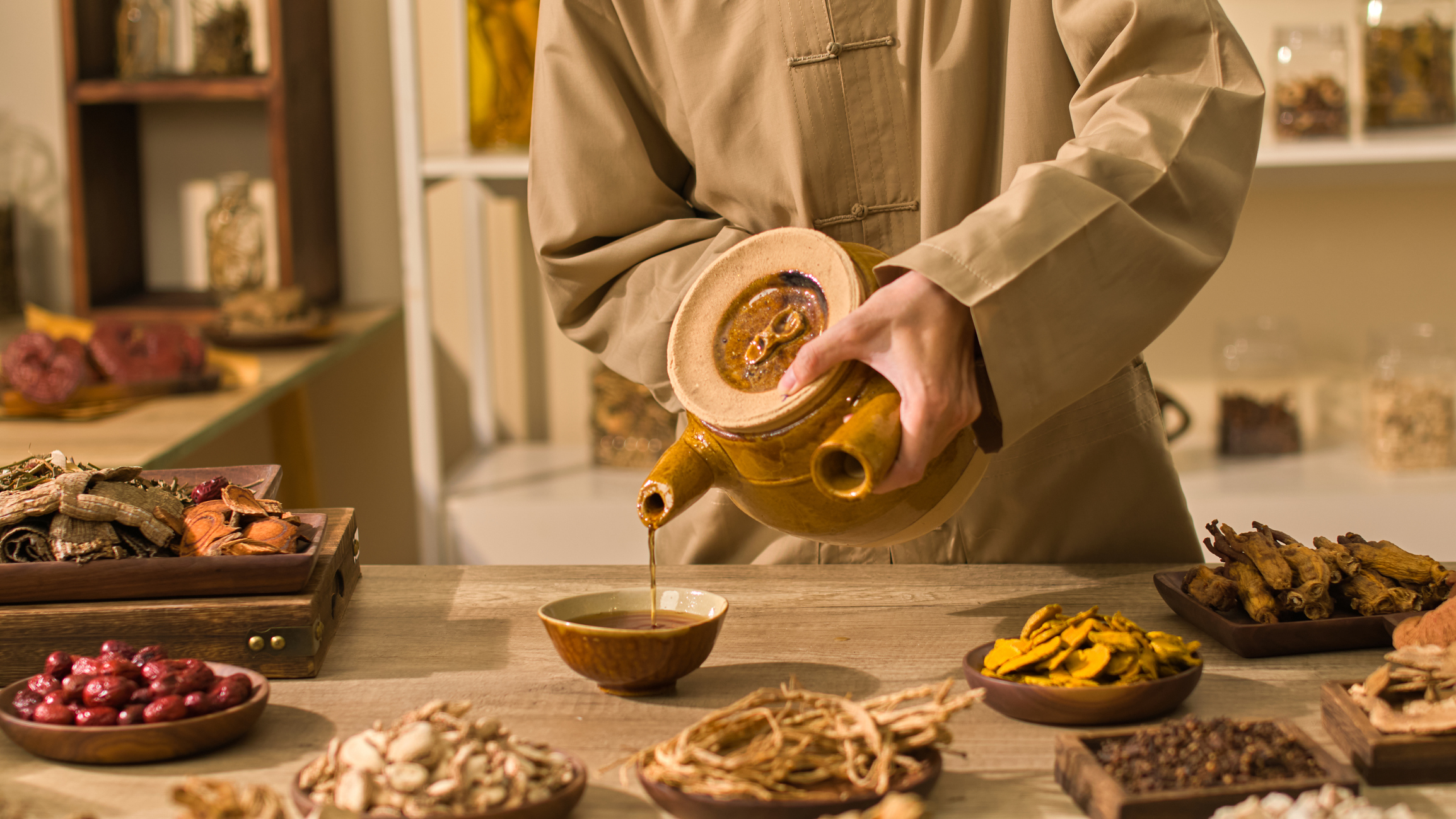
Herbs that are extremely effective in regulating hormonal balance include:
- Vitex agnus-castus, which works by increasing luteinizing hormone and reducing follicle stimulating hormone, indirectly acting on progesterone levels, while its dopaminergic compounds reduce prolactin secretions.
- Paeonia lactiflora, which has analgesic, anti-inflammatory and antispasmodic properties.
- Trillium erectum, Asparagus racemosa and Dioscorea villosa, which contain steroidal saponins which help to modulate oestrogen and reduce menstrual irregularity and abnormal bleeding.
- Schisandra chinensis, Carduus marianus, Rosmarinus officinalis and Curcuma longa, which support liver detoxification.
- Angelica sinensis, Rubus ideaus, and Mitchella repens, which are uterine tonics that improve endometrial tone
- Viburnum opulus, which is a great spasomolytic herb.
- Capsella bursa-pastoris, which can reduce excessive bleeding, used in combination of astringents such as Achilea millefolium and Rosa damascena.
- Caulophyllum thalictroides, Boswellia serrata and Zingiber officinalis, which are useful pelvic anti-inflammatories.
References
Ayers D.M., McEnroe R.N., Stucky J.E., Liptok L.M. (2004) Abnormal vs. Dysfunctional Uterine Bleeding: What’s the Difference. Nursing, November 2004 – Volume 23 – Issue P11-14. Retrieved from: https://journals.lww.com/nursing/Fulltext/2004/11002/Abnormal_vs__dysfunctional_uterine_bleeding_.6.aspx
Greene R.R., Peckham B.M. (1947) Vitamin B Complex, Menorrhagia, and Cancer. American Journal of Obstetrics and Gynecology. Volume 54, Issue 4, p. 611-617. Retrieved from: https://www.ajog.org/article/S0002-9378(16)39589-8/pdf
Hapangma D.K., Bulmer J.M. (2016) Pathophysiology of Heavy Menstrual Bleeding. Women’s Health. 2016 Jan: 12(1): 3-13. Retrieved from: https://www.ncbi.nlm.nih.gov/pmc/articles/PMC5779569/pdf/10.2217_whe.15.81.pdf
Lithgow D.M., Politzer W.M. (1977) Vitamin A in the Treatment of Menorrhagia. South African Medical Journal. Volume 51, Issue 7, p. 191-193. Retrieved from: https://journals.co.za/docserver/fulltext/m_samj/51/7/24315.pdf?expires=1567334984&id=id&accname=guest&checksum=7428DA18165AA8E052E564BC84086ECE
Livdans-Forret A.B., Harvey P.J., Larkin-Their S.M. (2007) Menorrhagia: A Synopsis of Management Focuisng on Herbal and Nutritional Supplements, and Chiropractic. The Journal of the Canadian Chiropractic Association. Dec; 51(4): 235-246. Retrieved from: https://www.ncbi.nlm.nih.gov/pmc/articles/PMC2077876/pdf/jcca-v51-4-235.pdf
About the Author: CJ Weber

Also on Integrative Practitioner

Dental Danger: Signs of Sleep Breathing Disorders in children and Adults, Learn the Visual Clues
Non-Member Price: $30.00 Member Price: $18.00 – 40% Off for Members Only Add to Cart Presented by: Mark Breiner, DDS,...

Integrative and Comprehensive Approach to Inflammatory Bowel Disease
Non-Member Price: $30.00 Member Price: $18.00 – 40% Off for Members Only Add to Cart Presented by: Ronald Hoffman, MD,...

Measuring Biology vs. Symptomatology: The Fully Integrated Functional Wellness Program
Non-Member Price: $30.00 Member Price: $18.00 – 40% Off for Members Only Add to Cart Presented by: Dane Donohue, DC...

Change Your Genes, Change Your Life
Non-Member Price: $30.00 Member Price: $18.00 – 40% Off for Members Only Add to Cart Presented by: Kenneth Pelletier, PhD,...

Guided Imagery – Efficacious, Portable, Scalable, User-Friendly, Self-Administered
Non-Member Price: $30.00 Member Price: $18.00 – 40% Off for Members Only Add to Cart Presented by: Belleruth Naparstek, ACSW...