








Sustaining clinical results through effective communication skills
By Joel Kreisberg, DC, PCC, CCH
Communication skills often take a back seat for practitioners in busy patient care settings, yet evidence suggests the communications skills that foster relationship-centered care have a profound positive impact on clinical outcomes. Given the diversity of potential therapeutic interventions, a thorough intake is vital to successful prescribing, leaving little time for emphasizing the healing power of the patient encounter. Busy clinicians will find significant therapeutic value in refining and deepening their skills in communication.
Skills such as active listening, asking powerful questions, and creating awareness are essential tools for healing. Relationship-Centered Care (RCC) is built on four principles: mutual respect, eliciting and understanding psychosocial context, acknowledgement of reciprocal influence, and affirmation of genuine relationships as inherently valuable.
Active listening is the ability to focus completely on what the patient is saying and not saying. In order to make the most of active listening, we attend to the patient’s agenda, rather than the physician’s. We hear each patient’s concerns, seeking to understand the meaning of what is said in the context of the patient’s desires, supporting his or her self-expression Active listening requires letting go of a preconceived case-taking agenda and bringing full presence and attention directly to the patient.
Specific techniques for active listening can be both nonverbal and verbal. Nonverbal listening skills include undivided attention, eye contact, silence and expressions and gestures that mirror the client’s emotional expression. Verbal listening skills are reflective, reflecting back to the patient the essential message of the communication. Reflective listening styles include summarizing, paraphrasing, and mirroring to ensure clarity and understanding. These styles often intermingle. Motivational Interviewing) uses the acronym Open-ended questions, Affirming, Reflective listening and Summarizing (OARS), to support practitioners’ development and access to these skills.
To best maximize active listening, remain focused on and respond to what the patient says, maintain eye contact, remain quiet, and acknowledge through body language and voice. Reflect back understanding through mirroring, paraphrasing or summarizing, with an open ended attitude that allows the patient to adjust and refine their statements. It is our response that indicates to the patient that we are listening to underlying concerns and unspoken issues.
Asking powerful questions reveals information needed for maximum benefit of the healing relationship and the client. Integrative practitioners tend to get the details of the illness and use their chosen method based on training, Functional, TCM, Ayurveda, Homeopathy, etc., rather than engage the healing relationship. Questions that seek to maximize the healing relationship evoke discovery, insight, commitment, and action. To further develop the relationship, questions need to elicit the patient’s narrative, their perspective of their illness. The patient is not just reporting data; rather, they bring experience, feelings, sensations, and stories that can be shared.
Specifically, open-ended questions are more “what” and “how” rather than “why.” Try to evoke the client’s stories, images and feelings, facilitating deeper levels of reflection. Through skillful questioning, patients gain awareness of themselves. Powerful questions can also lead toward creating awareness, the third essential communication skill, moving the client toward what they desire, facilitating clarity and offering the possibility for new learning.
Creating awareness is the ability to integrate and accurately evaluate multiple sources of information, making interpretations that help the patient gain awareness that leads to healing. Rather than telling the patient what he or she needs to do, the clinician facilitates the awareness necessary for the patient’s increased understanding and motivation. This helps the patient discover for themselves new thoughts, beliefs, and perceptions that strengthen their ability to take action.
One strategy for creating awareness is the identification of the “healing topic.” Every patient presents with a chief complaint and often a diagnosis, correct or not. After exploring the basic experience of the chief complaint, ask the patient to consider what he or she wants to have happen from our work together. At times patients just want to get rid of the problem. However, with more inquiry, most patients will share deeper desires that go unfulfilled. With a bit of exploration, we agree on the healing topic, an articulation of a broader outcome that can be achieved as we work to restore the body, heart and mind to healthier functioning.
William Appelgate, PhD, executive director of the Iowa Chronic Care Consortium, teaches communication skills by training clinicians in health coaching. Appelgate’s Clinical Health Coach training develops providers who are behavioral change specialists who partner with patients to identify health goals, and management facilitators who reinforce best practices. Clinical Health Coaching utilizes powerful communication skills to achieve results. The following three brief case studies involve introducing effective communication skills in primary care settings through the introduction of health coaching skills to clinicians.
Medicaid Population Diabetes
Care coordinators, trained in self-care skill building, coaching and information sharing, engaged with 600+ members with diabetes. The multiyear strategy resulted in a 54 percent reduction in inpatient stays and a 20 percent reduction in total healthcare costs against matched control group.
Hypertension Control
A dispersed rural healthcare clinic organization in northern Minnesota participated in a demonstration program to improve hypertension control in hypertensive patients. The clinic provided health coaching to 352 of these patients. Conducted over a two-year period, 3,429 patients without coaching achieved an 8.9 percent improvement in blood pressure control; those with 1-2 coaching visits an 11.8 percent improvement; and those with 3 or more coaching visits a 23.9 percent improvement in control.
Hospital Clinic System Focus on Diabetes
Designated healthcare professionals in primary care clinics of a healthcare system were trained in health coaching to work with patients with diabetes. Coaching focused upon regular visits, preventative screenings, self-care skill building and improved health behaviors, resulting in a 51 percent increase in diabetes visits in first year, impressive control of HgA1c and elevated HEDIS scores.
While these studies do not look at the clinical outcomes based on individual communication skills, they do suggest that emphasizing relationship-centered care through the use of effective communication skills has considerable positive impact on chronic medical conditions.
Effective communication involves expressing insight in ways that are useful and meaningful for the patient. As a clinician trained in health coaching, I seek to communicate broader perspectives that inspire the patient’s commitment to shift their viewpoints and find new possibility for action. Relationship-centered clinicians identify strengths as well as major areas for learning and growth, helping prioritize what is important in the clinical encounter.
These skills are taught in health coaching and serve as powerful therapeutic tools. It is becoming increasingly clear that, whether we commit to developing these skills ourselves, we train our staff, or we bring qualified coaches into our practices, we will be able to better serve our patients.
References
- Heisler M, Bouknight RR, Hayward RA, Smith DM, Kerr EA. (2002) The relative importance of physician communication, participatory decision making, and patient understanding in diabetes self-management. Journal of General Internal Medicine.17(4):243-52.
- International Coach Federation, Core Competencies, Retrieved from https://coachfederation.org/core-competencies
- Miller, W., and Rollnick, S., (2013) Motivational Interviewing, Guilford Press, NY.
About the Author
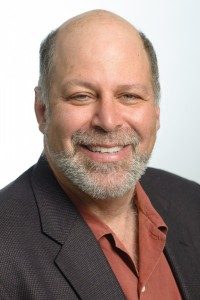 Dr. Joel Kreisberg, DC, PCC, CCH, is the executive director of the Teleosis Institute in Berkeley, California. Co-author of the Coaching and Healing: Transforming the Illness Narrative, Kreisberg has 29 years of experience as an integrative homeopathic physician. He holds credentials in chiropractic (a graduate of the New York College of Chiropractic), homeopathy (a graduate of the Hahnemann College of Homeopathy, and in coaching (a graduate of Integral Coaching Canada).
In 1996, Kreisberg founded the Teleosis School of Homeopathy. After completing his Master’s degree in Integral Ecology at Prescott College in Arizona, Dr. Kreisberg founded the Teleosis Institute, devoted to sustainable medicine. In 2012, he was instrumental in developing the first ordinance in the United States making it mandatory for drug companies to operate safe disposal systems for consumer prescription drugs.
After becoming an Integral Master Coach, Dr. Kreisberg developed the current curriculum at Teleosis Institute, including the Certificate Program in Narrative Health Coaching and The Journey of Inspiring Homeopathy
About the Author: CJ Weber

Also on Integrative Practitioner

Dental Danger: Signs of Sleep Breathing Disorders in children and Adults, Learn the Visual Clues
Non-Member Price: $30.00 Member Price: $18.00 – 40% Off for Members Only Add to Cart Presented by: Mark Breiner, DDS,...

Integrative and Comprehensive Approach to Inflammatory Bowel Disease
Non-Member Price: $30.00 Member Price: $18.00 – 40% Off for Members Only Add to Cart Presented by: Ronald Hoffman, MD,...

Measuring Biology vs. Symptomatology: The Fully Integrated Functional Wellness Program
Non-Member Price: $30.00 Member Price: $18.00 – 40% Off for Members Only Add to Cart Presented by: Dane Donohue, DC...

Change Your Genes, Change Your Life
Non-Member Price: $30.00 Member Price: $18.00 – 40% Off for Members Only Add to Cart Presented by: Kenneth Pelletier, PhD,...
Guided Imagery – Efficacious, Portable, Scalable, User-Friendly, Self-Administered
Non-Member Price: $30.00 Member Price: $18.00 – 40% Off for Members Only Add to Cart Presented by: Belleruth Naparstek, ACSW...