







Culinary herbs and teas for immune support
Photo Cred: pintando la luz/Unsplash
By Carolina Brooks, BA, IFMCP
Most of the planet is currently on some form of lockdown to prevent the spread of the novel coronavirus (COVID-19), and our global economy has come to a standstill. Clinics have shut down, the healthcare system is overwhelmed, people are hoarding what are considered essential goods, while food, supplements, and herbal materials are all on backorder or being delivered extremely late, if at all, due to regulations around social distancing. This has led to shortages, particularly of imported Chinese and Ayurvedic herbs, which has consequently caused me to think about what we have growing locally to us, and easily available in our kitchens as our revised, hopefully temporary Materia Medica.
The key element to consider is the patient’s own immune status. At this stage, aside from encouraging advice on good nutrition, sleep, hygiene practices, and social distancing, I am advising patients to take preventative measures to support their immune heath, as well as educating patients on how to manage themselves if they are told to self-quarantine at home.
An often-overlooked opportunity for patients is to look in their own kitchen, and perhaps consider what they might want to have to hand, if they can still find it in the shops. This strategy has worked well for my own friends and family members who have in recent weeks displayed moderate viral symptoms but been told they were not priority patients and manage themselves at home. If you live in a rural area, it might also be a good idea to explore what is growing around you.
In my area, hawthorn grows abundantly. Hawthorn is considered an angiotensin converting enzyme 2 (ACE2) receptor modulator and possesses potent antioxidant and anti-inflammatory, and may be useful in an herbal strategy for immune support.
Antimicrobial and immune supportive broths, teas, decoctions, and chai blends should become part of a daily routine, including key herbs such as horseradish, cinnamon, clove, cayenne, black pepper, thyme, garlic, yarrow, and ginger. These herbs would also be useful in the presence of fever because they have stimulating diaphoretic properties, which allow heat to leave the body.
Expectorants include marshmallow root, fennel, anise, liquorice, mullein and elecampane, which can be drunk as teas. These can help to prevent respiratory congestion, efficiently expel mucus if it is present, and liquorice contains triterpenoids which possess strong antiviral and antimicrobial activity.
An essential oil diffuser may be helpful at home to support respiratory health, although be mindful to check safety issues if there are pets in the house. Oregano, thyme, lemon, rosemary, coriander and savory are some of the herbs which contain thymol, a compound with potent antimicrobial activity. Products containing thymol have been included on the EPA’s approved list.
Culinary medicinal mushrooms are also useful. A 1979 report discussed the antiviral activity of shiitake mushroom and the a 2011 research article confirmed the anti-inflammatory activity of oyster mushroom via suppression of pro-inflammatory cytokine production and inflammatory mediators. Other notable kitchen spices which modulate inflammatory activity and have antimicrobial properties include turmeric, cardamom and cumin. These herbs and the stimulating diaphoretics also have carminative action, so also support healthy digestive function. Consider the nutritive herbs such as nettle plantain and dandelion, which support detoxification pathways, including fluid volume in the body.
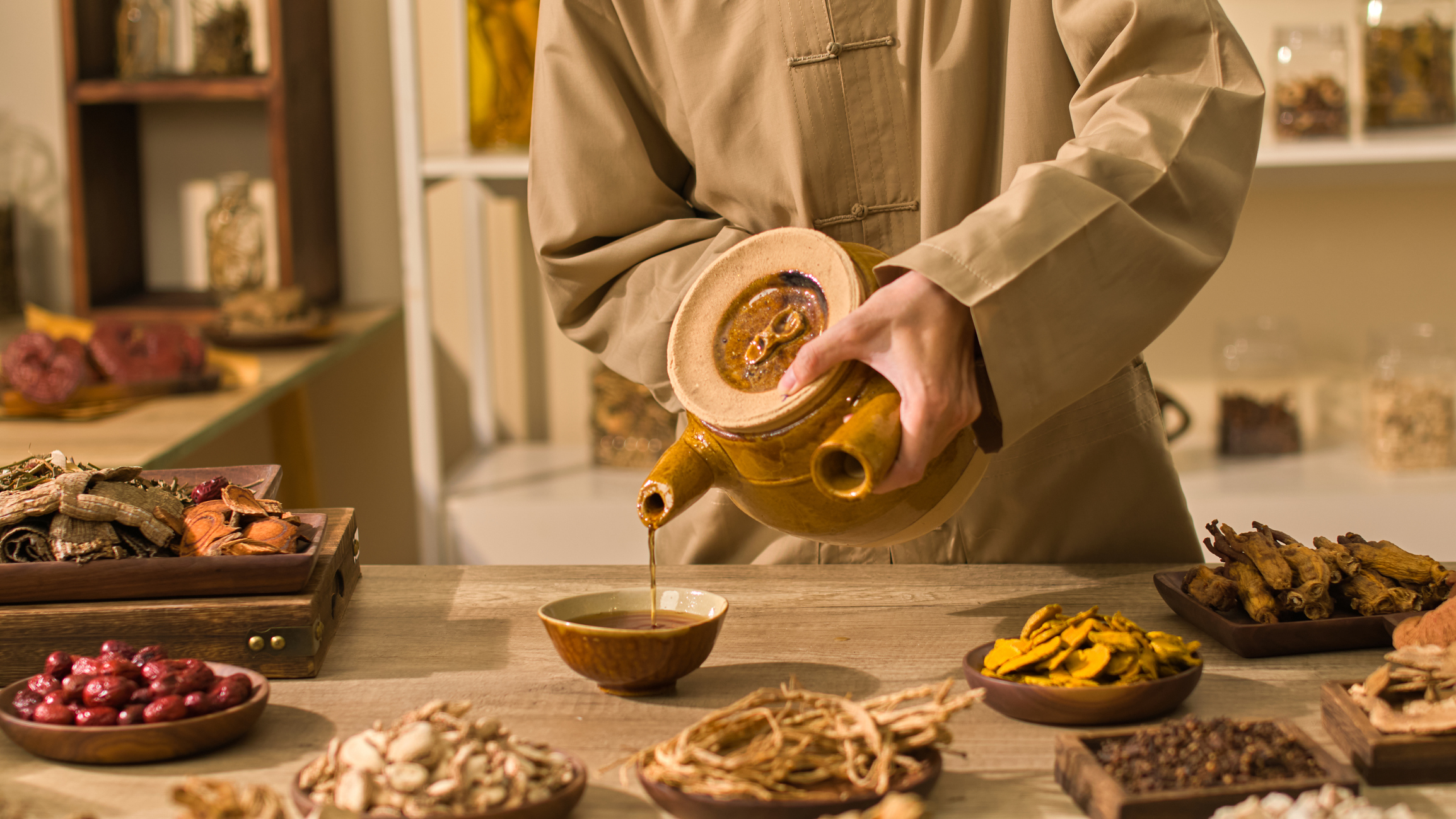
A useful adaptogen which is easy to find dried, can be used to add to a soup or decoct is astragalus, which has been used for centuries in traditional Chinese medicine as an immune tonic. A 2016 research article in Evidence Based Complementary Alternative Medicine demonstrated the herb’s ability to prime the immune system’s ability to respond to an aggressor, and a 2020 article in the International Journal of Biological Sciences discusses its inclusion in a Traditional Chinese Medicine (TCM) formula, Yu Ping Feng San.
The stress of lockdown and mood stability is certainly something to consider, particularly around job stability, financial difficulties, isolation experienced by the elderly, and those prone to depression. Children may also find staying at home and not socializing in their usual way difficult. Great nervine herbs to include in a tea blend to support mood and calm anxiety include vervain, oat straw, skullcap, rose, lavender, chamomile, and California poppy, which can also be used before bed to promote restful sleep.
References
Denzle K, Moore J, Harrington, H, Morrill, K, Huynh, T, Jacobs, B, Waters, R, Langland, J (2016) Characterization of the Physiological Response following In Vivo Administration of Astragalus membranaceus. Evidence-based complementary and alternative medicine: eCAM, 2016, 6861078 Retrieved from: https://www.hindawi.com/journals/ecam/2016/6861078/.
Jedinak A, Dudhgaonkar S, Wu Q, Simon J, Sliva D (2011) Anti-inflammatory activity of edible oyster mushroom is mediated through the inhibition of NF-κB and AP-1 signaling. Nutrition Journal. 10, 52 (2011). Retrieved from: https://doi.org/10.1186/1475-2891-10-52
Takehara M, Kuida K, Mori K (1979) Antiviral activity of virus-like particles from Lentinus edodes (shiitake). Brief report. Archives of Virology.1979;59(3):269-74. Retrieved from: https://doi.org/10.1007/bf01317423.
Wang L, Yang R, Yuan B, Liu Y (2015) The antiviral and antimicrobial activities of licorice, a widely-used Chinese herb. Acta Pharmaceutica Sinica B. Volume 5, issue 4, July 2015. Pages 310-315. Retrieved from;https://www.sciencedirect.com/science/article/pii/S2211383515000799
Yang Y, Islam MS, Wang J, Yuan Li, Chen X (2020) Traditional Chinese Medicine in the Treatment of Patients Infected with 2019-New-Coronavirus (SARS-CoV-2): A Review and Perspective. International Journal of Biological Sciences. 2020;16(10):1708-1717. Retrieved from: https://www.ijbs.com/v16p1708.htm#B113
About the Author: CJ Weber

Also on Integrative Practitioner

Dental Danger: Signs of Sleep Breathing Disorders in children and Adults, Learn the Visual Clues
Non-Member Price: $30.00 Member Price: $18.00 – 40% Off for Members Only Add to Cart Presented by: Mark Breiner, DDS,...

Integrative and Comprehensive Approach to Inflammatory Bowel Disease
Non-Member Price: $30.00 Member Price: $18.00 – 40% Off for Members Only Add to Cart Presented by: Ronald Hoffman, MD,...

Measuring Biology vs. Symptomatology: The Fully Integrated Functional Wellness Program
Non-Member Price: $30.00 Member Price: $18.00 – 40% Off for Members Only Add to Cart Presented by: Dane Donohue, DC...

Change Your Genes, Change Your Life
Non-Member Price: $30.00 Member Price: $18.00 – 40% Off for Members Only Add to Cart Presented by: Kenneth Pelletier, PhD,...
Guided Imagery – Efficacious, Portable, Scalable, User-Friendly, Self-Administered
Non-Member Price: $30.00 Member Price: $18.00 – 40% Off for Members Only Add to Cart Presented by: Belleruth Naparstek, ACSW...