










Focusing on circadian rhythm to optimize patients’ sleep quality
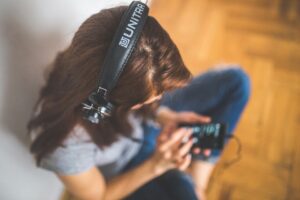
Photo Cred: Lucas Andrade/Unsplash
By Avery St. Onge
Aligning a patient’s lifestyle with their circadian rhythm is a fundamental factor to ensuring quality sleep which is essential to overall health, according to Catherine Darley, ND, founder of the Institute of Naturopathic Sleep Medicine based out of Seattle, Wash. However, the ability to follow one’s natural circadian rhythm has become progressively more difficult in today’s society.
“In today’s lifestyle we’re inside all the time and it’s very different from what our physiology is designed for,” said Darley.
Abnormal working hours, screen time, and lack of natural light can all impair a patient’s circadian rhythm, resulting in a lack of sleep at night and a lack of energy during the day, Darley explained. Although some of these factors are unavoidable, such as overnight shift work, there are some simple lifestyle changes that practitioners can recommend to patients to leverage their circadian rhythm and optimize their quality of sleep and health outcomes.
Practitioners like Darley and Valerie Cacho, MD, an integrative sleep medicine physician based out of Whittier, Calif., are trying to bring awareness to the benefits of using holistic modalities to improve sleep.
Cacho explain that conventional medicine often does not try to get to the root cause of a sleeping disorder. She said many patients come to her after being misdiagnosed with insomnia and prescribed pharmaceuticals.
“The traditional, Western practice for sleep disorders like insomnia is prescription sleeping pills, or cognitive behavioral therapy,” said Cacho. “Since I practice holistically, I don’t like to prescribe sleeping pills. I like to teach patients how to sleep with integrative therapies.”
According to Darley, a problem that often underlies difficulty sleeping is an offbeat circadian rhythm. The term circadian rhythm refers to the 24-hour variability in function within different organ systems and hormones, Darley explained. The two variables of circadian rhythm that relate to sleep include melatonin, a hormone produced in the pineal gland, and core body temperature. During the night, while someone is sleeping, melatonin levels go up and core body temperature goes down. In turn, during the day, core body temperature rises while melatonin levels drop.
Light
The biggest component of a circadian rhythm is light because melatonin levels are extremely sensitive to light, according to Darley. Natural light decreases melatonin levels, therefore increasing energy, while the absence of light causes the body to become tired as melatonin levels increase.
“If you can hold your hand out arm’s distance and see your fingers wiggling, that’s enough light to suppress your melatonin somewhat,” said Darley.
Although the modern work schedule often involves being inside for most of the day, Darley said there are some simple ways to trigger melatonin’s cycle. For example, to awaken the body and decrease metalation levels, Darley said it’s important for patients to get at least 20 minutes of bright light when they wake up. This could come in the form of eating breakfast outside, walking to work, or even opening a bedroom shade to let light into a room, said Cacho.
Darley also explained that getting light, preferably natural light, throughout the day is helpful in reminding the body to stay active. If a patient is working in an office, even a short walk outside during lunch would accomplish this, Darley said.
In the case that a patient lives in a region with little natural light, “leveraging melatonin with box lights can be really helpful,” said Cacho.
In the same way that morning light triggers melatonin to decrease, dim light and darkness cause the body’s melatonin levels to rise. At least an hour before bedtime, patients should be encouraged to stay in a dim light environment. This can be a challenge for many patients who use electronics like phones, tablets, and computers before bed, Darley explained.
Screentime before bed can confuse a patient’s circadian rhythm, and impair sleep, Cacho explained. “Late at night that artificial light can delay the release of melatonin, delay your sleep, and disrupt sleep quality,” she said.
Jay Olson, PhD, postdoctoral scholar in the department of psychology at McGill University in Montreal, Québec, Canada, researches a variety of subjects, among them, sleep, and smartphone use. In his latest study, published in the International Journal of Mental Health and Addiction, Olson tested the effects that 10 simple interventions had on participants’ smartphone use, symptoms of depression, and quality of sleep. When compared with a control group, participants who used a combination of the recommended interventions reported improved sleep quality, as well as a reduction in problematic smartphone use, screentime, and depression.
According to Olson, practitioners can suggest these simple interventions to patients struggling with smartphone addiction and a lack of sleep. Olson and his team of researchers created a website where practitioners can direct patients which includes a list of the 10 interventions, starting with the most effective strategies. This list includes:
- Reduce notifications
- Enable screen time tracking
- Keep your phone away while sleeping
- Set your phone screen to greyscale
- Hide social media apps
- Make your phone less accessible
- Make your phone harder to unlock
- Change your display settings
- Move phone tasks to computers
- Leave your phone at home when you can
“We’re trying to help people take more control over their screen time rather than letting app designers decide how much time people spend on their phones,” said Olson. “Interventions like these might help people better align their technology habits with their lifestyle.”
Sleep schedule
Another important factor to a patient’s circadian rhythm is their sleep schedule. According to Darley, everyone’s circadian rhythm is unique. Some people are naturally night owls, staying up late and getting up late. Others like to go to bed early and wake up early. No one circadian rhythm is better or healthier than the other, Darley said, and if their lifestyle allows for it, patients should be encouraged to follow their natural clock. However, no matter what a patient’s natural clock looks like, to optimize their circadian rhythm, they should be going to bed and waking up around the same time every day, said Darley.
Contrary to popular belief, Darley explained, the consistency with the time in which a patient wakes up is more important to their natural clock then when they go to bed. This is because “it both sets your circadian rhythm and starts your wake period,” Darley said.
Most patients are familiar with the amount of sleep they need to function at their best. Commonly, Darley said, it’s eight hours. This means most patients have an awake period of 16 hours a day. If a patient’s wake up time varies throughout the week, that effects their energy throughout the day and when they get tired at night.
“If you get up at seven every weekday, you get sleepy at a particular time,” said Darley. “Then, if you sleep late until nine on Saturday and Sunday, that means you’re not going to get sleepy until those 16 hours are up and you’re not going to get sleepy until later. That can be part of Sunday night insomnia.”
For patients who like to sleep in on the weekends, Darley suggested they wake up at the same time they do during the weekday and take a nap instead. “That’s going to be less problematic for their circadian rhythm,” she said.
Diet
Diet can also have a large effect on a patient’s sleep schedule. According to Darley, it’s important that patients eat their meals at the same time every day. Having distinct, spread-out mealtimes can help strengthen a patient’s circadian rhythm, she explained.
It’s also important that patients have time to rest and digest before bed. According to Cacho, if a patient eats too soon before lying down, they can have heartburn and acid reflux for two to three hours, negatively impacting sleep quality. In addition, Cacho said drinking alcohol before bed can hinder sleep.
“The high sugar content of alcohol and then the breakdown products of alcohol can disrupt sleep,” said Cacho. “If you’re a person who does need a drink or wants to drink, it’s better to do so earlier in the day. I’m more of a proponent of mimosas with brunch than drinks with dinner.”
Cacho also added that a high-fiber diet with lots of fruits and vegetables and limited processed foods, caffeine, and sugar, can lead to better sleep.
“Health doesn’t have to be complicated,” said Cacho. “[Patients] can start by making one simple choice and make it something that is doable for [them] and [their] lifestyle.”
Supplements
Although she tries not to prescribe too many supplements, using lifestyle and nutritional changes first, Cacho acknowledged that for some patients struggling with sleep, supplements can be helpful. For patients with delayed sleep phase syndrome, rapid eye movement (REM) behavior disorder, shiftwork, or jet lag, melatonin can be beneficial, said Cacho.
However, according to Darley, most over-the-counter melatonin doses are far higher than what she recommends. The ideal dose of melatonin to help reset a patient’s circadian rhythm is 0.3 milligrams (mg), Darley said, and most often, it has to be prescribed.
Cacho also warned that many over-the-counter melatonin supplements have ingredients other than melatonin and have less melatonin than the bottle says. To avoid this, she suggested researching brands to make sure patients are getting a high-quality supplement. Even with the correct dose of a high-quality melatonin supplement, Cacho said, a supplement often is not the answer to sleep troubles.
“For the most part, I see patients who have a hard time learning how to wind down, relax, turn off their brain, and they think melatonin is the answer for that, unfortunately,” Cacho said. “Instead, it’s learning how to work through the mind, being able to improve the relaxation response with integrative tools such as yoga, journaling, breathing exercises, tai chi, acupuncture. Those are really excellent to help improve sleep.”
Another supplement Darley recommended to help strengthen patients’ circadian rhythm involves the amino acid, glycine. Glycine, according to Darley, can help lower patients’ core body temperature at night, promoting better sleep.
Both Darley and Cacho explained that sleep is an integral part of human health, and that sleep medicine should be incorporated into patient practices.
“I think that circadian rhythm medicine is an emerging frontier,” said Darley. “It would be great to include sleep and circadian rhythm interventions for every patient just like we include recommendations for nutrition and exercise.”
Addressing sleep with patients is crucial, according to Cacho, and integrating sleep medicine into clinical settings doesn’t have to be hard.
“Sleep is a foundational pillar of health, and for a long time, our culture has dismissed the importance of it,” said Cacho. “Patients should be encouraged to prioritize their sleep and that only takes a quick conversation. It’s an underutilized tool for improving one’s health.”
About the Author: CJ Weber

Also on Integrative Practitioner

Dental Danger: Signs of Sleep Breathing Disorders in children and Adults, Learn the Visual Clues
Non-Member Price: $30.00 Member Price: $18.00 – 40% Off for Members Only Add to Cart Presented by: Mark Breiner, DDS,...

Integrative and Comprehensive Approach to Inflammatory Bowel Disease
Non-Member Price: $30.00 Member Price: $18.00 – 40% Off for Members Only Add to Cart Presented by: Ronald Hoffman, MD,...

Measuring Biology vs. Symptomatology: The Fully Integrated Functional Wellness Program
Non-Member Price: $30.00 Member Price: $18.00 – 40% Off for Members Only Add to Cart Presented by: Dane Donohue, DC...

Change Your Genes, Change Your Life
Non-Member Price: $30.00 Member Price: $18.00 – 40% Off for Members Only Add to Cart Presented by: Kenneth Pelletier, PhD,...
Guided Imagery – Efficacious, Portable, Scalable, User-Friendly, Self-Administered
Non-Member Price: $30.00 Member Price: $18.00 – 40% Off for Members Only Add to Cart Presented by: Belleruth Naparstek, ACSW...