







Bolstering the immune system with Traditional Chinese Medicine
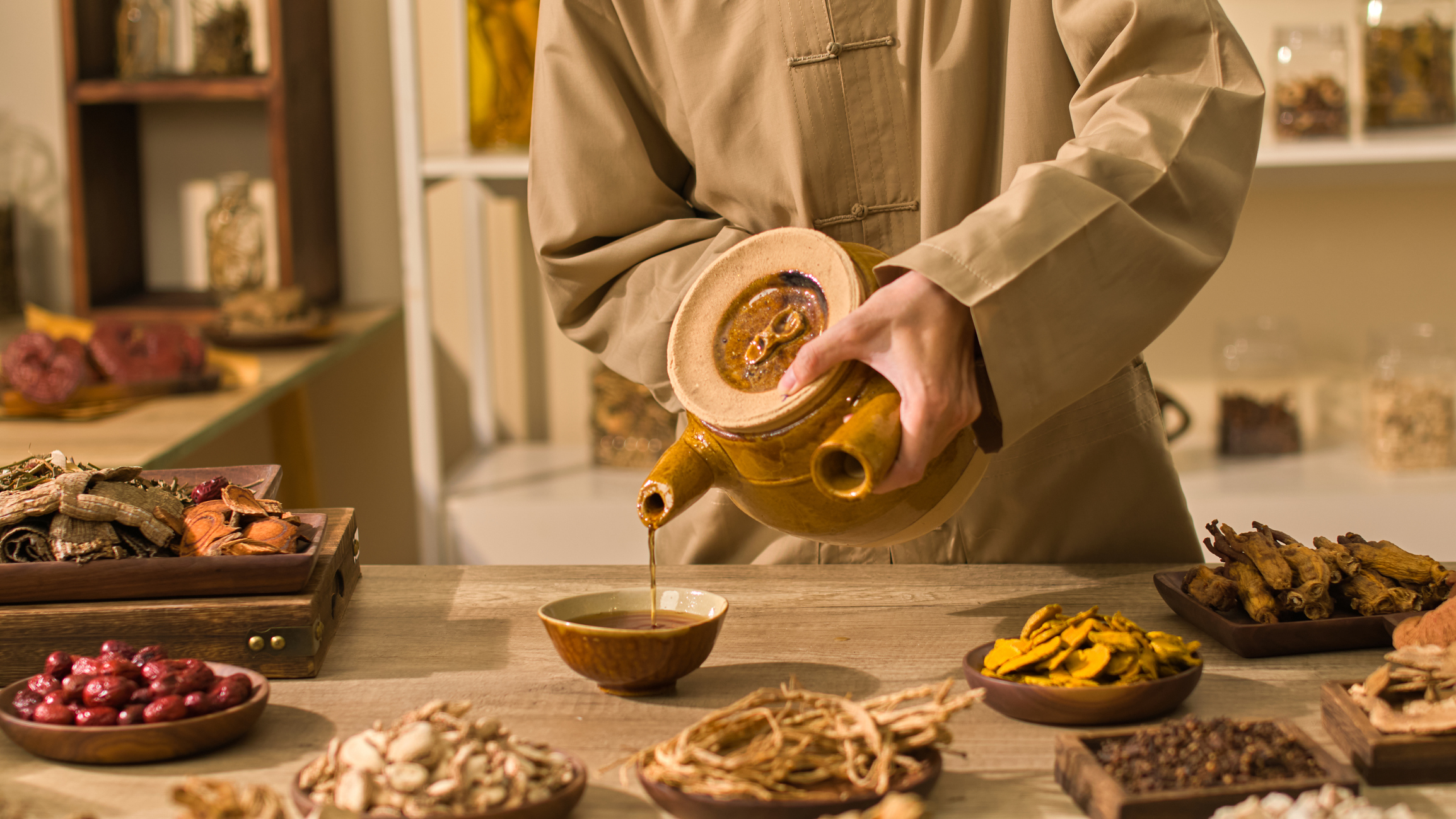
Photo Cred: Leon Gao/Unsplash
By Melissa Carr, BSc, DrTCM
Catching the occasional cold or flu is inevitable, but severe, frequent, or lingering infections is something we can work to avoid. For centuries, Traditional Chinese Medicine (TCM) practitioners have tested and employed herbs, foods, acupuncture techniques, lifestyle measures, and diagnostic skills to support the immune system and combat viruses, bacteria, and other pathogens. Many non-TCM practitioners have already recognized the benefits of Chinese herbs to help support a healthy immune response and fight infection. The U.S. Drug and Drug Administration (FDA) has even approved a double-blinded, randomized, controlled trial on a modified version of the Chinese herbal formula Qing Fei Pai Du Tang for its effect on the novel coronavirus (COVID-19).
While we generally clump many types of illnesses into “common cold” or “flu,” there is a seemingly infinite number of pathogens, each offering a variety of signs and symptoms. TCM treatment is specific, so the recommendations and therapies vary according to the individual’s constitution, the season, whether it’s for prevention or treatment, and the TCM diagnosis of the illness.
TCM recognizes different types of Qi, and it is the Wei Qi (defensive Qi) that is most active in defending the body against external pathogens like viruses and bacteria. The TCM organs most associated with this Wei Qi are the Spleen and Lungs. The TCM Spleen (sometimes called the Spleen/pancreas) processes food and drink, transforming the energy from the things we ingest into energy for our immune system and Wei Qi. The Lungs, along with Wei Qi, control the surface of the body (skin and mucus membranes).
So, we can ask ourselves, how strong is this person’s body/Qi? Do we need to strengthen their immune system? The answer might be “no,” as we sometimes see the body overrespond, such as it does in a cytokine storm. If the immune system response is already very strong, then we probably don’t want to add too many Qi tonics. Immune modulators, like the beta-sitosterols found in mushrooms and many plants might be good options.
If the person tends to get sick often or recovers slowly, and if they also often feel tired or weak, have poor digestion, feel foggy headed, bruise easily, and struggle with worry and overthinking, taking a formula like Bu Zhong Yi Qi Tang, Si Jun Zi Tang, or Shen Ling Bai Zhu San, can help strengthen Spleen Qi, the source of Wei Qi. If there is shortness of breath, weak cough, fatigue, and spontaneous sweating, then a modified version of Bu Fei Tang may be a fit.
A good general formula that is often used to support the body’s defensive measures is Yu Ping Feng San (“Jade Windscreen Powder”). It is a relatively simple formula with huang qi (astragalus), bai zhu, and fang feng. It strengthens the Spleen and Lung Qi and releases and expels External Wind.
Formulas also change depending on the level that the pathogen has invaded. At the very beginning, at the Wei level, the goal is to provide the body the ability to “vent the pathogen,” and herbs might be used to induce sweating. A classic herb for this is ma huang (ephedra) and it is in many common cold formulas like Ma Hua Tang and Ma Xing Shi Gan Tang. However, because of misuse and abuse for weight loss and as a stimulant, this herb is banned in many places. Xiang ru is a possible substitute, though it isn’t as strong. Practitioners might also tell their patients to drink hot ginger or garlic tea before bed and bundle up warm to sweat it out. I’ve seen this work often, though it usually means an uncomfortable night of sleep.
For a flu that has lodged itself deeper, causing symptoms such as with alternating chills and fever, dizziness, sensation of fullness in the chest, abdominal or stomach pain, nausea, and vomiting, the formula Xiao Chai Hu Tang may be a good starting point.
Because TCM is founded largely on the observation of humans and our surrounding environment, the natural factors of Wind, Heat, Cold, Damp, Dry, and Fire are defined as types of elements that can negatively impact us. Wind is the primary carrier for an external pathogen to attack our bodies, so a TCM diagnosis of a cold or flu typically includes Wind as part of the diagnosis.
While not all symptoms may be present, if the symptoms are sore throat, dry cough or cough with yellow phlegm, nasal congestion, distension headache, thirst, and fever, and if the pulse is superficial and fast, Superficial Wind-Heat is the diagnosis. Treatment may include modifications of the formula Yin Qiao San, Gan Mao Dan (“Common Cold Pill”), or Sang Ju Yin (if cough is a main symptom).
Superficial Wind-Cold results in the patient struggling with a cold or flu that causes achy body, headaches, itchy throat, sneezing, and runny nose or cough with clear or white phlegm. For this diagnosis, the practitioner could select a formula such as Jing Fang Bai Du San, Ge Gen Tang, Gui Zhi Tang, or Xing Su San.
If the patient has a lot of phlegm or congestion, then Dampness or Phlegm are part of the diagnosis and there are two main types, either Hot or Cold. Hot Phlegm shows up as yellow phlegm or mucus and some of the herbs to treat this include zhe bei mu, chuan bei mu, gua lou, zhu ru, and huang qin. For Cold Phlegm, the phlegm is clear or white and the herbs zhi ban xia, xuan fu hua, and jie geng might be included.
For Dryness to be part of the diagnosis, it is often present alongside Heat. Signs and symptoms include thirst and dry mouth, nose, skin, and cough. It’s also possible when the mucus is sticky and hard to expectorate. In this case, the herbs pi pa ye, tian hua fen, and niu bang zi are options.
Fire symptoms are severe Heat and might be paired with the TCM diagnosis of Toxic-Heat. Fire is not a starting symptom for a light cold. It might occur when a pathogen has continued its progress into invading the body, creating a more serious illness. High fever, coughing up blood, burning sensation, swollen throat, thirst, red eyes, and restlessness are some possible symptoms, and a formula like Pu Ji Xiao Du Yin may come into play.
One of the challenges with addressing colds and flus in clinic, is that it is difficult to stock all these herbs and formulas, particularly because, since the start of the pandemic, most practitioners have stopped allowing anyone with cold or flu symptoms into their clinic. So, what I generally keep in clinic is some Yu Ping Feng San and some mushroom supplements that I supply to patients to help them keep a healthy immune system. If they contact me about cold or flu symptoms, I prescribe a customized formula that I have a supplier ship to them directly.
References
National Institute of Health (NIH). Chinese Herbal Formula for COVID-19 (MACH19) https://clinicaltrials.gov/ct2/show/NCT04939415
About the Author: CJ Weber

Also on Integrative Practitioner

Dental Danger: Signs of Sleep Breathing Disorders in children and Adults, Learn the Visual Clues
Non-Member Price: $30.00 Member Price: $18.00 – 40% Off for Members Only Add to Cart Presented by: Mark Breiner, DDS,...

Integrative and Comprehensive Approach to Inflammatory Bowel Disease
Non-Member Price: $30.00 Member Price: $18.00 – 40% Off for Members Only Add to Cart Presented by: Ronald Hoffman, MD,...

Measuring Biology vs. Symptomatology: The Fully Integrated Functional Wellness Program
Non-Member Price: $30.00 Member Price: $18.00 – 40% Off for Members Only Add to Cart Presented by: Dane Donohue, DC...

Change Your Genes, Change Your Life
Non-Member Price: $30.00 Member Price: $18.00 – 40% Off for Members Only Add to Cart Presented by: Kenneth Pelletier, PhD,...

Guided Imagery – Efficacious, Portable, Scalable, User-Friendly, Self-Administered
Non-Member Price: $30.00 Member Price: $18.00 – 40% Off for Members Only Add to Cart Presented by: Belleruth Naparstek, ACSW...