




Possible Traditional Chinese Medicine formula for post-traumatic stress and addictions
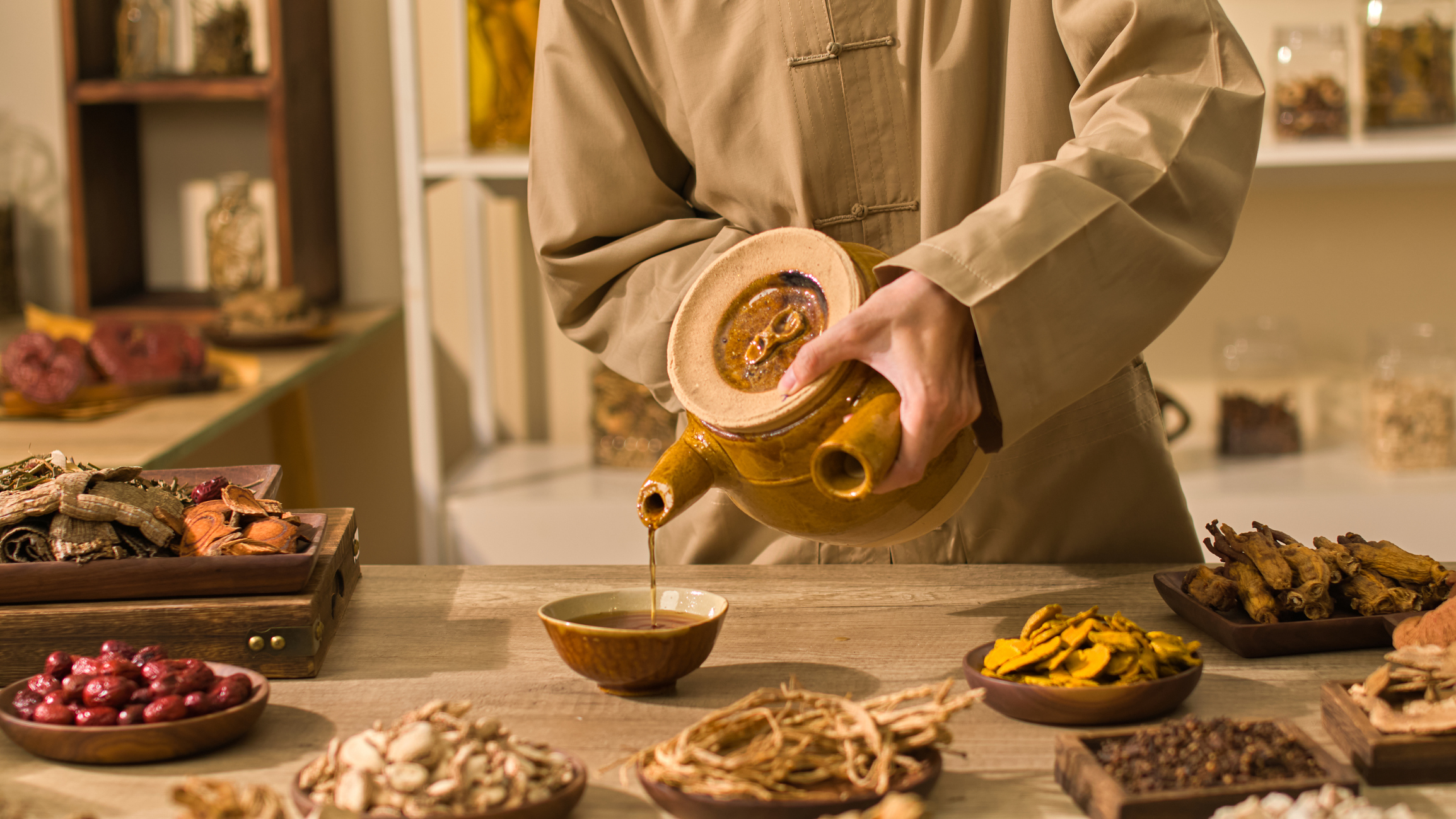
Photo Cred: Bundo Kim/Unsplash
By Melissa Carr, BSc, DrTCM
In Traditional Chinese Medicine (TCM), the body and mind have always been thought of an inseparable continuum. As a result, physical, mental, and emotional symptoms are treated equally.
For example, the TCM diagnostic of yu zheng translates as “stagnation pattern,” but is more commonly interpreted as depression. It addresses both physical stagnation issues such as digestive problems, changes in appetite, pain, headache, dizziness, and palpitations, as well as mental stagnation issues like frustration, anger, agitation, worry, paranoia, obsessive thoughts, fear, lassitude, and sadness.
These issues are complex, so there is clearly no one-size-fits-all solution and multiple approaches are likely needed, but TCM practitioners have long used herbal blends to treat the root cause as well as the branch symptoms for a wide range of ills. The herbal formula Chai Hu Jia Long Gu Mu Li Tang (Bupleurum Plus Dragon Bone and Oyster Shell Decoction) is one of the formulations now used with the appropriate presentation to treat PTSD, addiction, schizophrenia, and neurosis, as well as gastritis, post-concussion syndrome, menopausal symptoms, hypertension, and hyperthyroidism.
Chai Hu Jia Long Gu Mu Li Tang comes from one of the oldest clinical textbooks in the world, the Shanghan Lun (Treatise on Cold Damage Diseases). While it is classified as a formula that sedates and calms the shen (Spirit), its original use is quite different from its modern one. Its action is to “unblock the three Yang stages.”
This blockage is said to have occurred because of the overuse use of purgatives when treating a patient who has been battling an attack from an external pathogen. The purgatives weaken the body and allow the pathogen to go deeper and further invade the interior. Classical indications for the use of this formula include fullness in the chest, irritability with occasional attacks of palpitations, inability to rotate the trunk, sensation of extreme heaviness throughout the body, urinary difficulty, constipation, and delirious speech. Even for established TCM practitioners, reading a classical description of this formula can leave one with the impression that it will rarely be pulled off the shelf for use. In fact, this is a valuable formula that every TCM herbalist should carry.
Today, this formula is most often used for illnesses and symptoms that have nothing to do with a viral, bacterial, or other externally contracted disease. Instead, it is more often used to treat disorders caused by fright, such as post-traumatic stress disorder (PTSD). Key symptoms are a feeling of fullness in the chest, palpitations, and irritability. These are very common symptoms for many suffering with mental health issues, so it’s important to make sure that the TCM pattern fits the formula and that modifications are made, if needed.
While the formula is balanced with a mix of warming and cooling, as well as tonifying and sedating herbs, it still leans toward addressing more stagnation, addressing Liver Qi stagnation, Phlegm stagnation, Liver Heat, and Liver Yang rising. The suitable patient’s tongue is red with a slippery coating and the pulse is wiry and rapid.
If the patient has a lot of Heat signs, particularly of Liver Fire with outbursts of anger, red face and eyes, dizziness or vertigo, and bitter taste in the mouth, the herbs long dan cao or xia ku cao could be added in. For patients with sleep issues, the herbs suan zao ren (zizyphus) or ye jiao teng are good additions. It’s also possible to combine with the formula Suan Zao Ren Tang for those with Liver and Heart Blood deficiency or Tian Wang Bu Xin Dan for Kidney and Heart Yin deficiency Heat. Zhu sha, ye jiao teng, yuan zhi, he huan pi, bai zi ren, and fu shen can also help further calm the nervous system, easing anxiety.
Case Study
Imani is a 40-year-old woman suffering from PTSD and anxiety. She has done a lot of personal work, group work, and counseling, but has struggled for years with a multitude of experiences of racial prejudice and attacks. She also has some childhood trauma issues that she doesn’t want to discuss in detail, though she admits to a strained relationship with her family, in particular her mother.
She has a few close people in her life that she can lean on for support, but she feels like she doesn’t belong in her predominantly Caucasian community. Recently, higher stresses at work and in her personal life have triggered more episodes of rage or anxiety with palpitations. She often has the sensation of a pit in her throat and tightness in her chest.
Muscle tension has left her feeling a lot of pain, particularly on her right side of her body. Her digestion is poor, and she feels her anxiety is largely situated in her gut, causing her bowel movements to feel incomplete. She describes her sleep as disastrous because though she can fall asleep okay, she wakes several times a night and struggles with returning to sleep.
Though she has made great strides to try to eat healthy, she recognizes that she has been drinking alcohol too much and too frequently to dull her emotional pain. She is not taking any medication and would like to continue to avoid that. She takes magnesium citrate, milk thistle, and probiotics.
Since she was unable to get regular acupuncture sessions, we decided to focus on Chinese herbals for her treatment. I diagnosed her with Liver Qi stagnation with Heat, Phlegm-Heat, and Liver Yang rising. I prescribed her Chai Hu Jia Long Gu Mu Li Tang and added in zhu sha and yuan zhi to help further calm her nervous system. Because of the dominance of Phlegm obstruction, I included shi chang pu, and to address her muscle tension and pain, I added bai shao and chuan lian zi.
After a few weeks, she noted fewer episodes of rage, but still issues with her sleep, so I omitted the zhu sha (it is cinnabar and should not be used in large quantities for a prolonged period). I gave her the additional formula of Tian Wang Bu Xin Dan (minus the zhu sha which is usually in this formula) to take before bed. I also suggested she take ling zhi (reishi mushroom) supplements in capsule form, as it is an adaptogenic herb that can help calm the nervous system, support the heart and liver, and provide a feeling of more energy during the daytime without being stimulating.
After another month of herbs, she noted she was able to better manage external stressors without mood swings, an improvement in her sleep, more complete and formed bowel movements, and less body discomfort. As a result, she was able to resume her usual physical activities that further help her manage stress.
While the herbs won’t resolve her traumas, they did help her to lower her anxiety and emotional outbursts to something much more manageable, allowing her to continue her counseling and personal work, while also turning her away from self-medicating with alcohol and marijuana. Most of all, they helped her return to a feeling of being in control of her life once again.
About the Author: CJ Weber

Also on Integrative Practitioner

Dental Danger: Signs of Sleep Breathing Disorders in children and Adults, Learn the Visual Clues
Non-Member Price: $30.00 Member Price: $18.00 – 40% Off for Members Only Add to Cart Presented by: Mark Breiner, DDS,...

Integrative and Comprehensive Approach to Inflammatory Bowel Disease
Non-Member Price: $30.00 Member Price: $18.00 – 40% Off for Members Only Add to Cart Presented by: Ronald Hoffman, MD,...

Measuring Biology vs. Symptomatology: The Fully Integrated Functional Wellness Program
Non-Member Price: $30.00 Member Price: $18.00 – 40% Off for Members Only Add to Cart Presented by: Dane Donohue, DC...

Change Your Genes, Change Your Life
Non-Member Price: $30.00 Member Price: $18.00 – 40% Off for Members Only Add to Cart Presented by: Kenneth Pelletier, PhD,...
Guided Imagery – Efficacious, Portable, Scalable, User-Friendly, Self-Administered
Non-Member Price: $30.00 Member Price: $18.00 – 40% Off for Members Only Add to Cart Presented by: Belleruth Naparstek, ACSW...