



Promoting optimal eye health with traditional medicine
Photo Cred: Susan Duran/Unsplash
By Melissa Carr, BSc, DrTCM
In recent years, we’ve greatly increased our daily screen time with a growing reliance on smart phones and computers. With vision and eye complaints on the rise, integrative practitioners can utilize holistic and natural approaches to help their patients, by looking at eye health through a Traditional Chinese Medicine (TCM) lens.
A 2019 Pew Research Center survey reported 28 percent of adult Americans admitted to being online “almost constantly.” Then, the novel coronavirus (COVID-19) pandemic hit, and computer and television screen time increased further. Since we could not meet in person, work meetings, doctor’s appointments, consultations, parties, and meet-ups with friends and family moved to online platforms. People also found themselves spending more time using screens a at home in lieu of their usual activities.
Eye fatigue is nothing new, nor is it solely caused by backlit liquid crystal display (LDC) screens. I experienced eye fatigue and headaches when I was in my early 20s and spent a lot of time studying paper textbooks, before I had a computer or needed eyeglasses. However, there is a rise in ocular complaints like eye dryness, excessive tearing, irritated eyes, blurred vision, double vision, and light and glare sensitivity. Now, it even has its own diagnosis, computer vision syndrome (CVS).
TCM Approach to the Eyes
TCM practitioners consider more than the affected tissue when assessing symptoms and injuries. In TCM, the Liver is said to “open into the eyes,” so changes in appearance and function of the eyes must address the Liver.
Other TCM organs, however, may also be involved. The Kidneys nourish the eyes and Kidney Yin deficiency can cause failing vision and eye dryness. Kidney deficiency can manifest as swelling or dark circles under the eyes. Age, overwork, ongoing fear and anxiety, and poor sleep can contribute to this pattern.
The eyes also reflect the state of the Mind and the Heart, so chronic stress and trauma creating Heart Fire can result in redness and pain of the eyes, especially in the corners of the eyes.
In addition, the whites of the eyes are connected to the Lungs, so respiratory function, immune health, skin conditions, and issues with grief and sadness should be assessed. If the sclera is red, there may be Lung Heat.
The eyelids connect to the Spleen, so swelling or styes indicate Spleen Qi deficiency and accumulation of Dampness or Phlegm. This diagnosis can be confirmed if there are also symptoms such as bloating, diarrhea, muscle fatigue, foggy-headedness, and overthinking or worry.
Common Eye Fatigue Issues and Their TCM Treatments
To get more specific about CVS and eye fatigue, practitioners can use TCM’s diagnostic patterns to determine treatment plans.
Liver Blood deficiency can cause dry eyes and blurry vision. This pattern can also be identified by a pale complexion, pale and brittle nails, dizziness, numbness of the limbs, muscle weakness, and muscle cramping. While acupuncture points like LV8 and SP6 may help, nutrition and herbs are best to help rebuild the Liver Blood. Foods include dark leafy greens, beets, animal proteins, and cooked whole grains. TCM practitioners can consider gou qi zi (goji berries), long yan rou (longan fruit), dang gui (dong quai or angelica sinesis), sang shen, and appropriate modifications of the Chinese herbal formula Si Wu Tang.
If dryness is dominant, the eyes are red, and the person has night sweats, light sensitivity, tearing, and low back pain or weakness, Liver and Kidney Yin deficiency may be the correct diagnosis with Qi Ju Di Huang Wan as a good formula option. It’s also important to address issues with poor sleep, hormonal imbalance, and overwork. This patient should limit or avoid hot spicy foods and stimulants like caffeine, making sure to stay hydrated and opting for moisture-filled foods like zucchini, cucumber, melons, mushrooms, avocado, and soups.
While TCM diagnostic patterns of weakness are common, for those leading an excessive lifestyle with little downtime and restorative rest, those with strong constitutions, the young, and those who are on a path to burnout, there are also excess patterns related to eye fatigue, including Liver Heat, Liver Fire, and Liver Yang Rising. These are fundamentally similar patterns, with Liver Fire being a more severe version of Liver Heat.
Liver Heat and Fire may be caused by Liver Qi stagnation and Liver Yang Rising often arises because of a deficiency of Liver and Kidney Yin. Common symptoms of these patterns include red eyes and face, dizziness, tinnitus, and distending sensation headaches.
Anger and irritability are present with a tendency to a quick temper, but some direct that anger internally instead of expressing it outwardly. For these patterns, treatments are focused on calming the nervous system and cooling off excess Heat. The acupuncture point LV2 is the most important point for red eyes, but others that could be employed include LV3, LV8, KI6, KI3, GB38, Taiyang, and Yintang. Herbs like jue ming zi, man jing zi (vitex, chasteberry), bo he (peppermint), ju hua (chrysanthemum), bai ji li (Tribulus), and zhen zhu mu (mother of pearl) may be used to clear Liver Heat, treat the eyes, and sedate Liver Yang.
Case Study
While most of us have had some experience with eye fatigue, it is rare that I have someone come in for treatment with it as their chief complaint. It seems to be something that most of us have learned to live with and consider a “normal” part of modern life.
John, age 44, listed “eye irritation from too much screen time” as his primary concern. His job required long hours at the computer, though he had already made several lifestyle changes like using an old school flip phone instead of smart phone, limiting television time, wearing blue light blocking glasses, doing eye exercises, and shutting off backlit screens at least an hour before bedtime.
In addition to noticing dry eyes, eye fatigue, and blurred vision, he also had eczema on his eyelids with itchiness that would wake him in the middle of the night, dry skin and mouth, night sweats, low back pain, and a lot of stress causing feelings of frustration and irritation.
Though I expected his tongue would be red because of the signs of Heat, it was instead pale and thin. His pulse though was slightly rapid and thin. I diagnosed Liver Blood deficiency causing Wind along with Liver and Kidney Yin deficiency. With the Liver being deficient in both Yin and Blood, it was showing signs of Liver Qi stagnation that was amplified by his external stressors, so I decided that acupuncture could take the lead for managing that. During each of the six sessions I delivered, I chose from a selection of LV2, LV3, LV8, ST36, SP6, the extra points Baichongwo and Zhiyangxue (for itching), KI6, LI4, LU7, and Yintang.
For herbs, I prescribed Dang Gui Yin Zi and Ming Mu Di Huang Wan. I also instructed him to avoid hot spicy foods and stimulants like coffee, and to consume instead plenty of fluids and moisture-rich foods. After six weeks of treatment, he noticed a reduction in his CVS symptoms, as well as his eczema and he feels less aggravated by the stresses around him.
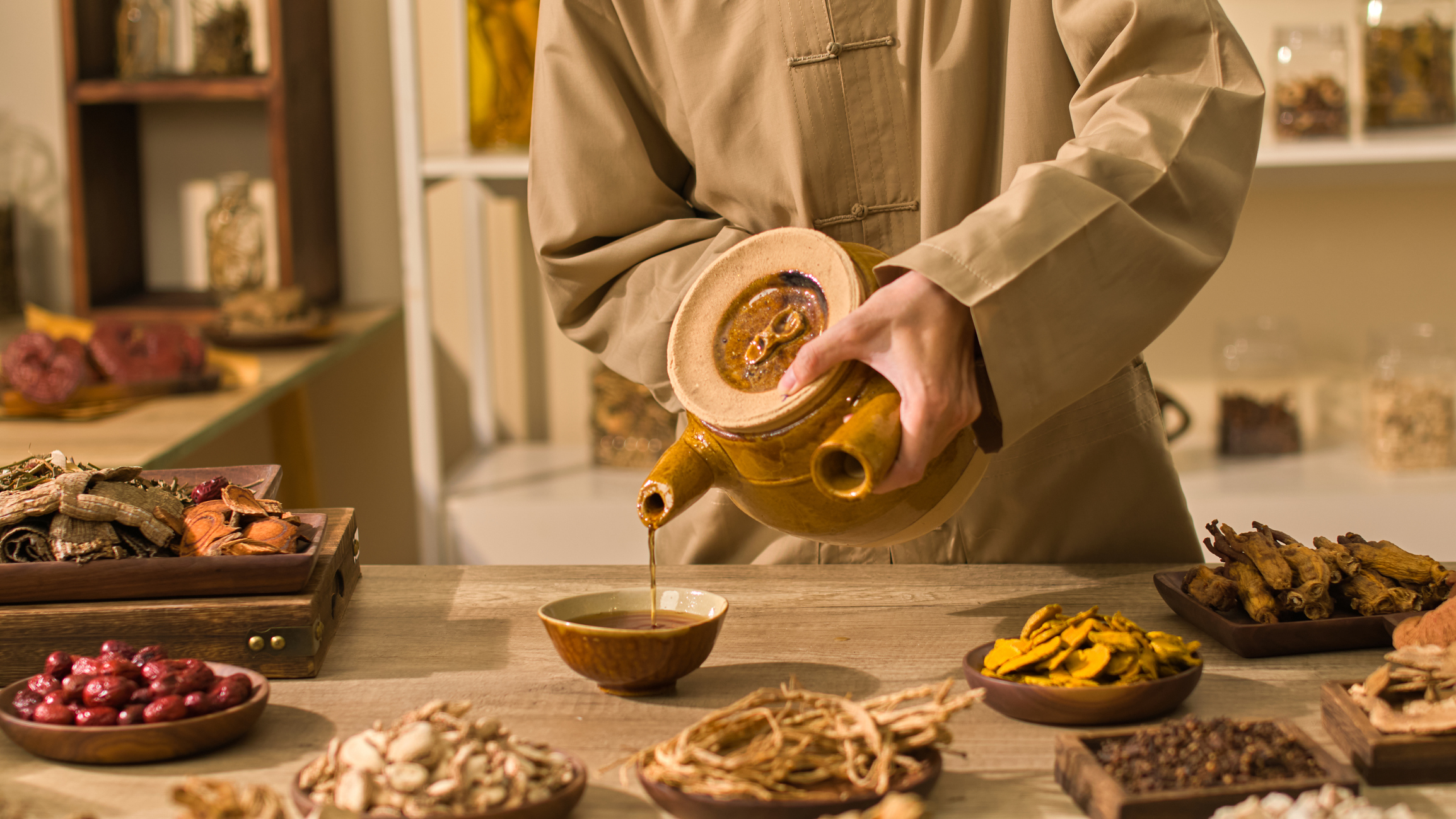
One of the things I saw many of the TCM doctors doing when I interned at two hospitals in China 20 years ago was that many of them drank hot water with goji berries (gou qi zi) in it. When the weather was hot, they added dried chrysanthemum flowers (ju hua). Since these herbs benefit the eyes, I also recommended this as a lifestyle habit that is simple to apply.
References
Mehra, D., Anat, G. (2020) Digital Screen use and Dry Eye: A Review. Asia-Pacific Journal of Opthamology. Retrieved from https://journals.lww.com/apjoo/Fulltext/2020/12000/Digital_Screen_Use_and_Dry_Eye__A_Review.3.aspx
Pew Research Center (2019) January 2019 Core Trends Survey. Retrieved from: https://www.pewresearch.org/wp-content/uploads/2019/07/FT_19.07.25_ConstantlyOnline_Topline_Methodology.pdf
About the Author: CJ Weber

Also on Integrative Practitioner

Dental Danger: Signs of Sleep Breathing Disorders in children and Adults, Learn the Visual Clues
Non-Member Price: $30.00 Member Price: $18.00 – 40% Off for Members Only Add to Cart Presented by: Mark Breiner, DDS,...

Integrative and Comprehensive Approach to Inflammatory Bowel Disease
Non-Member Price: $30.00 Member Price: $18.00 – 40% Off for Members Only Add to Cart Presented by: Ronald Hoffman, MD,...

Measuring Biology vs. Symptomatology: The Fully Integrated Functional Wellness Program
Non-Member Price: $30.00 Member Price: $18.00 – 40% Off for Members Only Add to Cart Presented by: Dane Donohue, DC...

Change Your Genes, Change Your Life
Non-Member Price: $30.00 Member Price: $18.00 – 40% Off for Members Only Add to Cart Presented by: Kenneth Pelletier, PhD,...
Guided Imagery – Efficacious, Portable, Scalable, User-Friendly, Self-Administered
Non-Member Price: $30.00 Member Price: $18.00 – 40% Off for Members Only Add to Cart Presented by: Belleruth Naparstek, ACSW...