











Q&A: Helping your patients embrace vibrancy
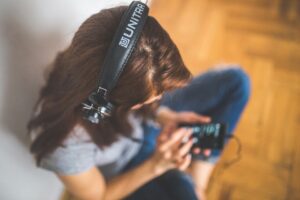
Photo Cred: Fuu J/Unsplash
By Liz Gold
Stacie Stephenson, DC, CNS, DABAAHP, FAARM, is on a mission to help people create vibrant health. With a background in functional medicine, her focus has always been on integrative, regenerative, and natural medicine modalities.
Stephenson was a practicing physician for 15 years before becoming founder and chief executive of a new health and wellness media venture, VibrantDoc and currently is the chair of Functional Medicine for Cancer Treatment Centers of America, a board member of the American Nutrition Association, and vice chair of Gateway for Cancer Research, a non-profit organization dedicated to funding breakthrough cancer research and early-stage clinical trials.
As a speaker, she shares her expertise with hospitals and advocacy groups throughout the United States on topics such as innovations in genomics and personalized cancer therapies to nutritional strategies that support recovery and long-term management of chronic and other diseases. In addition, she is a philanthropist, championing organizations in the areas of children’s health and wellness, poverty, and education. She is also the author of the book, “Vibrant: A Groundbreaking Program to Get Energized, Own Your Health, and Glow.” We asked Stephenson to answer a few questions via email about her work and how patients can live more vibrant lives.
Integrative Practitioner: How did you first become interested in functional and integrative medicine?
Stacie Stephenson: After suffering a figure-skating accident and a string of other health issues, I decided to become a doctor because I thought I could provide people with better care than the very conventional ‘here’s a pain pill’ kind of care I received at the time. But I was soon frustrated by medical school because conventional medicine, as you know, has a very specific kind of training that doesn’t make allowances for building health and doesn’t look at the big-picture of lifestyle. Back then, a friend convinced me to go to a lecture by functional medicine pioneer Dr. Jeffrey Bland, and that lecture changed the whole course of my training. I left with a couple of bottles of omega-3s and a new outlook on what healthcare could be. After that, I learned everything I could and got trained in multiple modalities, including nutrition, TCM, and anti-aging medicine. I never wanted to stop learning about how to create health.
 Integrative Practitioner: How can practitioners help their patients identify what you describe as a “personal vision of vibrancy”?
Stacie Stephenson: This is what it’s all about, for me. Vibrancy is my way of describing that deep inner health that imbues someone with energy and glow. I don’t just want to help people get back to their baseline of ‘average’ health. I want them to take their health all the way, so that they have the energy they need to do everything they want to with their lives. So, to me, part of a vibrant life is figuring out your purpose, your passion, your mission, and your priorities. Once you know why you’re here and what you’re meant to do, you have a reason and a motivation to change your habits, overhaul your lifestyle, and live in a way that really does build that deep health, intrinsic energy, and the glow that comes from giving your body what it needs to thrive and flourish.
Integrative Practitioner: What are some of your favorite modalities that you have used in your practice to help your patients de-stress and feel more vibrant in their lives?
Stacie Stephenson: When I was in practice, I used every trick in the book, if it seemed right for the patient. The reason I trained in so many different fields was that I wanted to be able to offer people options, and I found that every system I learned about had some features that worked for some people. I wanted to learn it all so I could customize health strategies for anyone with any problem or any health goal. In retrospect, though, I’ve found that a few different modalities have risen to the top, that I still advise people to do and that I do myself. Those include acupuncture, Chinese medicine, medical-grade supplement therapy (including supplements as simple as vitamin C and those omega-3s I discovered so long ago), massage, yoga, anti-aging medicine (I love learning about all the new science that keeps coming out in this field), and perhaps most importantly, the therapeutic benefits of a really high-quality lower-carb, Mediterranean-style diet, and a regular exercise program.
Integrative Practitioner: Being in nature has been known to usually help people feel better. How do you define nature therapy and how is it being used to improve health now?
Stacie Stephenson: This is another tool I love. For most of human history, we lived mostly outdoors, and that is where our bodies feel most at home, even if our minds want to draw us back inside. Our biology responds to nature, and it is a profound stress reliever. Just seeing green and blue (like trees and lakes or the ocean) has been shown to improve the biomarkers associated with chronic stress. Best of all, this is a completely free and easy therapy. All you have to do is go outside and take a walk. If you can get to a park or the woods or the beach, even better. The more time you spend outside, the more you will feel the beneficial effects.
Integrative Practitioner: Our culture is very obsessed with their screens. What are some ways practitioners can encourage their patients to put down their devices and get outside more?
Stacie Stephenson: This has become such a problem. You can’t go anywhere without seeing people with their heads bent over (terrible for your neck, by the way), glued to their phones. Others spend hours at their computers, or use their phones while using their computers or watching television. I believe this is harmful to the brain, compromising the ability to concentrate and pay attention to one thing for an extended period of time. It’s also isolated us from the real-live people in front of us, that we could be connecting to on a more meaningful level. There are some things I suggest. Many phones have screen trackers you can turn on, that will tell you how much you’ve been looking at your screen each day or each week. That can help you put your screen time in perspective. I also recommend putting your phone away at the end of the day so you can focus on family or friends, and especially leaving it stowed when you are at the dinner table. It’s more important to focus on your food than it is to eat mindlessly while scrolling. I also recommend doing a digital detox at least once a month, where you put your phone away for an entire weekend. It’s amazing how much your brain will wake up and start paying attention to reality again. Try it and you’ll see.
Integrative Practitioner: What strategies would you share with practitioners who are dealing with patients resistant to changing their lifestyle for better health?
Stacie Stephenson: Compliance is always the challenge, isn’t it? Part of the problem, I think, is that practitioners—especially those practicing conventional medicine–sometimes give their patients relatively vague advice, so the patients don’t know how to implement it, or they tell them to do something that’s too big. Telling someone to eat better, exercise more, and manage their stress isn’t helpful and can feel overwhelming. Doctors aren’t all trained for this, but what really helps is to give people 1) very specific advice and 2) small steps they can take one at a time. The little things you do consistently over time have so much more of an effect than drastic changes that aren’t sustainable. I like to start with giving people one thing to do. Maybe you start with diet. This could be something like asking them to add two servings of vegetables to their daily meals, or cut the amount of soda they drink by half. Or maybe exercise is the goal, but again, instead of quoting public health recommendations like saying ‘Get 150 minutes of exercise a week,’ really talk to them about their lifestyle and what would work for them. Can they take a 30 minute walk every morning before work, or after dinner? Can they try some yoga or begin lifting some weights at home? Of course, this assumes you can work with someone over time to build up an arsenal of healthy habits and check in about how it’s going so you can shift strategies if what you’ve prescribed isn’t working. Not all doctors are willing to do this, but I think those in the integrative space are much more open to this kind of personalization of health advice. Fortunately, I think that’s where modern medicine is headed, and patients can only benefit from one-on-one, longer-term wellness care.
About the Author: CJ Weber

Also on Integrative Practitioner

Dental Danger: Signs of Sleep Breathing Disorders in children and Adults, Learn the Visual Clues
Non-Member Price: $30.00 Member Price: $18.00 – 40% Off for Members Only Add to Cart Presented by: Mark Breiner, DDS,...

Integrative and Comprehensive Approach to Inflammatory Bowel Disease
Non-Member Price: $30.00 Member Price: $18.00 – 40% Off for Members Only Add to Cart Presented by: Ronald Hoffman, MD,...

Measuring Biology vs. Symptomatology: The Fully Integrated Functional Wellness Program
Non-Member Price: $30.00 Member Price: $18.00 – 40% Off for Members Only Add to Cart Presented by: Dane Donohue, DC...

Change Your Genes, Change Your Life
Non-Member Price: $30.00 Member Price: $18.00 – 40% Off for Members Only Add to Cart Presented by: Kenneth Pelletier, PhD,...
Guided Imagery – Efficacious, Portable, Scalable, User-Friendly, Self-Administered
Non-Member Price: $30.00 Member Price: $18.00 – 40% Off for Members Only Add to Cart Presented by: Belleruth Naparstek, ACSW...