







Five strategies to strengthen patient circadian rhythms
Photo Cred: Andrea Piacquadio/Pexels
By Catherine Darley, ND, Catherine Darley, ND
Several years ago, during the winter holiday break, I had the unique opportunity to stay in a rustic log cabin from the 1880s, nestled in an evergreen forest in the Pacific Northwest. The cabin was heated with an antique wood stove, which was also the primary means of cooking as there was no electricity, and lighting was by candlelight. This was a highly instructive experience.
During that week, it was dark outside by 5 p.m., and, although we had plenty of candles, by 7 p.m. to 7:30 p.m., I was thinking about bedtime, as the candlelight was so soporific, and it was difficult to have my typically active evening in the low light. Conversely, during the day, it was dim inside the cabin, so most of our days were spent outside, being active or bundled up reading and enjoying the view of nature. It also got significantly colder at night as the fire died down.
Many health changes happened during this week. My time in bed sleeping increased, I felt much more alert throughout the day, probably due to both the longer sleep times and increased bright light outside during the day, and my overnight fast lengthened.
Human physiology evolved in a world with predictable, rhythmic changes throughout the day, and across the seasons. These are changes in light and dark exposure, day length, temperature, and food availability. Our physiology works best when those environmental cues are stable. However, the problem for many people in the modern world is that these environmental cues are not stable, because we can easily manipulate them to suit the needs and even mood of the moment. When our circadian rhythm is strong, we feel more widely alert and active during the day, and more deeply asleep at night.
With the novel coronavirus (COVID-19) pandemic and work from home orders still in place, many people are struggling to sleep well at night, and be as alert and high functioning as they need to during the day. Circadian rhythms are an area that practitioners can influence to improve daytime function, sleep, and overall health.
Treatment 1
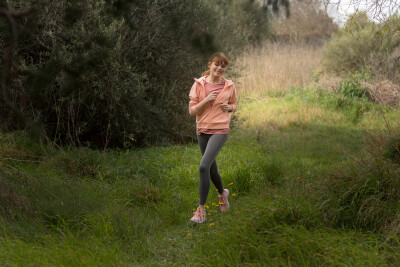
Several lifestyle factors that entrain us to the environmental day are particularly disrupted right now. People are spending more time inside, without getting the predictable bursts of bright light as they leave their home each day. The burst of morning bright light is the key time point that entrains our body clock. The first strategy to strengthen patients’ circadian rhythm is to get 20 minutes of bright outside light within the first one to two hours of wakefulness.
If it is just not possible to go outside, a light box can be substituted. Have your patient use a full-spectrum lightbox that provides 10,000 lux of light. Be sure they place it the correct distance from the eyes (each model may have different specifications), and at an angle so that the light is falling on the eyes, but the patient is not looking directly into the light. Contraindications include macular degeneration and a history of mania.
As a naturopathic physician, and with our understanding of the health impact of light, I prefer that patients get outside natural light when at all possible. Continue getting bursts of outside light for 10 minutes or so every couple hours throughout the day.
Treatment 2
In a naturalistic environment, when the sun goes down, our light exposure changes again, becoming more golden red as with sunset and much less bright. For most of human history, we have spent our evenings in this natural light, or with candle and firelight which again provides that more golden light. These dim light conditions allow our melatonin levels to begin increasing an hour or two before bed.
In contrast, the bright and blue spectrum of light that our patients are exposed to during the evening in their homes by use of electronic screens or full-spectrum lighting suppresses melatonin secretion until the lights are turned off. At this point, many people have heard about the negative effects of evening blue light on sleep. However, many people tell me they have heard this, but don’t think it could have that big of an impact so haven’t done anything to limit their evening light exposure. For that reason, it is worth discussing with patients.
There are several strategies people can use to allow their melatonin to increase before bed. First, turn off screen devices and full-spectrum light an hour or two before bed. One tip is to have a torchiere-type lamp that is the “wind-down” lamp with an older incandescent style or golden light bulb to use during that time when all other lights are off. If a patient must be on electronic devices, then using an app that changes the hue of the screen can be helpful, or they can wear blue light blocking goggles for that last one to two hours of their day. Note, these should be goggles that enclose the eye fully, not just glasses, as glasses allow artificial light to reach the eye from the sides or top.
The melatonin system is really that sensitive to light. For those patients who like to monitor or measure, they can download a simple lux app on their phone, and monitor their light exposure. Ideally, we get 10,000 lux or more of light during the day, and three lux or less in the hour before bed.
Treatment 3
Another zeitgeber that is disrupted for people right now is mealtimes. Patients working from home, and feeling the stress of the pandemic, are eating more often and even grazing throughout the day. This blunts the entraining effect that distinct meals have. Ideally, to make our circadian rhythm as robust as possible, people should have distinct meals, with a break of four hours between mealtimes.
Treatment 4
The workday is a key time cue for many people, one that has been lost to some extent for people newly working for home. This also applies for children or older students who no longer have consistent school hours regulating their activities. Without external obligations imposing this daily routine, patients are left to impose this daily structure themselves, which is difficult for many people. We’ve also lost the physical cues of different places being for different activities, as now the dining room can be for work, meals, and homework.
Help patients define their “work hours,” whether for a paid job or home responsibilities. Having a distinct and regular start time for their main responsibility of the day will make the circadian rhythm more robust.
Treatment 5
The last time point to emphasize and reinstate with patients is predictable social times. For many people, going into work provided a predictable social cue. That cue may now be lost as people work from home on their own, with less predictable social interactions. This change is another reason our circadian rhythms may not be as robust as they were pre-pandemic.
As practitioners work with their patients to create their ideal schedule, include some regular social interactions that can predictably happen at about the same time most days of the week. One strategy is to gather with household members at the same time every evening, or with friends outside the home via video conference.
These lifestyle strategies are among the most effective ways for making the circadian rhythm more robust by entraining us to the environment. When our circadian rhythm is more robust, our physiology works better, improving sleep, daytime alertness, and mood, and improving the function of many organ systems. Practitioners should get down into the details with their patients during this challenging time, create a daily routine starting with morning bright light, regular work and mealtimes, predictable social time to look forward to and enjoy, and then closing each day with one to two hours of dim light in the evening. These tactics will pay off in better health and wellbeing.
About the Author: CJ Weber

Also on Integrative Practitioner

Dental Danger: Signs of Sleep Breathing Disorders in children and Adults, Learn the Visual Clues
Non-Member Price: $30.00 Member Price: $18.00 – 40% Off for Members Only Add to Cart Presented by: Mark Breiner, DDS,...

Integrative and Comprehensive Approach to Inflammatory Bowel Disease
Non-Member Price: $30.00 Member Price: $18.00 – 40% Off for Members Only Add to Cart Presented by: Ronald Hoffman, MD,...

Measuring Biology vs. Symptomatology: The Fully Integrated Functional Wellness Program
Non-Member Price: $30.00 Member Price: $18.00 – 40% Off for Members Only Add to Cart Presented by: Dane Donohue, DC...

Change Your Genes, Change Your Life
Non-Member Price: $30.00 Member Price: $18.00 – 40% Off for Members Only Add to Cart Presented by: Kenneth Pelletier, PhD,...
Guided Imagery – Efficacious, Portable, Scalable, User-Friendly, Self-Administered
Non-Member Price: $30.00 Member Price: $18.00 – 40% Off for Members Only Add to Cart Presented by: Belleruth Naparstek, ACSW...