



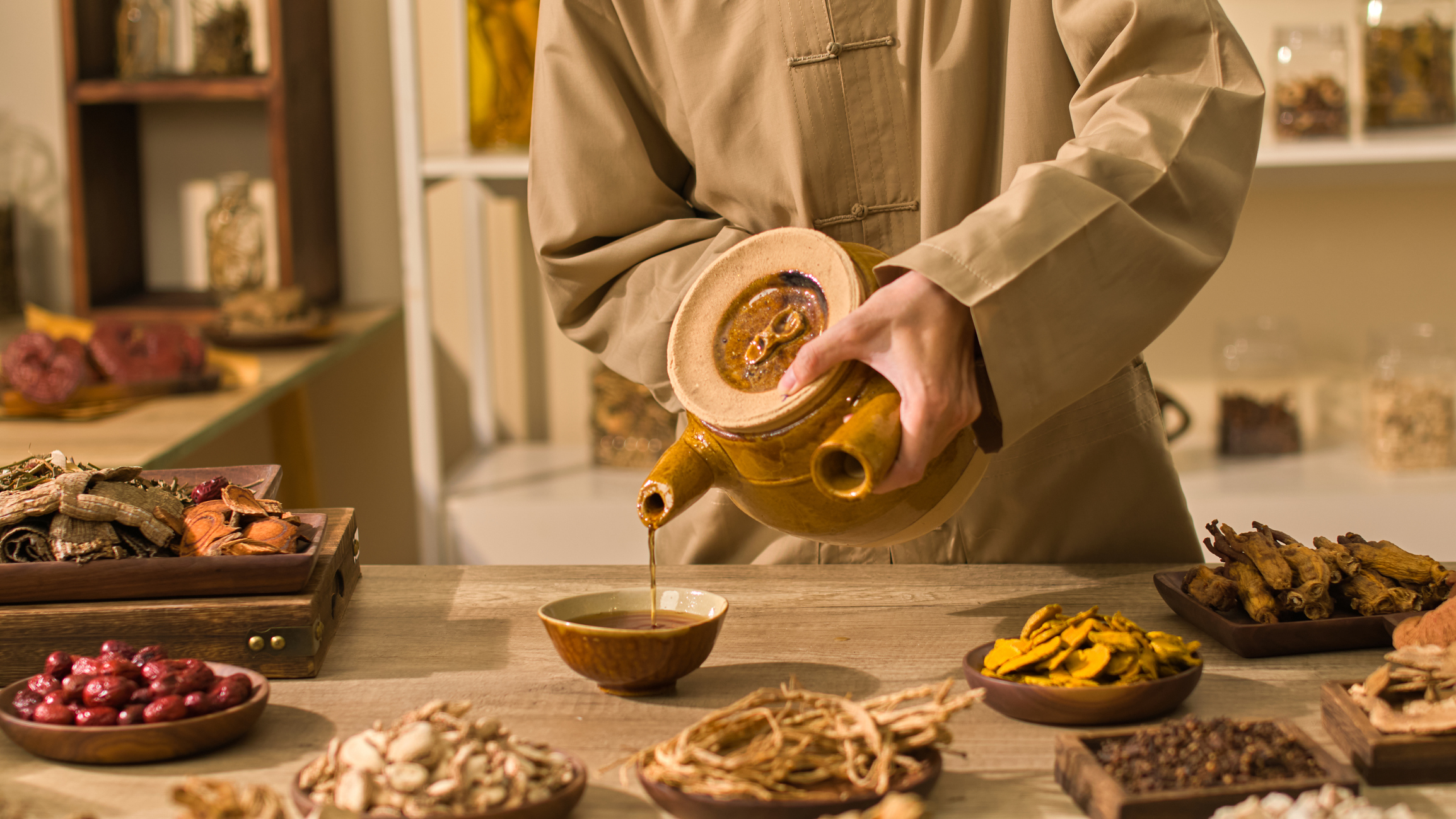


Traditional Chinese Medicine May Help Relieve Long COVID Symptoms
By Irene Yeh
The World Health Organization (WHO) defines long COVID as persistent symptoms of the COVID-19 virus that occur three months after initial infection. Symptoms last at least two months and cannot be explained by other diagnoses. Currently, there are no specific Western medicine treatments for long COVID, and care generally focuses on relieving symptoms and lifestyle interventions, but what about traditional Chinese medicine (TCM)?
The National Health Commission of China issued the Diagnostic and Treatment Protocol for Novel Coronavirus Infection, which provides TCM syndrome differentiation and recommended prescriptions for COVID-19 recovery. Published in Future Integrative Medicine (DOI: 10.14218/FIM.2026.00001), the research team investigated the efficacy of TCM on long COVID and explored if it could alleviate symptoms and help with recovery.
Evaluating TCM for Long COVID
The research team divided participants into a treatment group that received TCM combined with Western symptomatic treatment and lifestyle intervention and a control group that only received Western symptomatic treatments. Participants were assigned to their cohort based on clinical treatment preferences and consultation with their physicians.
Patients in the TCM treatment group were further classified into three TCM syndrome differentiation-based types—Lung-Spleen Qi Deficiency, Qi-Yin Deficiency, and Cold Fluid Stagnating in the Lung—and received standardized blends of medicinal herbs recommended for each subgroup. They were categorized based on differing symptoms.
The three subgroups had symptoms associated with their specific ailments. Lung-Spleen Qi Deficiency manifested as shortness of breath, fatigue, poor appetite with nausea and vomiting, bloating, and a pale enlarged tongue with a white, greasy coating; Qi-Yin Deficiency also manifested as shortness of breath, fatigue, and poor appetite, as well as dry mouth, thirst, excessive sweating, palpitations, a weak pulse, and a red tongue with less fluid; and Cold Fluid Stagnating in the Lung manifested as coughing fits, irritative coughing, nocturnal coughing, white phlegm that was difficult to expel, and a tight pulse.
Initially, the researchers enrolled 434 participants. After excluding patients with extreme propensity scores, loss to follow-up, or incomplete clinical data, the team matched 94 pairs of patients using propensity score matching to balance differences between the groups. Treatments were administered over a seven-day period.
Symptom Improvements After TCM
The TCM treatment group had a response rate of 30.85%, compared with 17.02% in the control group. All three TCM subgroups experienced significant symptom improvement, suggesting that TCM may be beneficial for patients across different TCM symptom patterns, with Lung-Spleen Qi Deficiency rated the highest with 32.14% improvement. The improvements are also closely associated with clinical efficacy.
Adults 65 and older, women, and patients with high blood pressure did not reach statistical significance. The researchers also noted that few studies have examined how TCM performs in different demographic groups, such as age and sex, among people with long COVID. As such, the findings of the current study are an important addition to the available evidence.
Considerations and More Research Needed
Because there was only a seven-day follow-up, there is no information on TCM treatment for medium- to long-term efficacy and symptom recurrence. The research team also noted that the TCM symptom scale was developed specifically for this study and has not been externally validated, which may limit the accuracy of the symptom scores. There was also no objective lung function data measured during the study, which makes it difficult to assess the effectiveness of TCM treatment on respiratory health.
TCM treatment, especially when paired with Western medicine treatment, is effective at alleviating long COVID symptoms and recovery, even after only a week of treatment. Future studies are encouraged to recruit a bigger participant pool and have longer follow-up to verify medium- to long-term efficacy of TCM treatment. Lung function must also be measured, and the researchers also recommend a double-blind, placebo-controlled design for future trials.
About the Author: Irene Yeh

Also on Integrative Practitioner
AI Helps Find ‘Hidden Gems’ Buried in Sleep Study Data
By Deborah Borfitz For decades now, doctors have been referring people suspected of having obstructive sleep apnea to a specialized...
MD Anderson: Immune System Provides Biological Blueprint for Treating Cancer-Related Depression with Psychedelics
By Deborah Borfitz Since the brain and body are inexorably connected and seem to modulate each other, it follows that...

Follow the Money: Mental Health Care for Youth in Crisis, Parkinson’s Research Grants, Prostate Care Platform
By Integrative Practitioner Staff SoundHealth accelerates growth of its breathing and sleep disorder device portfolio; Wellinks expands commercial footprint for...

Home Test for Diabetes Risk has a Leg Up on Standard Methods
By Deborah Borfitz The worried well the world over now have readily accessible and easy to self-administer home tests for...

Guidelines on Navigating GLP-1 Medications Before, During, and After Pregnancy
By Irene Yeh As incretin-based medications, including glucagon-like peptide-1 receptor agonists (GLP-1RAs) or glucose-dependent insulinotropic polypeptide (GIP) drugs, become increasingly...