





Higher-Intensity Exercise Linked to Lower Depression and Anxiety Symptoms
By Irene Yeh
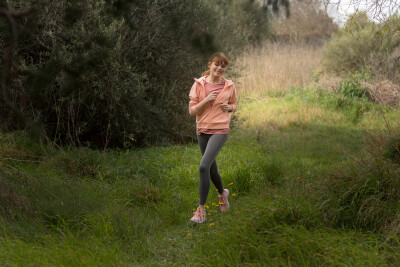
Physical activity usually correlates with improved depression and anxiety symptoms. However, it isn’t just the frequency of exercise but the intensity level, as well.
“From a mental health perspective, the intensity of physical activity is key, not merely increasing movement as such,” says Maisa Niemelä, adjunct professor at the University of Oulu, Finland, in a press release. Niemelä and her team investigated movement behaviors—sedentary behavior (SB), light physical activity (LPA), and moderate-to-vigorous activity (MVPA), defined as intense enough to leave you slightly out of breath—and assessed how each of them impacted participants’ depression and anxiety symptoms in 24 hours. The results were published in Depression and Anxiety (DOI: https://doi.org/10.1155/da/6881070).
Assessing Depressive and Anxiety Symptoms
The research team collected data from the Northern Finland Birth Cohort 1966, a birth cohort study consisting of people born in the year 1966 who received follow-ups throughout the decades. The present study collected data from the most recent follow-up in 2012, making the participants 46-years-old at the time. Over a 14-day period, movement behaviors were recorded using a hip-worn accelerometer and participants’ self-reported sleep duration. The movement behaviors were divided through compositional linear regression and were also examined with time reallocation analysis to determine the connection between the movement behaviors and depression and anxiety symptoms in 24 hours.
Three assessment tools were used to gauge depression and anxiety symptoms: the Beck Depression Inventory-II (BDI-II), Generalized Anxiety Disorder Assessment (GAD-7), and Hopkins Symptom Checklist-25 (HSCL-25). The BDI-II is a 21-item self-reported questionnaire that focuses on the key symptoms of depression and is used to determine depression severity. The GAD-7 is a high-sensitivity and specificity initial screening tool to determine anxiety symptoms. The self-reported questionnaire had 7 items that covered the main symptoms of anxiety disorders. Finally, the HSCL-25 is a questionnaire consisting of 25 items (10 related to anxiety, 15 related to depression).
The accelerometer was worn during waking hours, and participants had to provide four or more valid days of accelerometry, which was defined as less than or equal to 10 hours of wear time. In total, 4,490 participants had valid accelerometry data. The average wear time for the accelerometer was 12.8 days, with 450 minutes a day spent asleep, 435 minutes a day in SB, 342 minutes a day in LPA, and 45 minutes a day in MVPA. About 57.2% of participants with valid data were female, and it was found that more male participants engaged in more SB and MVPA than female participants. Notably, MVPA had the largest relative log-ratio difference between male and female participants.
Work Harder, Not More
More time spent in MVPA and sleep were consistently linked to lower levels of depression and anxiety symptoms while more time spent in SB and LPA were associated with higher levels of depression and anxiety symptoms. Specifically, the BDI-II and GAD-7 questionnaires reported that 90.7% and 79.3% of participants, respectively, had minimal depression and anxiety symptoms. For the HSCL-25, it was found that 89.9% of participants were not considered to have depression and anxiety symptoms.
When conducting compositional regression analysis, the team found that more time in MVPA and sleep had a positive association with depression and anxiety symptoms while more time in LPA and SB were negatively associated across all three assessment models. Notably, when 30 minutes of SB was replaced with MVPA, the BDI-II score was 9% lower. 30 minutes of sleep or LPA replaced with MVPA showed a 5% lower score on the same assessment tool. When 30 minutes of MVPA was replaced with either sleep, SB, or LPA, the depression scores increased by 15-20%.
It is not yet fully understood why MVPA seems to lower depression and anxiety symptoms, but the study provides further evidence that MVPA is the most beneficial movement behavior for depression and anxiety symptoms. More research is encouraged to fully determine MVPA’s affects on depression and anxiety.
The team stressed the importance of adequate sleep. They reported that increasing SB or LPA at the expense of sleep showed detrimental results, and replacing SB or LPA with sleep showed significantly lower depression and anxiety symptoms. While physical activity plays a critical role in mental health, it does not replace the benefits of sleep.
Great Potential, Despite Limitations
Although the sample size was large, the results may not represent the entirety of the original population. The cohort analyzed was from only one point in time. Because of this, it cannot be completely determined whether movement behaviors caused changes in depression or anxiety symptoms. Furthermore, the increased use of digital technology and social media in recent years may affect how people spend their time and how movement behaviors relate to mental health. Additionally, participants who met study requirements tended to have lower levels of depression and anxiety symptoms than those who did not participate fully, which may affect the final results.
Sleep duration was self-reported, which leaves room for error from participants, as it is common for people to overestimate or underestimate how much sleep they get. Naps were also not included, so total sleep time may not be fully calculated. The use of questionnaires opens the possibility of recall bias, and the three different assessment tools differ in what they measure. The study also did not factor external influences, such as seasonal changes triggering seasonal depression.
The cohort was quite homogenous, as it only took individuals that were of the same ethnicity and age. The study also did not examine whether participants’ movement behaviors differed from weekdays compared to weekends. Several people may be sedentary during the work week but may be a “weekend warrior.”
Nonetheless, the findings of the study correlate with previous studies that showed evidence of MVPA having more benefits for depression and anxiety symptoms. MVPA combined with adequate sleep results in the best results. And though any movement is better than no movement, increasing physical activity should not come at the expense of sleep. Instead, the researchers encourage that a 24-hour day should be viewed as a balanced whole, according to the press release.
About the Author: Irene Yeh

Also on Integrative Practitioner
AI Helps Find ‘Hidden Gems’ Buried in Sleep Study Data
By Deborah Borfitz For decades now, doctors have been referring people suspected of having obstructive sleep apnea to a specialized...

MD Anderson: Immune System Provides Biological Blueprint for Treating Cancer-Related Depression with Psychedelics
By Deborah Borfitz Since the brain and body are inexorably connected and seem to modulate each other, it follows that...

Follow the Money: Mental Health Care for Youth in Crisis, Parkinson’s Research Grants, Prostate Care Platform
By Integrative Practitioner Staff SoundHealth accelerates growth of its breathing and sleep disorder device portfolio; Wellinks expands commercial footprint for...
Home Test for Diabetes Risk has a Leg Up on Standard Methods
By Deborah Borfitz The worried well the world over now have readily accessible and easy to self-administer home tests for...

Guidelines on Navigating GLP-1 Medications Before, During, and After Pregnancy
By Irene Yeh As incretin-based medications, including glucagon-like peptide-1 receptor agonists (GLP-1RAs) or glucose-dependent insulinotropic polypeptide (GIP) drugs, become increasingly...