








Acupuncture may promote prostate health and provide relief from chronic prostatitis
Photo Cred: Beka Schiller/Pixabay
By Kat Black
Chronic prostatitis is one of the most common health problems affecting men in the United States – but treatments are often short-term and ineffective. A recent study, however, provides encouraging data about the potential of acupuncture to provide long-term relief from prostatitis symptoms, which may include pelvic pain, urinary incontinence, and sexual dysfunction.
According to the National Institute of Diabetes and Digestive and Kidney Diseases, prostatitis is an inflammatory condition that accounts for 2 million medical visits annually in the United States. Ten to 15 percent of men in the U.S. develop chronic prostatitis or chronic pelvic pain (CP/CPP). Antibiotics are used to treat acute prostatitis and some cases of chronic prostatitis caused by bacterial infection, but the etiology of chronic prostatitis is more mysterious, and treatment options usually remain limited to symptom management.
A 2018 article published in Cochrane Database of Systematic Reviews concluded that, based on a review of three studies, acupuncture is a low-risk intervention with the potential to reduce prostatitis symptoms. In 2021, a clinical trial published in Annals of Internal Medicine found that 60 percent of patients involved in the study reported a significant decrease in symptoms after 20 acupuncture sessions, as compared with 37 percent of participants who received a sham version of acupuncture. Effects were observed to last 24 weeks after treatment, suggesting that acupuncture therapy for prostatitis may have a more long-lasting impact than previously thought.
It’s still not clear why acupuncture relieves the symptoms of chronic prostatitis. Researchers theorized that stimulation of acupoints with needles may trigger the release of the body’s natural pain-killing chemicals. In addition, a 2021 study published in Nature identified a neuroanatomical basis for the anti-inflammatory effects of acupuncture, which has been used to treat chronic pain conditions for thousands of years.
From a Traditional Chinese Medicine perspective, inflammation is caused by an excess of yang, a manifestation of qi, explained Effie Chow, PhD, LAc, the founder of East West Academy of Healing Arts in San Francisco. “We talk about neutrality, the balance of yin and yang,” she said. “Qi is the life force in Chinese medicine.”
Brian Crouse, ND, LAc, an acupuncture practitioner, and naturopath with practices in Connecticut and New York, said that prostate conditions are some of the most common health issues he treats in his male patients. “Symptoms go in channels in Chinese medicine, and they’re usually related to qi, blockages of qi, and excess and deficiencies of yin and yang,” Crouse said.
Acupuncture points are located along these channels, or meridians. Crouse said that prostate issues are often associated with the ren and du meridians (known as the conception and governing vessels, respectively) as well as the liver, stomach, and kidney channels. “Any of those can be out of balance for a variety of reasons,” he said. “We don’t necessarily look at it as a prostate problem, but we look at it as an imbalance of the channels. Treating the channels will have an effect on the prostate.”
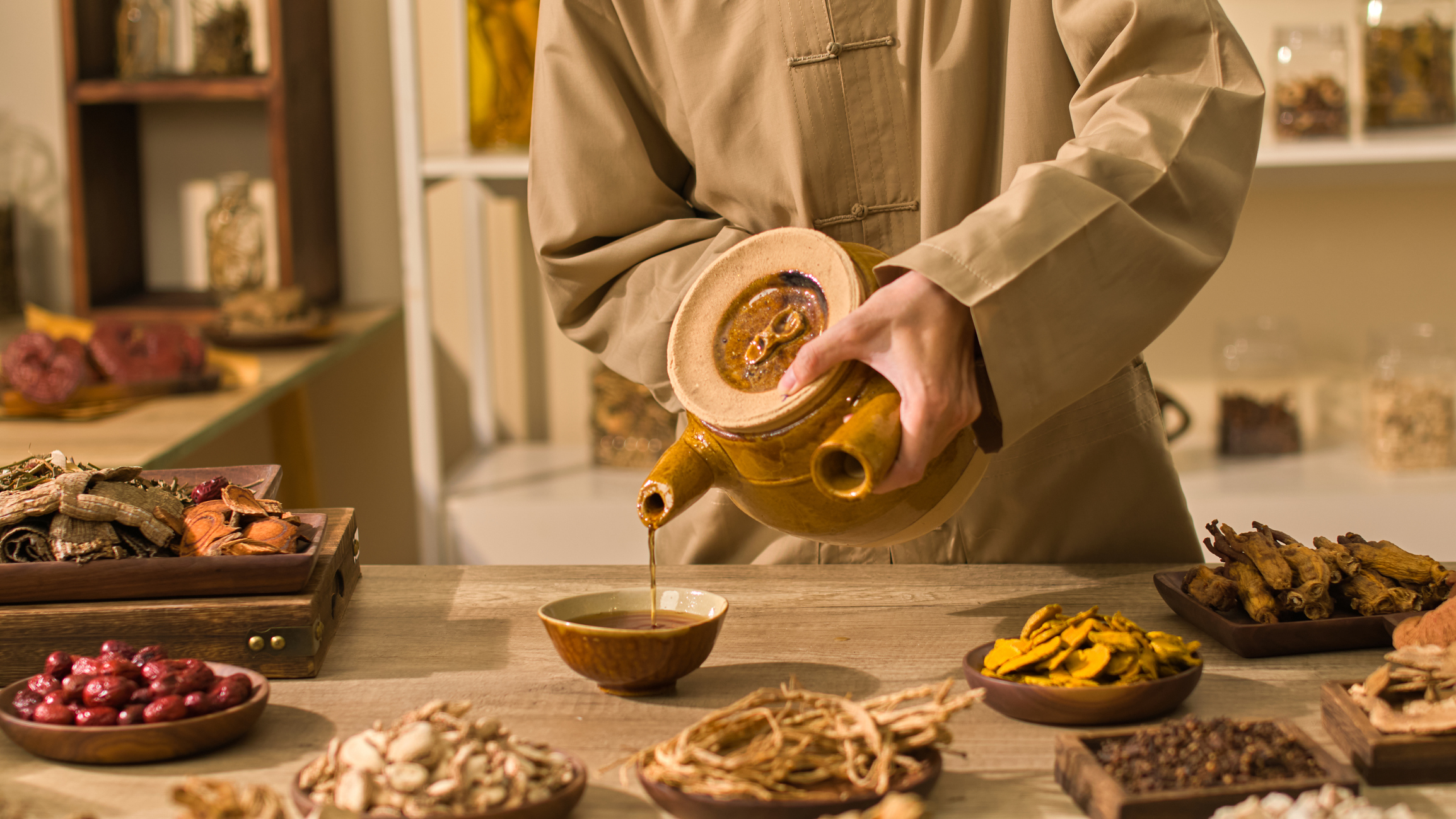
Acupuncture may also provide benefits to patients with benign prostatic hyperplasia (BPH) or enlargement of the prostate gland, a common condition in older men that may cause symptoms such as urinary tract problems and interrupted urinary flow. Participants in a 2017 study published in PLoS One reported statistically significant improvement in BPH symptoms after receiving acupuncture. Crouse said that he may recommend herbal remedies such as maca, pumpkin seed oil, and urtica dioica, also known as stinging nettle or nettle root, in conjunction with acupuncture to improve symptoms in his BPH patients.
Both Chow and Crouse emphasized the importance of a holistic approach to treating chronic pain conditions in Traditional Chinese Medicine. “Deep breathing posture, herbs — they all comprise a whole system,” said Chow. “Acupuncture is part of a holistic system and it’s good for prevention and promoting health rather than treating disease.”
Since stress is a potential contributing factor to chronic prostatitis, Crouse recommends that his patients adopt lifestyle interventions in addition to receiving acupuncture therapy. “Stress and anxiety will affect your hormones, which will have an effect on your prostate. Getting people’s sleep in order and the problems in the channels that I spoke about, I can see benefits from that week to week in a patient. Each week they’d be describing to me that there’s better urinary flow or better erections. When their sleep gets better, and their energy level gets better, they start to take better care of themselves, and they exercise more and eat better.”
About the Author: CJ Weber

Also on Integrative Practitioner

Dental Danger: Signs of Sleep Breathing Disorders in children and Adults, Learn the Visual Clues
Non-Member Price: $30.00 Member Price: $18.00 – 40% Off for Members Only Add to Cart Presented by: Mark Breiner, DDS,...

Integrative and Comprehensive Approach to Inflammatory Bowel Disease
Non-Member Price: $30.00 Member Price: $18.00 – 40% Off for Members Only Add to Cart Presented by: Ronald Hoffman, MD,...

Measuring Biology vs. Symptomatology: The Fully Integrated Functional Wellness Program
Non-Member Price: $30.00 Member Price: $18.00 – 40% Off for Members Only Add to Cart Presented by: Dane Donohue, DC...

Change Your Genes, Change Your Life
Non-Member Price: $30.00 Member Price: $18.00 – 40% Off for Members Only Add to Cart Presented by: Kenneth Pelletier, PhD,...

Guided Imagery – Efficacious, Portable, Scalable, User-Friendly, Self-Administered
Non-Member Price: $30.00 Member Price: $18.00 – 40% Off for Members Only Add to Cart Presented by: Belleruth Naparstek, ACSW...