








Loneliness and its impact on sleep
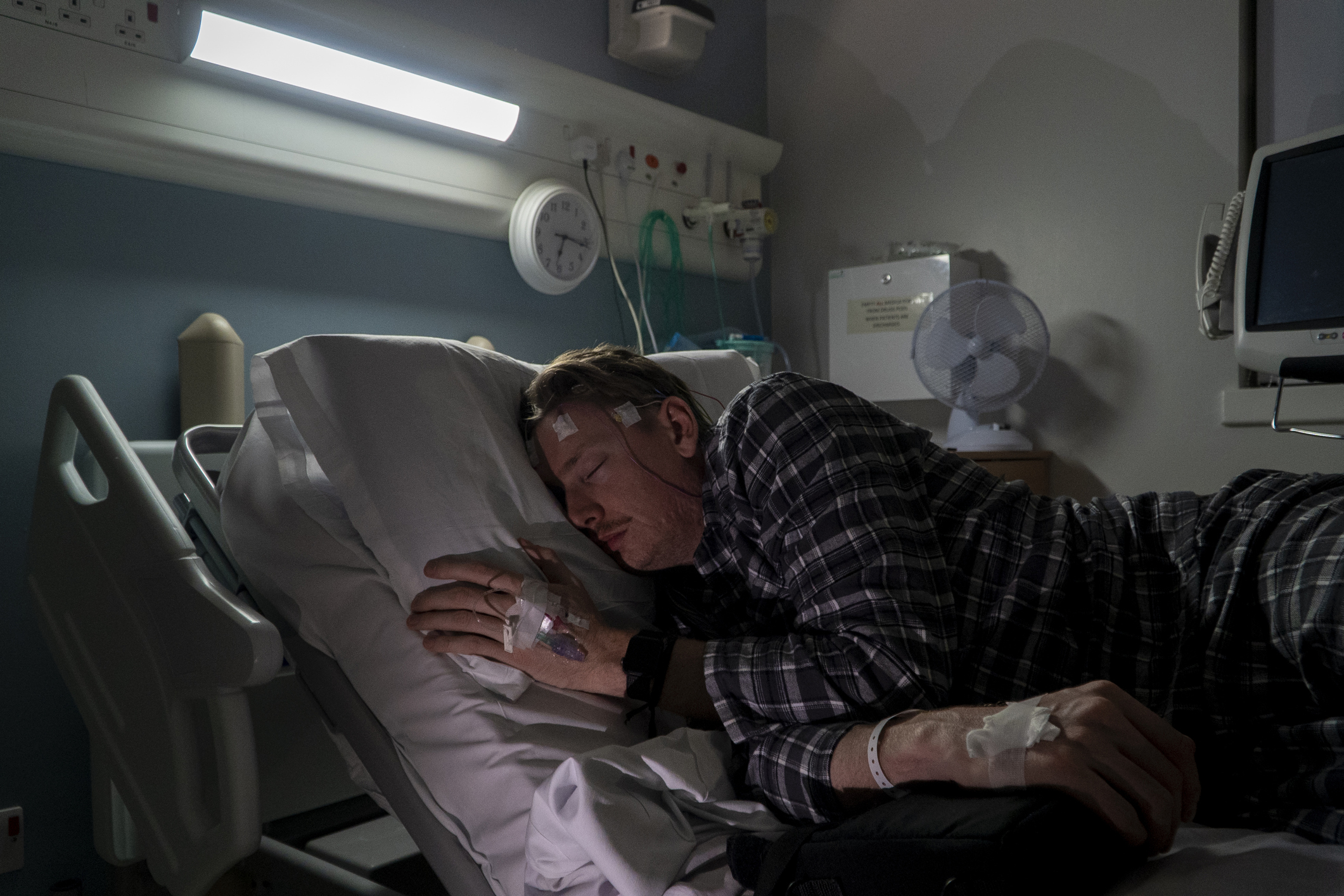
Photo Cred: Kinga Cichewicz/Unsplash
By Catherine Darley, ND
Years ago in my practice, when talking with patients’ about their sleep problem, I noticed an important theme in what was keeping them awake. Many patients were struggling with some of those big, existential questions in the middle of the night. Thoughts like “will I ever find my partner,” “will I ever have children,” and “how can I find my community?” This was such a strong observation that I thought to myself “I should change the name of my practice to ‘Sleep and Dating Center’,” that resolving these essential questions about connection would also solve patients’ sleep problems.
Since then, research has borne out this clinical observation. Loneliness appears to be increasing in our society, paradoxically even as we become more “connected” via social media. Currently, 20 percent of people in primary care report being lonely, with the highest prevalence of 1 in 3 in people younger than 25. As in many arenas, this is a bidirectional relationship—sleep loss increases social withdrawal and, at the same time, the lonely have a harder time sleeping.
We need to feel secure to relax into sleep, as captured in a 2017 study. The researchers found that loneliness was associated with poor subjective sleep quality among twins born in 1994 and 1995. They also looked at some smaller groups within the cohort, monozygotic twins and people who had been maltreated in childhood. Among the monozygotic twins, loneliness was also associated with worse sleep quality, showing an independent association from genetic factors. Being maltreated in childhood, or exposed to violence in adolescence, strengthened the relationship between feeling lonely and poor sleep.
There are different types of loneliness. The main types are social and emotional, with emotional loneliness further classified as romantic and familial. After adjusting for the presence of anxiety and depression, both types of loneliness increase the difficulty of initiating and maintaining sleep, with social loneliness having a larger impact.
Even the state of bedpartners influences each other’s sleep characteristics. When a person is lonely, their bedpartner will report lower sleep quality, and that sleep quality will decrease as loneliness increases. The lonely will also rate their partners’ sleep as more disturbed. Sleeping in sync with your bedpartner is one factor that can lead to a sense of a good nights’ rest. Among married people, the highest rate of concordance in sleep is when the wife is highly satisfied with the marriage.
We are facing an epidemic of insufficient sleep, as the Centers for Disease Control and Prevention declared in 2014. The newest data is that 35.6 percent of adults are getting less than seven hours of sleep on work nights, though the recommended amount is seven to nine hours. This is up from 30.9 percent in 2010.
Research done totally sleep depriving people overnight found that they choose greater interpersonal distance on the social approach task. An fMRI taken that same day showed interesting results: brain areas involved in warning of an approaching person became more active, while the areas involved in understanding another’s’ motives became less active. The sleep deprived are motivated to withdraw from others, perpetuating a negative feedback loop whereby sleep deprivation increases withdrawal and in turn loneliness, which in turn lowers sleep quality.
This was a multi-prong study. Another aspect was noting nightly variability in participants’ ad libitum sleep schedule and finding that shorter sleep correlated with higher loneliness on self-report. The third aspect was to have judges evaluate the video interviews. The judges rated the sleep deprived participants as more lonely, and interestingly reported feeling more lonely themselves afterwards, to a corresponding degree. The judges also felt less inclined to engage with the sleep deprived. From all the data taken together, the authors make a powerful conclusion, “the state of sleep loss should be recognized as a social repellant, enforcing greater inter-personal separation on both sides of the social interaction.”
Ask your patients about their level of social connection and any loneliness they may feel. When they report feeling lonely, find out more. Are there people they’d like to become closer to, and how might they do that? Do they need help finding the right people for them? Are there barriers to being more socially connected, and what’s the work around?
Once you’ve learned more about their experience, make increasing social connection part of the treatment plan, with specific action items. Over the years, some actions patients have taken are to find and join groups for people with similar interests. Meet-up, community centers and parks, senior programs, lifelong learning centers, and religious organizations are all good places to start.
Encourage your patients to reach out to those they’d like to be closer to with a phone call or invitation. And help patients figure out solutions to barriers. Common barriers are childrearing responsibilities, feeling that their home is inadequate for socializing, and lack of people who feel like the right fit. For people who have significant physical and mental illness there is a growing volunteer movement called befriending programs. The client and volunteer are matched up and meet regularly for one-to-one companionship. These programs show moderate improvements in patient health and can be a good option for people whose illness prevents them from engaging socially in other ways.
Humans are social creatures, designed to be socially connected. Not only is sleep affected by isolation, but other areas of health are too. As healthcare providers, we are uniquely situated to highlight and address this need. Incorporate social health into the health framework, so people feel the security needed for a good nights’ sleep.
References
Cacioppo, J.T., and Patrick, W. (2008) Loneliness: Human Nature and the Need for Social Connection. W.W. Norton & Company.
Gunn, H.E., Buysee, D.J., Hasler, B.P., Begley, A., and Troxel, W.M. (2015) Sleep Concordance in Couples is Associated with Relationship Characteristics. Sleep. Retrieved from: https://www.ncbi.nlm.nih.gov/pmc/articles/PMC4434560/
Hayley, A.C., Downey, L.A., Stough, C., Sivertsen, B., Knapstad, M., and Overland, S. (2017) Social and emotional loneliness and self-reported difficulty initiating and maintaining sleep (DIMS) in a sample of Norwegian university students. Scandinavian Journal of Psychology. Retrieved from: https://onlinelibrary.wiley.com/doi/abs/10.1111/sjop.12343
Hirshkowitz, M., Whiton, K., Albert, S.M., Alessi, C., Bruni, O., Don Carlos, L., Hazen, N., Herman, J., Katz, E.S., Kheirandish-Gozal, L., Neubauer, D.N., O’Donnell, A.E., Ohayon, M., Peever, J., Rawding, R., Sachdeva, C., Setters, B., Vitiello, M.V., and Adams Hillard, P.J.. (2015) National Sleep Foundation’s sleep time duration recommendations: methodology and results summary. Sleep Health. Retrieved from: https://www.ncbi.nlm.nih.gov/pubmed/29073412
Khubchandani, J. and Price, J.H. (2019) Short sleep duration in working American adults 2010-2018. Journal of Community Health. Retrieved from: https://link.springer.com/article/10.1007%2Fs10900-019-00731-9
Matthews, T., Danese, A., Gregory, A.M., Caspi, A., Moffitt, T.E.,and Arseneault, L. (2017) Sleeping with one eye open: loneliness and sleep quality in young adults. Psychological Medicine. Retrieved from: https://www.ncbi.nlm.nih.gov/pmc/articles/PMC5551384/
Mullen, R.A., Tong, S., Sabo, R.T., Liaw, W.R., Marshal, J., Nease, D.E., Krist, A.H., and Frey, J.E. (2019) Loneliness in Primary Care patients: a prevalence study. Annals of Family Medicine. Retrieved from: http://www.annfammed.org/content/17/2/108
Segrin C., and Burke, T.J. (2015) Loneliness and sleep quality: dyadic effects and stress effects. Behavioral Sleep Medicine. Retrieved from: https://www.researchgate.net/publication/260680430_Loneliness_and_Sleep_Quality_Dyadic_Effects_and_Stress_Effects
Siette, J., Cassidy, M., and Priebe, S. (2017) Effectiveness of befriending interventions: a systematic review and meta-analysis. BMJ Open. Retrieved from: https://bmjopen.bmj.com/content/7/4/e014304.
Simon, E.B., and Walker, M.P. (2018) Sleep loss causes social withdrawal and isolation. Nature Communications. Retrieved from: https://www.ncbi.nlm.nih.gov/pmc/articles/PMC6092357/
 About the Author
Catherine Darley is the founder of The Institute of Naturopathic Sleep Medicine in Seattle, Washington. The Institute’s mission is to provide patient care and public education about sleep health, and research on natural treatments for sleep disorders. Darley writes reviews of sleep health topics regularly for professional naturopathic journals.
About the Author: CJ Weber

Also on Integrative Practitioner

Measuring Biology vs. Symptomatology: The Fully Integrated Functional Wellness Program
Non-Member Price: $30.00 Member Price: $18.00 – 40% Off for Members Only Add to Cart Presented by: Dane Donohue, DC...

Integrative and Comprehensive Approach to Inflammatory Bowel Disease
Non-Member Price: $30.00 Member Price: $18.00 – 40% Off for Members Only Add to Cart Presented by: Ronald Hoffman, MD,...

Dental Danger: Signs of Sleep Breathing Disorders in children and Adults, Learn the Visual Clues
Non-Member Price: $30.00 Member Price: $18.00 – 40% Off for Members Only Add to Cart Presented by: Mark Breiner, DDS,...

Dietary Needs of the Cognitively Impaired
Non-Member Price: $30.00 Member Price: $18.00 – 40% Off for Members Only Add to Cart Presented by: Laura Rokosz, PhD...

Lifestyle Choices Chart Your Brains Destiny
Non-Member Price: $30.00 Member Price: $18.00 – 40% Off for Members Only Add to Cart Presented by: David Perlmutter, MD,...