








The Boundaries Between Wellness Products and Medical Devices
By Deborah Borfitz
November 5, 2026 | A Food and Drug Administration (FDA) warning letter issued to Whoop last year set off a regulatory dispute reshaping how the agency draws the line between general wellness wearables and medical devices. The case was followed by updated FDA guidance on low-risk general wellness products, under which certain noninvasive sensors may report validated blood pressure values when intended only for wellness use and without medical or clinical claims, according to Dan Simpson, director of regulatory affairs at DCN Dx, whose regulatory work focuses on the in vitro diagnostic (IVD) industry.
“The FDA made a high-level statement about opening up the wellness space, but in actuality the [subsequently updated] guidance document didn’t really open it up all that much … on the IVD side as much as [for] some software applications,” he says. Consumers are starting to demand not only more accurate results from their health and fitness wearables, but what it means for them, versus visiting their clinician for an interpretation, which could easily tip some wellness applications into the regulated medical device arena.
Among IVD and over-the-counter medical device companies, the Whoop case serendipitously incited interest in pursuing wellness claims whereby they can forgo the standard medical device requirements, adds Simpson. The reality is that the FDA doesn’t view the kind of biomarkers detected by lateral flow assays, including insulin and cortisol, as being solely for wellness purposes because of their medical connotations. Regulators are concerned about what the biomarker might be used for beyond the indication intended by the test maker.
To avoid compliance issues, Simpson advises IVD companies wanting to pursue a wellness indication to talk to the agency through one of the available communication mechanisms. These mechanisms may include an email classification determination inquiry, an FDA pre-submission meeting (Q-Submission program), and a 513(g) request used to obtain information on device classification and applicable regulatory requirements. Additionally, Simpson cautions that each of these methods of communication has positives and negatives and should be carefully considered by the sponsor.
Mounting Confusion
The sheer number of health-tracking wearables, software, and tools powered by artificial intelligence (AI) flooding the consumer market is helping to drive confusion about the distinction between general wellness products and regulated medical devices, says Simpson, particularly since they can measure some of the exact same physiological data. Developers and healthcare providers, as well as consumers, can struggle to understand where lifestyle tracking ends and medical management begins.
Part of this stems from differences in the way people, versus the FDA, define wellness. “It has very specific meaning to the FDA,” Simpson says, which considers both intended use and the risk of the product causing physical harm. In the eyes of the agency, the high-risk category includes certain biomarkers where there’s “inherent risk for a misdiagnosis or somebody making their own diagnosis and doing something about it that might cause injury or harm to them.”
Many products are marketed directly to consumers nowadays and the average consumer, including physicians, often can’t tell if they’re a medical or wellness product, adds Emily Friedland, vice president of the clinical research services business at DCN Dx. “They’re not going down the FDA rabbit hole, checking to see if there’s a 510(k) [regulatory status] affiliated with a product.”
Some wellness product providers make unproven, misleading, or legally prohibited health statements that lack scientific backing, she continues, but the FDA might not be aware of these statements unless the violation is brought to the agency’s attention. “Frankly, some of these wellness products are very useful, even if they don’t have FDA claims.”
Physicians may want to include the information in their overall assessment of patients, as opposed to using it as the final determination about whether they have a certain disease, Friedland offers as an example. Consumers may also want to ask their physician about a pattern of signals they’re getting from a wellness wearable.
Women often seek “extra advice from anywhere they can get it,” she notes, pointing to the historic and ongoing lack of adequate women’s healthcare research and dismissal of women’s symptoms by medical providers. These include nursing mothers who want to test their breast milk for alcohol with products that have not been cleared by the FDA. “The average consumer simply would not even know to check … whether the result they are getting is [confirmed as clinically] accurate.”
Consumer Perspective
Rising consumer interest in the quantifiable self has been enabled by wearable technologies and AI. “Regardless of the accuracy, people feel like they can do their own research and guide their healthcare or wellness journey … just because of the vast amount of information that’s available,” says Friedland. “Especially in certain economic groups, people are more likely to be tracking their glucose response just for daily wellness reasons,” she cites as an example.
Consumers are generally wanting more attention from their clinicians and hoping to get it from the output of wellness products. “Most people … are not trained to look at data,” she says. “They’re looking at it at this micro level, and don’t really understand trending … [or] what fluctuations in a normal range might be.”
Further complicating the situation are social media influencers who have made the wellness space much more lucrative and attractive to developers, says Friedland, who wears an Oura Ring and has done Everlywell home biomarker testing. But not everyone is a scientist who understands, as she does, what the test results indicate.
Crossing the Line
In the aftermath of the Whoop case, DCN Dx noticed an upswing in the number of clients believing the FDA was “taking a step back from regulation and allowing a broader space around wellness,” says Simpson. “That messaging was coming from the current FDA Commissioner at the time but the people who are actually doing the work really haven’t changed much about how they evaluate these [products].”
They closely follow the guidance on wellness devices, which was newly updated in January 2026 and differs only modestly from the 2019 version of the document, he says. “One of the big lines that you cross when you go from a wellness indication to medical devices is when you start mentioning specific disease states.”
This parallels how clinical decision support software and medical data are viewed by the agency, continues Simpson. A software function that only displays data from a blood pressure cuff may not be a medical device, although the cuff itself is. Neither is a product that presents published data to physicians that they could otherwise find on their own. “If you mention a disease state, you are at risk of becoming a medical device.”
The FDA worries when a wellness product even implies a disease state, he says, as might happen with biomarkers like insulin or glucose due to “preconceived notions” that there’s a diabetes-related purpose to their measurement.
FDA Guidance
The updated wellness guidance issued earlier this year was essentially designed to “address issues raised with optical sensing blood pressure devices that were at the center of the original Whoop warning letter,” says Simpson. The guidance includes examples involving noninvasive optical sensing, including blood pressure values, while distinguishing general wellness uses from medical or clinical monitoring. “To me, it was just more common-sense recommendations.”
Along with the wellness guidance, other similar FDA guidance documents distinguish alerts or alarms that prompt specific clinical action or medical management as medical device functions. Specifically, FDA guidance distinguishes display-only functions from software intended for active patient monitoring to enable immediate awareness for potential clinical intervention, Simpson adds, “because that implies there is some kind of time constraint on getting the results that could affect [a person’s] immediate health.”
Separate FDA guidance on multifunctional devices, which published in 2020, indicates that it’s okay to identify which parts of a product function as a medical device and which are wellness features, says Simpson. “You just need to ensure the wellness part of the device isn’t interfering somehow with the medical device part.”
The agency’s Digital Health Center of Excellence has helpful interactive tools and guidance on the FDA website for determining if a product is a general wellness tool or a regulated medical device, he notes.
Business Considerations
When companies are deciding whether to pursue the wellness or medical device path, “there are always business considerations to be had,” points out Simpson. For pure medical devices or the medical device portion of a multifunctional product, one key decision is what type of regulatory submission to pursue.
The most common pathway is premarket notification 510(k), which requires demonstrating substantial equivalence to a legally marketed predicate device. De novo classification may apply to novel low- or moderate-risk devices without a predicate, while premarket approval (PMA) is generally required for Class III high-risk devices, he says. “The harder route might be a better product in the end that you could sell more of, but it is usually costs you more to get there.”
In the regulated medical device arena, AI has enabled the rapid analysis of potentially hundreds of biomarkers to determine or aid in a diagnosis. The onus is on companies to show the FDA that the AI has been appropriately trained. Additionally, sponsor companies need to validate the AI software to clearly show how black-box determinations of disease states are made and how machine learning affects the product over time, says Simpson.
Fortunately, the agency now has a predetermined change control plan (PCCP) framework allowing manufacturers of AI-enabled device software functions to propose specified future modifications and validation methods for FDA authorization as part of a marketing submission, he adds. “AI can be good and it can be bad, but it definitely can be powerful if we can validate that it is working correctly and always giving the right answers.”
Wellness and Beyond
The FDA has the final say on whether a product qualifies as an unregulated wellness device. “You can’t go off what your neighbors are doing,” Simpson says. “Just because somebody’s claiming they’re wellness doesn’t mean they are … the FDA maybe just hasn’t noticed them yet.”
For products properly designated as wellness, another key question is about the sales volume needed, he continues. “Maybe you don’t need to sell the product … you just need to get something on the market for your investors.” Companies need to establish their minimal viable product and what it provides, such as faster time to market or validation that people will use or pay for the solution.
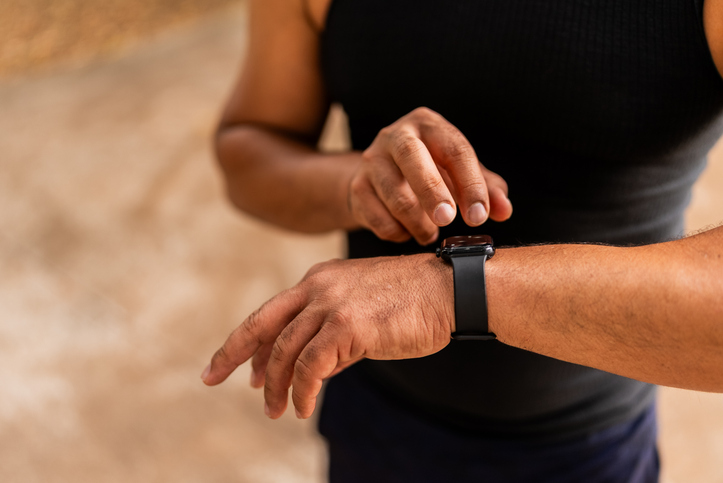
Makers of established wellness products might also consider transitioning into the regulated medical device space, Simpson says. The Apple Watch was successfully transformed into a hybrid device that contains both general wellness tools and clinically cleared medical device software, he offers as an example.
Apple partnered with major medical institutions to launch some of the largest digital health studies in medical history. Its smartwatch now features a single-lead electrocardiogram, irregular heart rhythm notifications, atrial fibrillation history tracking, and sleep apnea alerts, helping Apple sustain a dominant share of the wearable market. The overall product, including wellness features, would likely be viewed as more valuable with the addition of validated medical device functions, says Simpson.
But before moving toward specific disease claims, he reiterates that companies should talk to the FDA. Apple reportedly spent years in close collaboration with the agency to co-author how consumer tech companies are regulated.
Product Framing
Popularity of wellness-type markers are tied to growing interest in enhancing longevity, Simpson says. These most recently include biological markers reflecting how specific nutrient-rich eating patterns alter an individual’s aging trajectory.
This is also an area where the distinction between wellness and medical device functions can get a little tricky, says Simpson. It all rests on product framing. If the intended use is for improving health and well-being without mentioning a specific disease, and the biomarker doesn’t have a strong diagnostic tie, it likely falls into the wellness lane.
“[But] don’t assume if you have a wellness-intended use that you can just go ahead and market something as wellness,” he again emphasizes. At a minimum, companies should engage with regulatory professionals to determine the best FDA pathway to follow, which may or may not be the one that is less costly and shorter in duration.
“Understand what claims you’re trying to make about your device and whether that meets the wellness standards,” says Friedland. “My belief is that any device should have some [associated] data … whether it’s for the FDA or for advertising and labeling to support its proper use.” Product credibility will of course be enhanced if the supporting evidence matches the intended claim, population, and use setting, she adds.
About the Author: Allison Proffitt

Also on Integrative Practitioner

The Breathtaking New Cure for Chronic Insomniacs
Contributed Commentary by Barry Krakow, MD October 22, 2026 | Chronic insomnia (difficulty falling asleep or staying asleep) is a...

Music Therapy Proves Effective for Post-Treatment Cancer Survivors
By Lauren Kells October 20, 2026 | Although cognitive behavioral therapy (CBT) has long helped cancer patients manage anxiety and...

Should Peptide Scientists Ignore the Peptide Craze?
By Judy Myers October 14, 2026 | Unregulated injectable peptides promising better aging, better healing, and better sex are being consumed...

Exercise’s Impact on Cognition, Molecular Aging
By Allison Proffitt October 8, 2026 | Exercise didn’t sharpen thinking in breast cancer survivors, but it may have slowed...

Sugar May Supercharge Antibiotic Gut Damage Hospital Study Suggests
By Allison Proffitt October 6, 2026 | Cutting back on sweets while taking antibiotics could help protect the gut’s bacterial...