








Holistic approaches to treating restless legs syndrome
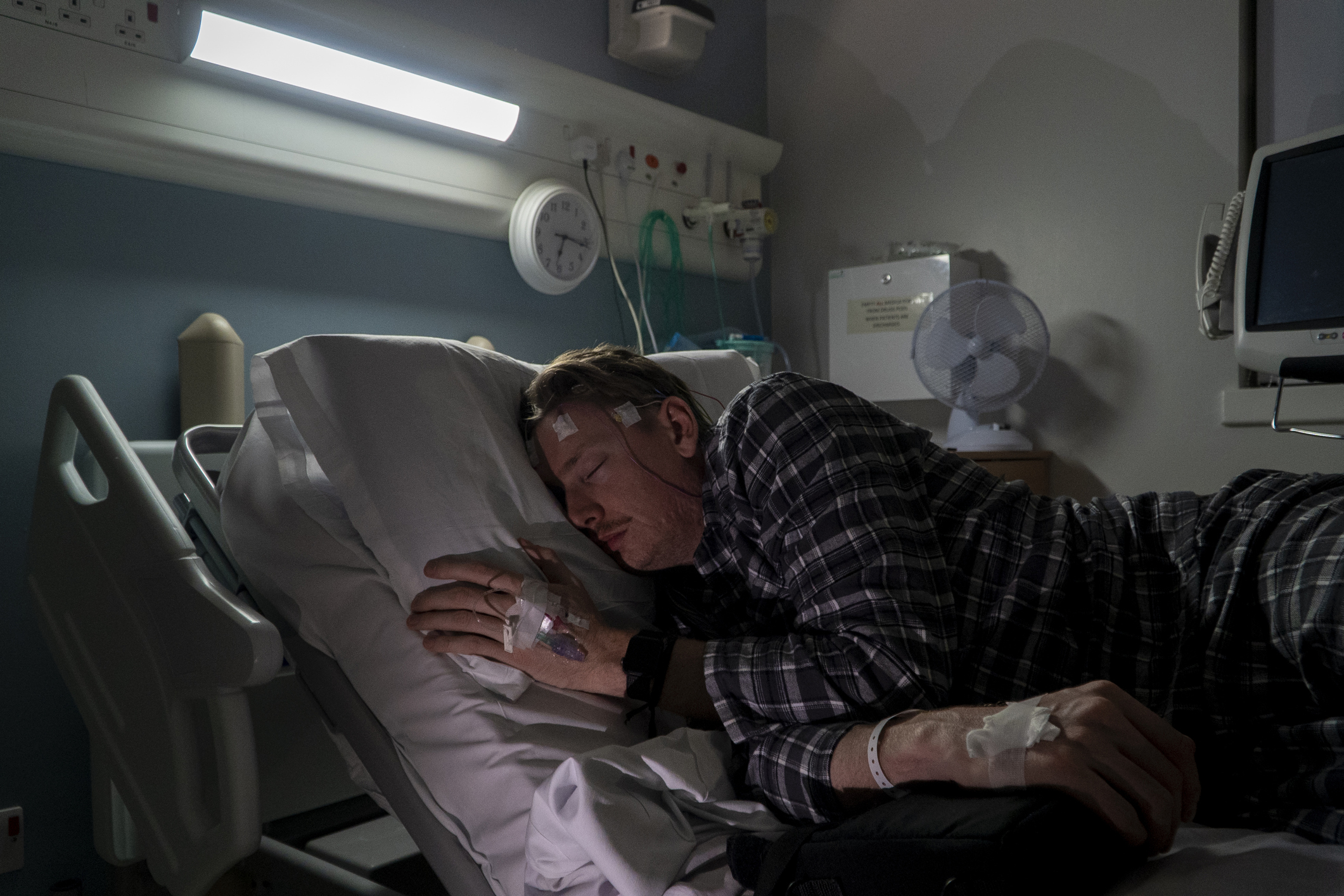
Photo Cred: Kristin Vogt/Pexels
By Catherine Darley, ND
I recently had a patient, a 57-year-old man who, every evening at about 7 p.m., started feeling antsy, like he had to move his legs. He said he found it impossible to sit still, and while standing shifted his weight from one foot to the other. His usual routine was to go for a 45-minute race walk in the hours before bed, to help fatigue his legs enough so he can fall asleep more easily. Without the walk, he said he felt restless, waking up after 90 minutes only to use an exercise bike until he felt tired enough to fall back asleep.
This patient is one of the 10 percent of people who suffers from Willis-Ekbom Disease, also known as restless legs syndrome (RLS). Diagnostic criteria include an urge to move the legs that can be irresistible and associated with an uncomfortable sensation in the legs and arms. This urge is typically worse during inactivity, occurs primarily in the evening, and is relieved by movement. The symptoms aren’t caused by another disorder, and they cause distress, sleep challenges, or impairment of daytime functioning. People with RLS have disturbed sleep, which is often the most distressing symptom.
RLS is important to treat for several reasons. First, because of the distress, sleep disruption, and daytime impairment in occupational, educational, social, and behavioral functioning, which can decrease overall quality of life. Secondly, RLS is associated with other disorders, including irritable bowel syndrome, mental health conditions, and possibly cardiovascular disease. RLS is more prevalent in both children and adults who have attention-deficit hyperactivity disorder (ADHD). In children with ADHD, the rate of RLS is 18 percent.
Women have nearly two times the incidence of RLS, and are more likely to experience it during the third trimester of pregnancy. Unfortunately, for both men and women, RLS tends to progressively worsen over the lifespan. There is a genetic component so multiple family members may suffer from RLS.
The mechanism of disease is interesting, low regional brain iron levels, even with adequate whole body iron levels. People with conditions such as iron-deficient anemia or chronic renal failure will have increased prevalence of RLS. A few medications, namely sedating antihistamines, some antidepressants, and dopamine antagonists, can worsen RLS.
The first line treatment is to optimize iron levels with supplementation. The International Restless Legs Syndrome Study Group has issued guidance of the use of iron treatment. They recommend collecting morning fasting labs including serum iron, ferritin, percentage of transferrin saturation (%TSAT), and total iron binding capacity (TIBC). Note that iron really needs to be at optimal levels, not just within normal lab limits, so oral iron is recommended if ferritin is less than 75 micrograms, unless %TSAT is greater 45. Intravenous iron can be used if oral iron is inappropriate so long as ferritin is less than 100 micrograms.
Practitioners may want to supplement vitamin C to aid in the uptake of iron. This simple first line therapy may be worth trying, once a practitioner has ensured there are no contra-indications to iron supplements for the patient. Additionally, there is some limited research on herbal supplements, such as Valerian root, 800 milligrams before bed. Nutrient supplementation if levels are low in the patient may be considered, especially with magnesium before bed, or vitamins E and D. There are no published dietary treatment guidelines for RLS. However, as integrative practitioners we can use diet to maintain an optimal iron status, by incorporating animal proteins, or iron-rich plant based foods such as dried apricots, large white beans, and spinach.
Exercise can be used to reduce the symptoms, and thereby reduce the need for medication treatment. Clinically, I’ve seen patients get relief with relatively low intensity exercise, such as strolling their neighborhood for 10 minutes in the hours before bed. Others require intensive and extended exercise sessions to calm their symptoms. Some have gotten the relief necessary to fall asleep easily with short 10-minute bursts of exercise such as running the stairs in their home, doing jumping jacks, or riding the stationary bike. Patients may try this if they wake from their first sleep cycle with symptoms.
RLS is typically progressive and people develop tolerance to the medications. Pharmaceutical management has been primarily dopaminergic drugs, which are recommended to keep at a low dose. At this point however alpha2delta ligands are recommended for initial pharmaceutical treatment. If mild augmentation develops, then the dopaminergic dose can be divided or advanced. For cases of severe augmentation, patients can be given an opioid.
As integrative practitioners, understanding the experience of patient with RLS, along with their increased health risks, will help treat them effectively. When RLS is effectively managed, then patients will be able to avoid disrupted sleep, and enjoy the benefits of a good nights’ rest.
References
Allen, R.P. (2015) Restless Leg Syndrome/Willis-Ekbom Disease Pathophysiology. Sleep Medicine Clinic. Retrieved from: https://pubmed.ncbi.nlm.nih.gov/26329430/
Allen, R.P., Picchietti, D.L., Auerbach, M., Cho, Y.W., Connor, J.R., Earley, C.J., Borreguero, D.G., Kotagal, S., Manconi, M., Ondo, W., Ulfberg, J., and Winkelman, J.W. (2018) Evidence-based and consensus clinical practice guidelines for the iron treatment of restless legs syndrome/Willis-Ekbom disease in adults and children: an IRLSSG task force report. Sleep Medicine. Retrieved from: https://reader.elsevier.com/reader/sd/pii/S1389945717315599?token=A9AC870228E9B96FDB183B0E0829DDD0449CA689A5F20513D3F0D225357BE5CA14839B07DD70AC2A979DCE3A85EC498F
American Academy of Sleep Medicine. (2014). International Classification of Sleep Disorders, Diagnostic & Coding Manual, Third Edition.
Bega, D. and Malkani, R. (2016) Alternative treatment of restless legs syndrome: an overview of the evidence for mind-body interventions, lifestyle interventions, and neutraceuticals. Sleep Medicine. Retrieved from: https://pubmed.ncbi.nlm.nih.gov/26847981/
Garcia-Borreguero, D., Silber, M.H., Winkelman, J.W., Hogl, B., Bainbridge, J., Buchfuhrer, M., Hadjigerorgiou, G., Inoue, Y., Manconi, M., Oertel, W., Ondo, W., Winkelmann, J., and Allen, R.P. (2016) Guidelines for the first-line treatment of restless legs syndrome/Willis-Ekbom disease, prevention and treatment of dopaminergic augmentation: a combined task force of the IRLSSG, EURLSSG, and the RLS-foundation. Sleep Medicine. Retrieved from: https://pubmed.ncbi.nlm.nih.gov/27448465/
Montoya, A.C.S., Restrepa, S.C.M., Arias, J.M.C., and Ochoa, W.C. (2018) Prevalence and Clinical Characteristics of the Restless Legs Syndrome (RLS) in Patients Diagnosed with Attention-Deficit Hyperactivity Disorder (ADHD) in Antioquia. International Journal of Psychological Research. Retrieved from: https://pubmed.ncbi.nlm.nih.gov/32612771/
About the Author: CJ Weber

Also on Integrative Practitioner

Dental Danger: Signs of Sleep Breathing Disorders in children and Adults, Learn the Visual Clues
Non-Member Price: $30.00 Member Price: $18.00 – 40% Off for Members Only Add to Cart Presented by: Mark Breiner, DDS,...

Integrative and Comprehensive Approach to Inflammatory Bowel Disease
Non-Member Price: $30.00 Member Price: $18.00 – 40% Off for Members Only Add to Cart Presented by: Ronald Hoffman, MD,...

Measuring Biology vs. Symptomatology: The Fully Integrated Functional Wellness Program
Non-Member Price: $30.00 Member Price: $18.00 – 40% Off for Members Only Add to Cart Presented by: Dane Donohue, DC...

Change Your Genes, Change Your Life
Non-Member Price: $30.00 Member Price: $18.00 – 40% Off for Members Only Add to Cart Presented by: Kenneth Pelletier, PhD,...
Guided Imagery – Efficacious, Portable, Scalable, User-Friendly, Self-Administered
Non-Member Price: $30.00 Member Price: $18.00 – 40% Off for Members Only Add to Cart Presented by: Belleruth Naparstek, ACSW...