









Forest therapy proves beneficial in boosting mental and physical health
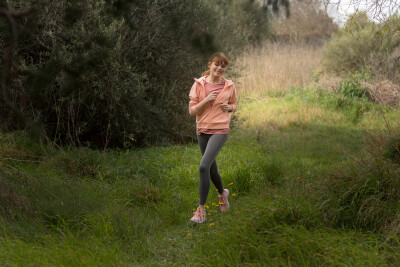
Photo Cred: Jake Melara/Unsplash
By Linda Childers
One of the most effective prescriptions for reducing stress, anxiety, depression, and improving overall health and wellbeing, can be found in nature.
Forest therapy, sometimes called forest bathing, is a practice inspired by the Japanese custom of Shinrin-Yoku, that originated in the 1980s when leaders in Japan noticed a dramatic increase in workers reporting stress-related illnesses. A 2021 study, published in the International Journal of Environmental Research and Public Health, found that forest therapy has become a global trend and combats a variety of physical and mental health conditions.
“Research from around the world has demonstrated that forest therapy contributes to mental and physical wellbeing,” said Melanie Choukas-Bradley, a certified forest therapy guide based in Washington D.C. and author of “The Joy of Forest Bathing: Reconnect with Wild Places and Rejuvenate Your Life” and “Resilience: Connecting with Nature in a Time of Crisis.”
“The mental health benefits include relief from ruminative thinking, which can lead to anxiety and depression, clearer focus, improved mood, increased creativity and imagination and better sleep,” she said.
In addition, Choukas-Bradley noted that research has uncovered numerous physical health benefits: lower blood pressure and cortisol levels, decreased incidents of diabetes, quicker recovery from illness and surgery, and overall boosts to immunity from all types of diseases.
“There’s a growing consensus among most healthcare professionals that time spent immersed in nature and natural beauty is beneficial to health and wellbeing. Many doctors now ‘prescribe’ nature to their patients,” Choukas-Bradley said. “I think the spiritual health benefits may be the most important of all, but they’re harder to measure.”
She described forest-guided therapy as time spent in nature with the extra benefits of slow walking, deep breathing, and immersion in the beauty and wonder of one’s surroundings.
Forest therapy is akin to other mindfulness practices such as meditation, yoga, and tai chi, with the added benefit that it connects participants to their natural surroundings and to others sharing in the experience of a forest bathing walk,” Choukas-Bradley said.
And despite its name, she noted that forest therapy can also be done in a park or a backyard.
“I encourage clients to take even five to 20 minutes to mindfully connect with nature,” Choukas-Bradley said. “I think it’s valuable to go on at least one forest bathing walk with a forest therapy guide to learn some simple methods of nature connection where you can tune in to the beauty and wonder around you—trees, clouds, birds, butterflies—even in the midst of the city.”
While a study reported in Scientific Reports found that two hours a week of nature immersion was optimal for achieving physical and mental health benefits, Choukas-Bradley said her view is that any time spent in nature is beneficial.
“I think the most important thing is to weave nature connection into your daily life. If you have another mindfulness practice such as tai chi, yoga, or meditation, taking it outdoors and combining it with forest therapy magnifies the benefits of each,” she said.
Choukas-Bradley received her training and certification six years ago from the Association of Nature and Forest Therapy (ANFT), a highly regarded forest therapy organization. She now leads field trips, tree tours, and forest therapy walks for the Audubon Naturalist Society, the Smithsonian Associates, and many others.
“I was the first certified forest therapy guide in the [Washington] D.C. -Baltimore area and now we have well over 30 practitioners here,” she said. “I think any integrative practitioner could benefit from either taking forest therapy training themselves or referring their clients to a certified forest therapy guide.”
Healing from emotional trauma
Joy Evans, MSW has a background in trauma healing. She previously led a team at the University of California, Berkeley, that developed healing services, crisis response, and advocacy for students, staff, and faculty, impacted by sexual violence, harassment, intimate partner violence, and stalking. In 2020, she became a certified guide through the ANFT. She now leads sound healing and forest therapy through community workshops, retreats, and individual sessions at her practice in Bainbridge Island, Washington.
“I combine trauma-healing modalities with sound therapy that uses crystal healing bowls and forest therapy as part of a client’s recovery,” Evans said. “You don’t have to be deep in the woods to practice forest therapy, the practice is about the connection and taking the time to walk slowly and take in the sights, including the birds, the trees, and your surroundings.”
According to Evans, forest therapy feels like guided meditation because clients use all their senses to rest the central nervous system promoting balance and restored vitality.
In a busy, high-tech world, Evans said forest therapy gives clients the opportunity to enjoy moments of stillness, while walking typically a mile or less.
“I often accompany clients on forest therapy walks once or twice a month as they learn the practice and I also incorporate forest therapy into the retreats that I offer,” Evans said. “I time each walk so they don’t have to, and once they’ve learned how to slow down and reconnect with nature, they feel comfortable going out on their own and making forest therapy part of their self-care routine.”
About the Author: CJ Weber

Also on Integrative Practitioner

Dental Danger: Signs of Sleep Breathing Disorders in children and Adults, Learn the Visual Clues
Non-Member Price: $30.00 Member Price: $18.00 – 40% Off for Members Only Add to Cart Presented by: Mark Breiner, DDS,...

Integrative and Comprehensive Approach to Inflammatory Bowel Disease
Non-Member Price: $30.00 Member Price: $18.00 – 40% Off for Members Only Add to Cart Presented by: Ronald Hoffman, MD,...

Measuring Biology vs. Symptomatology: The Fully Integrated Functional Wellness Program
Non-Member Price: $30.00 Member Price: $18.00 – 40% Off for Members Only Add to Cart Presented by: Dane Donohue, DC...

Change Your Genes, Change Your Life
Non-Member Price: $30.00 Member Price: $18.00 – 40% Off for Members Only Add to Cart Presented by: Kenneth Pelletier, PhD,...
Guided Imagery – Efficacious, Portable, Scalable, User-Friendly, Self-Administered
Non-Member Price: $30.00 Member Price: $18.00 – 40% Off for Members Only Add to Cart Presented by: Belleruth Naparstek, ACSW...