







Scientists explore whether mushrooms, Chinese herbs may fit into anti-COVID-19 arsenal
Photo Cred: Timothy Dykes/Unsplash
By Judy Packer-Tursman
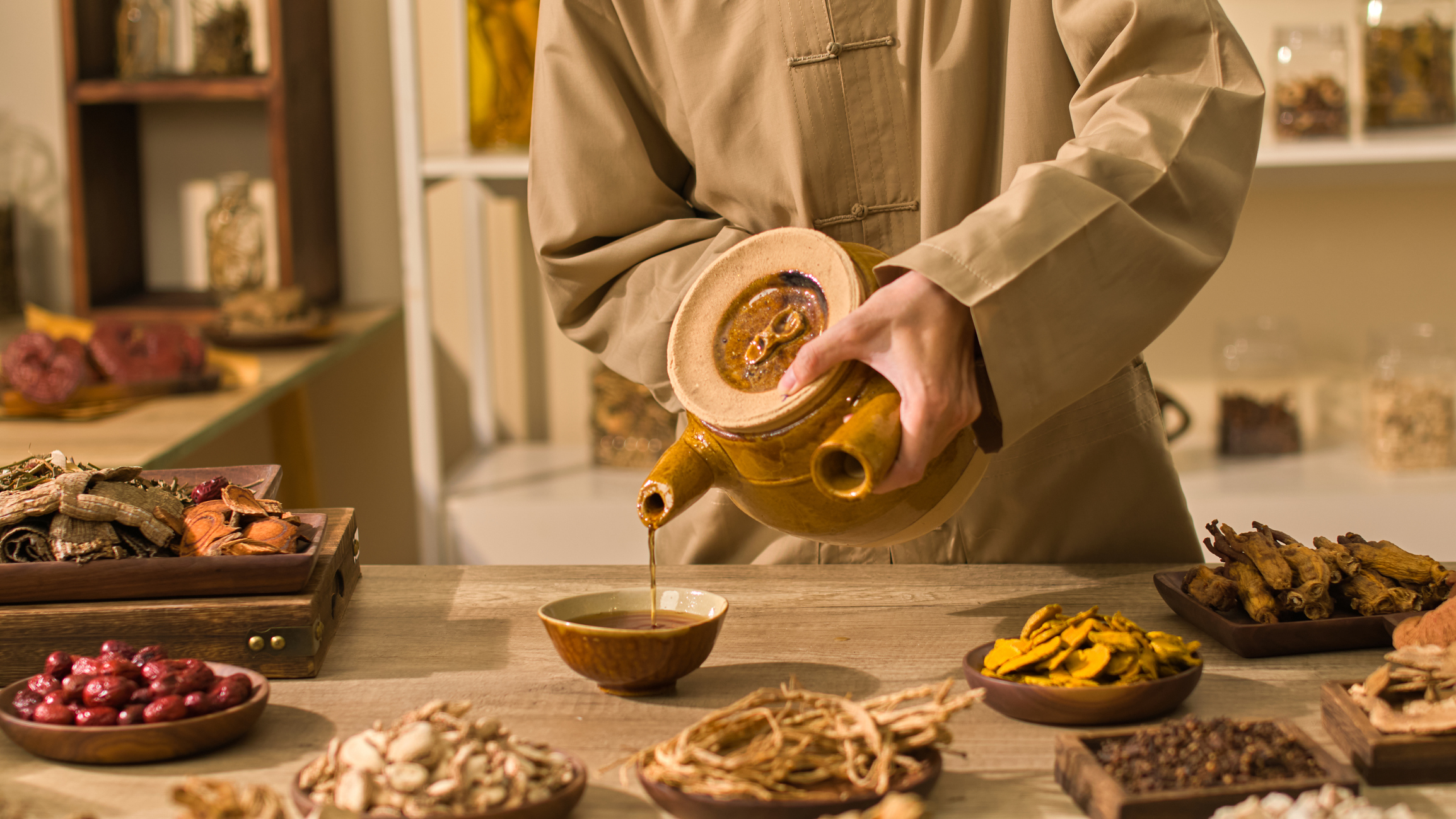
Using what conventional medicine in the United States considers the “gold standard” for objective scientific methodology, University of California (UC) researchers are exploring the use of Chinese botanicals already being widely used in Asia to treat novel coronavirus (COVID-19) patients. Their aim is to investigate whether natural therapeutics may safely reduce the risk of COVID-19-infected individuals becoming severely ill and requiring hospitalization ─ and enhance the body’s immune response to COVID-19 vaccines.
This research falls under the umbrella of the Mushrooms and Chinese Herbs for COVID-19 (MACH-19) trials, a collaboration between the University of California, San Diego (UCSD) and the University of California, Los Angeles (UCLA).
“When COVID-19 was spreading in 2020, we were really frustrated that there was no discussion of Chinese herbal medicine… Nobody was talking about things that had been in use for millennia,” said Andrew Shubov, MD, UCLA’s lead investigator for MACH-19.
As the pandemic ramped up, the federal government focused on investigating the potential use of antiviral medications such as Veklury (remdesivir) to treat COVID-19. “Our research got shut out,” said Shubov, a board-certified integrative medicine physician.
The MACH-19 trials are privately funded, primarily through the UCSD School of Medicine’s Krupp endowment, and no commercial gain is involved, Shubov said.
Shubov credits UCSD’s lead investigator for MACH-19, Gordon Saxe, MD, PhD, MPH, executive director of the Krupp Center for Integrative Research, as having “really put the wind in the sails” on the research. Shubov and Saxe have continued collaborative efforts on the following three randomized, double-blind, placebo-controlled clinical trials for MACH-19, each now in the midst of recruiting 66-odd patients:
- A study evaluating two polypore mushrooms, Fomitopsis officinalis (Agarikon) and Trametes versicolor (Turkey tail), collectively known as FoTv, to use as an adjunct to COVID-19 vaccination in the general population. Researchers aim to see whether these “immunomodulating” mushrooms increase antibody titers more than vaccination alone and decrease vaccine-related side effects.
- A study exploring whether using FoTv to treat COVID-19-positive outpatients who have mild to moderate symptoms will reduce their risk of developing severe disease; and
- A study investigating whether Chinese herbs ─ specifically, a 21-herb formula called modified Qing Fei Pai Du Tang (mQFPD) ─ to treat COVID-19-positive outpatients who have mild to moderate symptoms will reduce their risk of becoming severely ill.
Historically, Shubov said conventional medicine in the U.S. looks to integrative therapies to help treat conditions such as functional pain, but not infectious diseases. Yet, when it comes to viral respiratory diseases, he said Western healthcare practitioners should not have “a blind spot” about medicinal botanicals’ long history.
UC researchers felt the Western standard for evidence-based research was missing and decided to embark on MACH-19 to quash skepticism, Shubov said. The trials are being conducted as “effectively phase 1” safety studies, he said, but investigators are collecting efficacy metrics and anticipate making statements about any trends they find, then moving on to efficacy research involving larger study populations.
Shubiv said the investigators had to obtain U.S. Food and Drug Administration (FDA) approval to use the natural therapeutics as “investigational new drugs” for the MACH-19 treatment studies since the products are being used for purposes beyond those of a dietary supplement. The study looking into whether mushrooms may boost the immune response to COVID-19 vaccination did not require FDA oversight since there is no intent to treat disease. For quality control, he said researchers are using a single batch of botanicals manufactured by Taiwanese company, Sun Ten.
Shubov said he also had to “communicate in some detail” with the Drug Enforcement Administration (DEA) to ensure compliance because mQFPD contains ma huang or herbal ephedra. The FDA banned the sale of ephedra-containing dietary supplements in 2004.
In the vaccine study, the dosage of FoTv or placebo is eight capsules three times daily for four consecutive days. Dosing for the second and third treatment studies is eight capsules of FoTv or mQFPD, respectively, or placebo three times daily for 14 consecutive days. Shubov said using capsules, while perhaps not as good as decoctions, allow the trials to be “blinded” with similar capsules containing placebo.
- Craig Hopp, PhD, deputy director of the National Center for Complementary and Integrative Health’s Division of Extramural Research (NCCIH), said MACH-19 research, while he “wouldn’t consider it groundbreaking,” is “exciting and certainly has gotten a lot of attention that must reflect people think it’s unique.”
Hopp said there was “certainly no effort to shut out natural products” from COVID-19-related research money, citing a few small projects funded by NCCIH. However, though there’s enthusiasm to do these studies, funding is limited.
“Even if they’re overwhelmingly positive, it would be a starting point,” Hopp said. “By the time this trial gets through all the steps it needs to take to show efficacy against COVID-19, hopefully the pandemic is over.”
Hopp agreed that if the natural therapeutics under investigation are found to work well in boosting immunity, “it could be helpful for the next thing, whatever that might be.”
About the Author: CJ Weber

Also on Integrative Practitioner
Measuring Biology vs. Symptomatology: The Fully Integrated Functional Wellness Program
Non-Member Price: $30.00 Member Price: $18.00 – 40% Off for Members Only Add to Cart Presented by: Dane Donohue, DC...

Integrative and Comprehensive Approach to Inflammatory Bowel Disease
Non-Member Price: $30.00 Member Price: $18.00 – 40% Off for Members Only Add to Cart Presented by: Ronald Hoffman, MD,...

Dental Danger: Signs of Sleep Breathing Disorders in children and Adults, Learn the Visual Clues
Non-Member Price: $30.00 Member Price: $18.00 – 40% Off for Members Only Add to Cart Presented by: Mark Breiner, DDS,...
Dietary Needs of the Cognitively Impaired
Non-Member Price: $30.00 Member Price: $18.00 – 40% Off for Members Only Add to Cart Presented by: Laura Rokosz, PhD...
Lifestyle Choices Chart Your Brains Destiny
Non-Member Price: $30.00 Member Price: $18.00 – 40% Off for Members Only Add to Cart Presented by: David Perlmutter, MD,...