




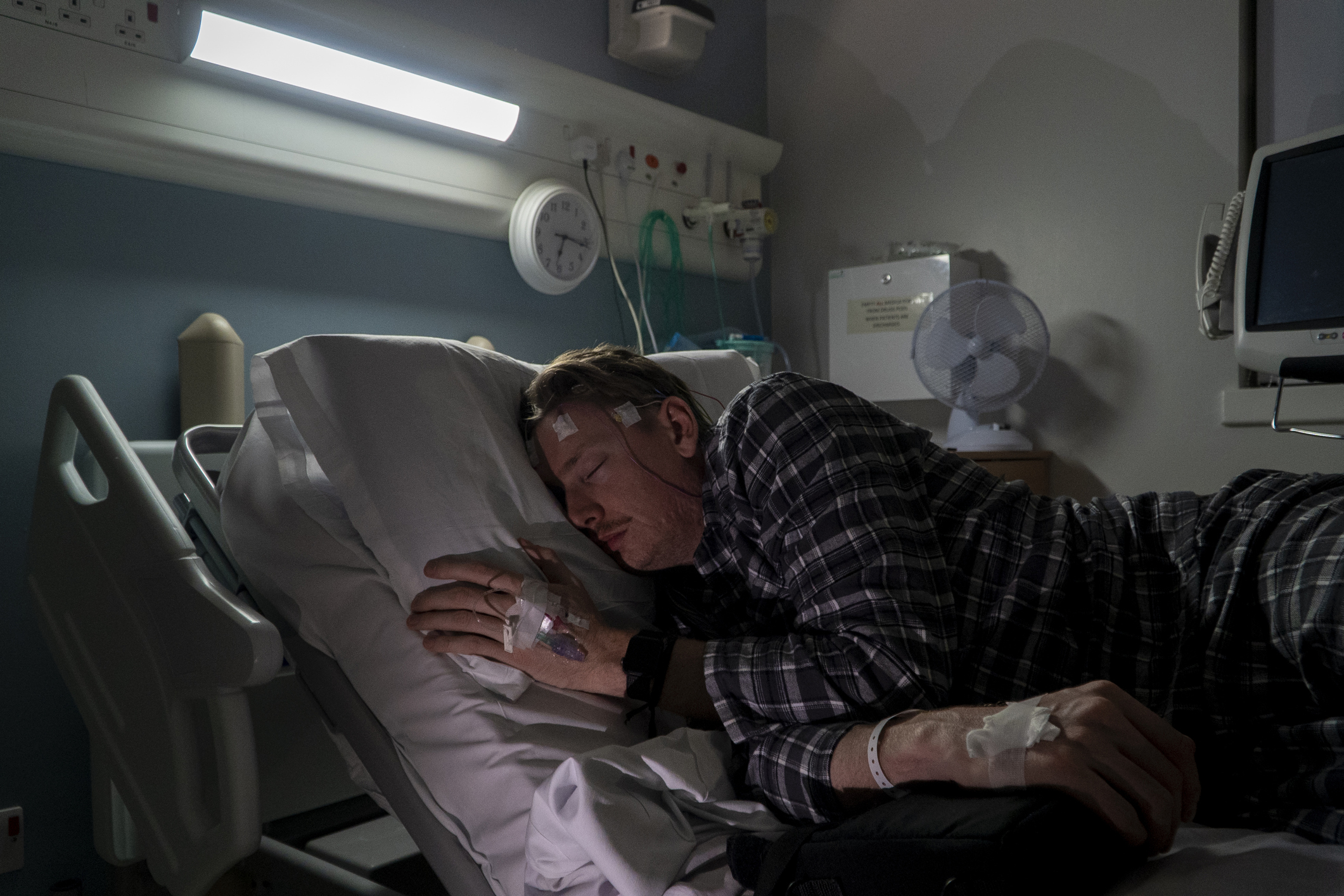





Fall back impacts on human health
Photo Cred: Castorly Stock/Pexels
By Catherine Darley, ND
In a couple of days on Sunday November 1, about a quarter of the world will set clocks back an hour. This abrupt time change puts our internal body clocks out of sync with the environmental day. This dis-synchrony impacts our wellbeing in many ways.
This comes up in my clinic often in the few weeks after each time change. Fortunately, at least in fall, this time change can help those of us who are sleep deprived by giving us an extra hour of sleep. Unfortunately, in the spring, the time change causes real health decrements. Hanxin Zhang of the University of Chicago estimates there are 150,000 adverse incidents in the United States and 880,000 globally associated with the spring change. However, for integrative practitioners, there are many ways to mitigate these effects.
Our circadian system is run by two mechanisms, the central pacemaker and peripheral clocks. The suprachiasmic nucleus (SCN) in the hypothalamus is the central pacemaker. It has its’ own inherent rhythm called tau, which is a little longer than the solar day at 24.2 hours. The SCN is entrained to the solar day primarily by the first burst of bright light we get in the morning. It is because our inherent clock is longer than the solar day that it is easier to adjust to standard time. Standard time is better aligned with our circadian rhythms. Peripheral clocks are run by clock genes that maintain circadian fluctuations in cellular function. Together these two systems keep us operating in rhythm with the earth.
The abrupt loss of an hour of sleep in the spring by millions of people gives the opportunity for research to capture the acute impact of an hour of sleep loss. Cardiovascular effects are among the most significant. There is a significant increase of 4 to 29 percent in acute myocardial infarction the week after switching to Daylight Savings Time. There is also an increase in stroke, and hospital admissions for acute atrial fibrillation.
Mood disorders increase during both the spring and fall transition. Some interesting findings outside of health, including stock market volatility and more severe sentencing by judges, indicate that reasoning is also affected. Knowing this as integrative healthcare providers we can increase monitoring of patients at risk for mood disturbances.
Motor vehicle crashes rise significantly due to the sleepiness induced by the hour of sleep loss. Sleep-related collisions are more likely to be fatal than drunk driving collisions, although drunk driving gets more press. When a driver is asleep, even with a microsleep, they are unable to respond to danger in any way, so they will often hit the obstacle straight on, without the faulty application of breaks or swerving seen in drunk driving. Other types of injury also increase. It often takes a person up to two weeks to fully adjust to the new time.
The health impact of changing back and forth to Daylight Savings Time is so profound that the American Academy of Sleep Medicine released a position statement soon to be published in the Journal of Clinical Sleep Medicine. In this statement, they conclude “these seasonal time changes should be abolished in favor of a fixed, national, year-round standard time.”
Until that improvement is made, practitioners will need to help our patients manage their own health during these transitions. In the fall, getting that hour of extra sleep gives patients the opportunity to experience what it is like to be better rested. It is worth following up with patients by making a plan to get more sleep on a routine basis and shifting lifestyles to allow sufficient sleep.
Although people often talk about how many hours of sleep they do best with, how much daytime activity goes along with that sleep is often overlooks. For instance, if your patient needs eight hours of sleep, there are 16 hours of the day that can be filled with activity. However, if that patient has committed to 17 or 18 hours of activity, then their lifestyle is reinforcing their chronic sleep deprivation. It’s not until they intentionally remove these obstacles by reducing their daytime commitments that they will routinely get adequate sleep.
In spring, the best strategy to reduce the negative effects of shifting to Daylight Savings Time is to start shifting sleep gradually. For instance shifting your patients sleep schedule 10 minutes earlier for the six nights before. This allows the body to gradually shift, rather than abruptly be thrown into the new time. The springtime change will take place mid-March in 2021.
Practitioners should put a reminder in their schedules to talk about the upcoming time change with their patients. If possible, include it in your patient newsletter so they can make this gradual shift and protect their health from the health effects of abrupt time change.
References
Manfredini, R. (2018) Daylight saving time, circadian rhythms, and cardiovascular health. Internal and Emergency Medicine. Retrieved from: https://pubmed.ncbi.nlm.nih.gov/29971599/
Rishi, M. (2020) Daylight saving time: an American Academy of Sleep Medicine position statement. JCSM. Retrieved from: https://jcsm.aasm.org/doi/10.5664/jcsm.8780
Zhang, H. (2020) Measurable health effects associated with the daylight saving time shift. PLOS Computational Biology. Retrieved from: https://journals.plos.org/ploscompbiol/article?id=10.1371/journal.pcbi.1007927
About the Author: CJ Weber

Also on Integrative Practitioner

Measuring Biology vs. Symptomatology: The Fully Integrated Functional Wellness Program
Non-Member Price: $30.00 Member Price: $18.00 – 40% Off for Members Only Add to Cart Presented by: Dane Donohue, DC...

Integrative and Comprehensive Approach to Inflammatory Bowel Disease
Non-Member Price: $30.00 Member Price: $18.00 – 40% Off for Members Only Add to Cart Presented by: Ronald Hoffman, MD,...

Dental Danger: Signs of Sleep Breathing Disorders in children and Adults, Learn the Visual Clues
Non-Member Price: $30.00 Member Price: $18.00 – 40% Off for Members Only Add to Cart Presented by: Mark Breiner, DDS,...

Dietary Needs of the Cognitively Impaired
Non-Member Price: $30.00 Member Price: $18.00 – 40% Off for Members Only Add to Cart Presented by: Laura Rokosz, PhD...

Lifestyle Choices Chart Your Brains Destiny
Non-Member Price: $30.00 Member Price: $18.00 – 40% Off for Members Only Add to Cart Presented by: David Perlmutter, MD,...