







Integrative approaches to treating obsessive-compulsive disorder (OCD)
By Brittany Vargas
An estimated one in 100 American adults suffer from obsessive-compulsive disorder (OCD), a disease characterized by repetitive, intrusive thoughts and anxiety-fueled compulsions, according to a clinical practice review published by The Anxiety and Depression Association of America.
Yet, as scientists uncover the complex factors that give rise to the disorder, many OCD patients don’t get effective treatment, or even the right diagnosis, according to Roseann Capanna-Hodge, LPC, CMHIMP, BCN, founder of The Global Institute of Children’s Mental Health and creator of the BrainBehaviorReset method.
“People come to me and may have seen a dozen providers, especially if they’ve been in [psychiatric] hospitals,” said Capanna-Hodge. “I just treated a young man who was diagnosed with psychosis, and he actually has OCD.”
Capanna-Hodge said OCD is one of the most treatment-resistant mental health conditions, largely because it’s often misdiagnosed.
“It’s an internal disease,” she said. “So, until you get in there, you don’t realize the kinds of dark thoughts people have or how much they’re having those intrusive thoughts. We have this belief that OCD is only about hand-washing, checking, and other observable behaviors. But those aren’t as common as straight intrusive thinking.”
James Greenblatt, MD, functional psychiatrist and Founder of Psychiatry Redefined said Cognitive-Behavioral Therapy (CBT) and medications, while widely used to treat OCD, have significant limitations.
“CBT has quite consistently demonstrated an efficacy rate of about 75 percent,” he said. “While 75 percent certainly something to applaud, we cannot ignore its implications. That if 75 percent of OCD patients are responsive to CBT, that means that 25 percent of patients are .”
Additionally, medications work for seven out of ten OCD patients, but they can have significant side effects and only reduce symptoms by an average of half, he said.
Treating the body and the mind
As a functional psychiatrist, Greenblatt said he honors “all factors that may be contributing to mental illness, whether biological, psychological, environmental, or some combination of these.”
“[Functional psychiatry] adheres to a model of treatment based on the concept of biochemical individuality,” he said.
Additionally, he said he uses tried-and-true techniques like CBT, but only after addressing the needs of the body, specifically the brain and the gut.
“I find that rebalancing biochemistry and nutrition is a critical prerequisite to other, more psychologically-oriented interventions,” Greenblatt said. “A patient whose brain is not functioning optimally due to, say, multiple severe nutritional deficiencies, is likely not going to reap significant benefits from therapy.”
As low serotonin is implicated with OCD, he said his nutritional interventions include supplements that support serotonin production, such as cofactors for enzymes that create serotonin, amino acid precursors to serotonin, and direct precursors to serotonin, like 5HTP.
He said his approach also acknowledges the deep connection between the gut microbiome and mental health.
“A significant percentage [of my patients with OCD] present with some level of dysbiosis, a disturbance in the ratio of symbiotic-pathogenic microbe species in the gut,” he said. “Testing often reveals that many such patients suffer from high 3-(3-hydroxyphenyl)-3-hydroxypropionic acid)”
Treating high levels of HPHPA involves a regimen of high-dose probiotics plus pulsed antibiotics if needed, he said. Nourishing the body makes it easier to nurture a mind held captive by OCD, he said, adding that both aspects of treatment are required.
“Nutritional rebalancing alone cannot address longstanding traumas,” he said, “nor sort through complex issues related to self-image.”
Calming an agitated brain
Capanna-Hodge treats OCD through a combination of Exposure Response Prevention (ERP) and tools like neurofeedback, biofeedback, and Pulsed Electromagnetic Field Stimulation (PENS). She said these techniques help her pull patients out of excessively activated sympathetic nervous system states and helps them regulate distressing emotions and sensations.
“My work is all about calming the brain,” she said.
She cites ERP as the gold standard in psychological treatments for the disorder, noting that it involves safely and strategically exposing patients to the anxiety-provoking stimuli that’s the root of their obsessions. Exposures might start off small as the patient learns to tolerate uncomfortable sensations. They then gradually learn to tolerate more challenging stimuli.
From a brain perspective, she said, it’s about moving away from patterns of hyperarousal and the temporary relief patients get through compulsions.
“It teaches the brain to break that habit,” she said. “If you don’t break the habit, then you’re going to just keep negatively reinforcing [the behavior and it is] going to occur more.”
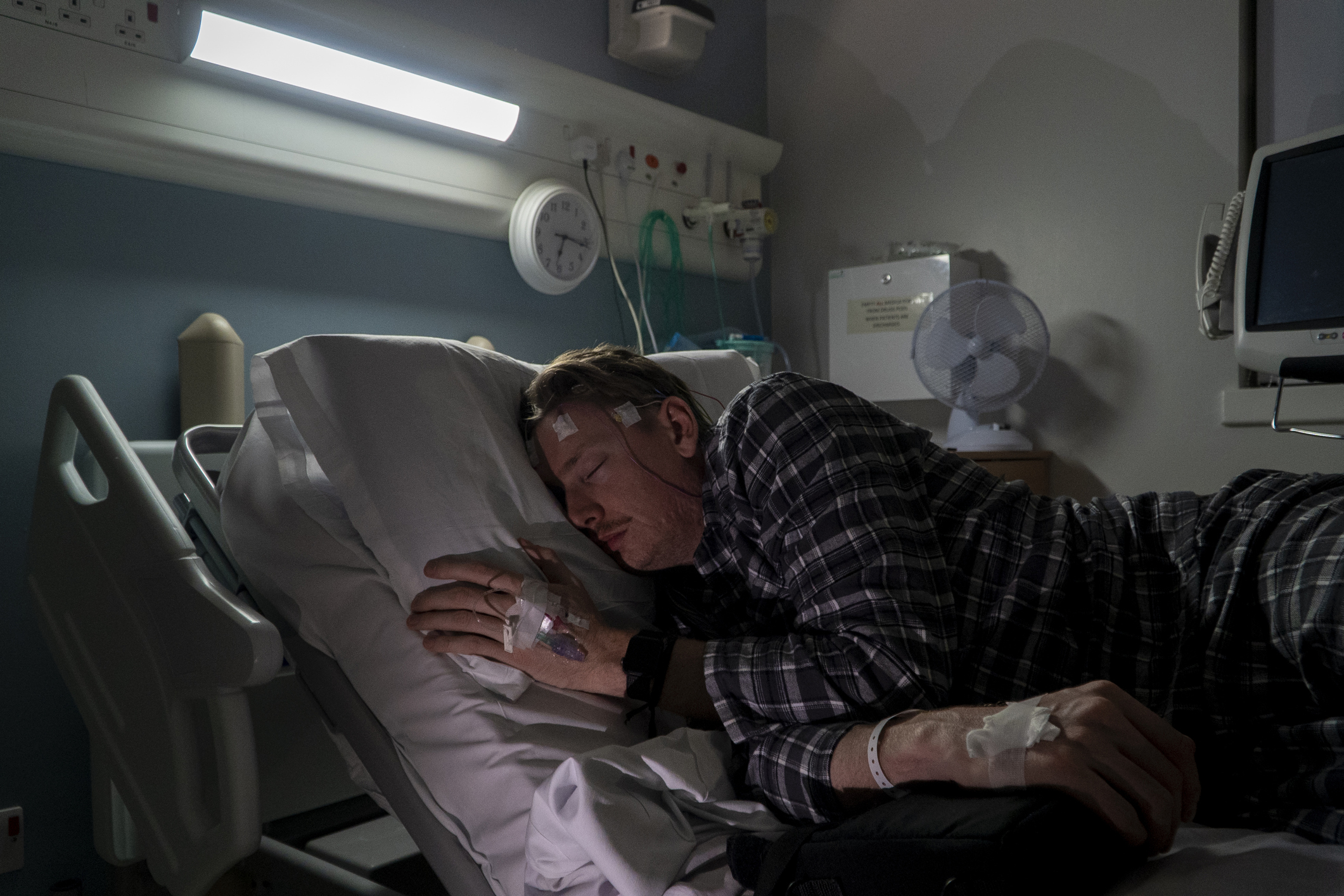
She finds ERP to be especially effective when used in combination with neurofeedback. This technique starts off with a QEEG brain map, where EEG activity is recorded and analyzed. The brain map points to places of overactivity.
“With OCD, you’re always going to have what we call brain hyper-communication, [where the sufferer is] having looping thoughts,” she said.
According to Capanna-Hodge, neurofeedback involves training patients to enhance or reduce specific brain wave patterns. As these changes are reinforced, new electrical activity is produced in the brain, and the brainwave activity is “shaped” toward a more desirable, regulated performance, she said.
She said she also uses , which helps patients observe and regulate their autonomic functions like heart rate, breath, skin conductance, and body temperature.
“In a session, a biofeedback sensor measures breath and heart rate while the patient is exposed to an OCD trigger. This visual monitor is a resource that gives a person concrete data on exactly what is activating them and what helps calm their brain,” she said.
Using acupuncture and lifestyle intervention
Jamie Bacharach Dipl.Ac, head of practice at Acupuncture Jerusalem Clinic, helps OCD patients with a combination of acupuncture, lifestyle modifications, and Chinese herbal medicine.
“Acupuncture represents a virtually painless, no-risk, extraordinarily high reward option for any individual who is seeking treatment for OCD,” she said.
A 2009 study published in Journal of Nervous and Mental Disease found electro-acupuncture to be an effective modality for treatment-resistant OCD.
When meeting a patient, Bacharach will first do a comprehensive medical history review and assess their symptoms, which may range from classic checking behaviors to repetitive movements like excessive blinking, scratching, or clearing of the throat.
Treatment includes personalized acupuncture sessions alongside recommended changes in sleep patterns, nutrition, or herbal medicine, depending on the specifics of their case. Her recommendations might include:
- Going to bed and getting up at the same time every day to promote better rest, as stress and fatigue can increase OCD symptoms and make it harder to handle them.
- Eating enough protein and whole grains, which have been shown to reduce OCD symptoms.
- Taking Gui Pi Tang, an herbal formula that promotes blood flow to the brain and can promote mental health in general.
- Taking Xiao Yao San, an herbal formula that clears liver qi, the excess of which can exacerbate OCD symptoms via increased irritability, anxiety, and mood swings.
Bacharach firmly believes that alternative medicine can play a significant role in improving the quality of life for OCD patients.
“While modern, conventional medicine works wonders every day, diagnosing and treating OCD is something we do not yet have a firm handle on,” she said. “Pursuing acupuncture treatment for OCD is well worthwhile for anyone who is suffering from its effects — even moderate improvements which fall short of a total cure can be life-changing.”
About the Author: CJ Weber

Also on Integrative Practitioner

Dental Danger: Signs of Sleep Breathing Disorders in children and Adults, Learn the Visual Clues
Non-Member Price: $30.00 Member Price: $18.00 – 40% Off for Members Only Add to Cart Presented by: Mark Breiner, DDS,...

Integrative and Comprehensive Approach to Inflammatory Bowel Disease
Non-Member Price: $30.00 Member Price: $18.00 – 40% Off for Members Only Add to Cart Presented by: Ronald Hoffman, MD,...

Measuring Biology vs. Symptomatology: The Fully Integrated Functional Wellness Program
Non-Member Price: $30.00 Member Price: $18.00 – 40% Off for Members Only Add to Cart Presented by: Dane Donohue, DC...

Change Your Genes, Change Your Life
Non-Member Price: $30.00 Member Price: $18.00 – 40% Off for Members Only Add to Cart Presented by: Kenneth Pelletier, PhD,...
Guided Imagery – Efficacious, Portable, Scalable, User-Friendly, Self-Administered
Non-Member Price: $30.00 Member Price: $18.00 – 40% Off for Members Only Add to Cart Presented by: Belleruth Naparstek, ACSW...