


Strengthening the immune system with sleep
Photo Cred: Burst/Pexels
By Catherine Darley, ND
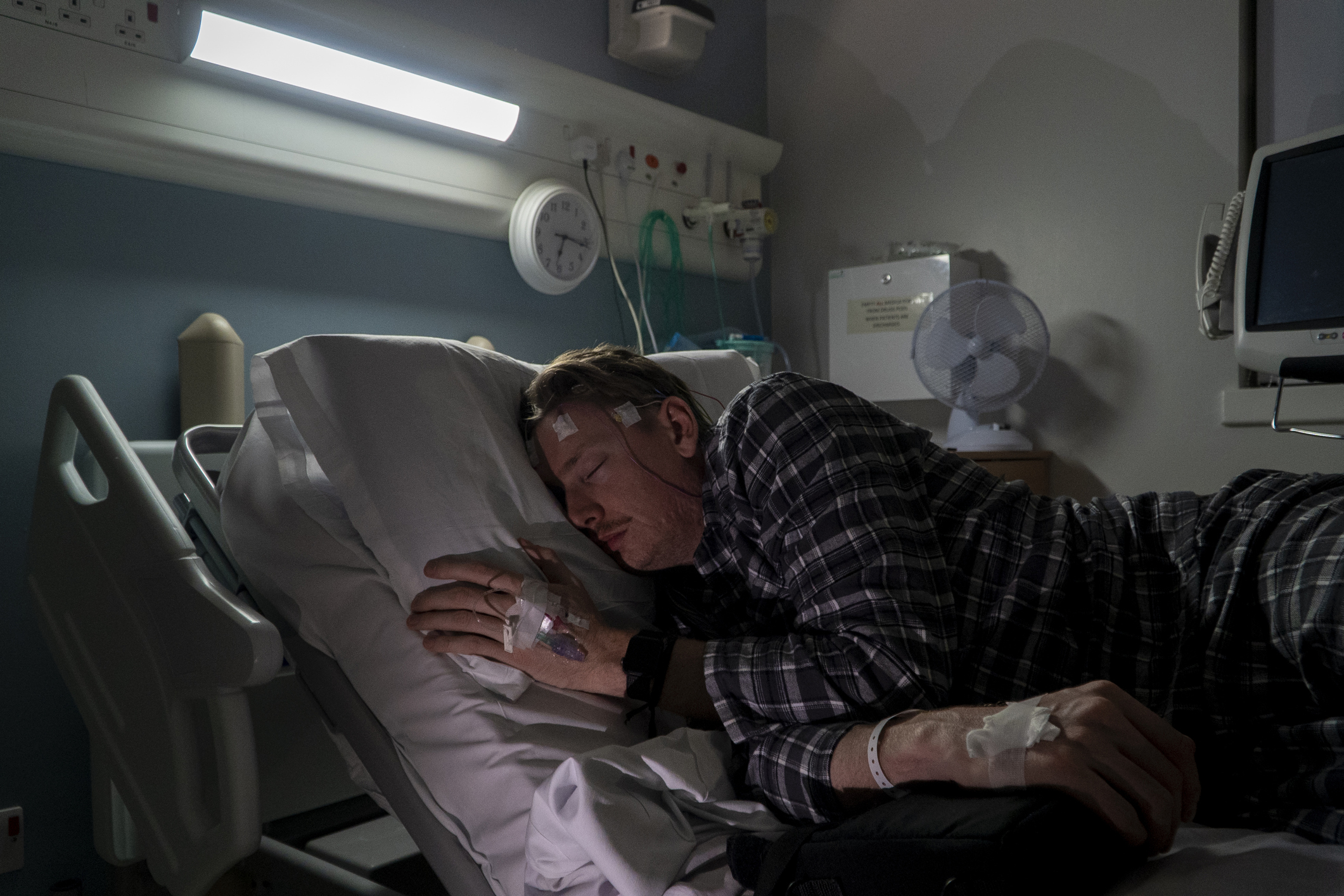
Right now, in this time of the novel coronavirus (COVID-19), both patients and practitioners are worried about their and their loved ones’ health. They are worried about the economy and personal finances. And they are worried about how to prevent getting infected with the virus. Many people take these worries to bed with them, and as a result experience worse sleep. Poor sleep weakens the immune system however, making them more likely to get an infection. It’s a bi-directional relationship – immune activation also impacts sleep.
It’s a common experience that when we are run down, not getting adequate sleep, we are more likely to get sick. Research published in the journal Sleep measured participants’ nightly sleep for a week while they were on their usual schedule. They were then quarantined in a hotel room, where they were exposed to nasal drops of rhinovirus, and monitored for infection and signs of a cold over the next five days. Those people who had been sleeping five to six hours per night were 4.2 times as likely to get sick compared to those who had slept seven hours or more the previous week. This research is particularly important in light of new numbers from 2019 showing that 35.8 percent of Americans get less than seven hours of sleep nightly.
Interestingly, it’s those occupations that are now called on the most during this public crisis who are most likely to get short sleep, with 50 percent of first responders and military, and 45 percent of medical support workers, reporting less than seven hours. Getting so little sleep puts them at greater risk of becoming infected with a virus. Additionally, 34 percent of healthcare workers exposed to COVID-19 have reported insomnia, further complicating the situation as their sleep is further deteriorated, and therefore their immune function.
Sleep plays a role in both innate and adaptive immunity. Vaccinations are used to develop adaptive immunity. Getting reduced sleep for nights before vaccination, or acute total sleep deprivation the night before, have both been shown to reduce antibody titers by about half, compared to those of people who slept their typical seven to eight hours nightly. Although this effect is consistent across studies, there is some discrepancy in how long this persists, and possible gender differences in effect. The effectiveness of vaccination can be so significantly decreased by insufficient sleep that is no longer clinically protective and must be repeated.
An exciting new area of animal research is on the relationship between melatonin and the inflammasome. Remember that melatonin levels change over the lifespan, with children having the highest levels, and seniors the least, at about 30 percent or less than during childhood. The NLRP3 inflammasome is part of innate immunity, modulating secretion of proinflammatory cytokines IL-1beta and IL18, and caspase 1 activation. In mice, there is a feedback loop between melatonin and the NLRP3 inflammasome, suggesting that melatonin may be an effective therapeutic tool for inflammatory airway diseases. Further research has induced acute lung injury in mice, and then treated with intra-tracheal melatonin. The result was decreased infiltration of neutrophils and macrophages into the lung. Just last month this research thread was extended by giving a melatonin receptor agonist to rats after ventilator induced injury. The authors found that there was a reduction in both lung edema and inflammatory cytokines in the lung fluid after treatment. This line of research may provide therapeutic hope as COVID-19 patients struggle with acute respiratory distress syndrome, and the challenges of ventilator treatment.
The “sick behavior” we see with infections changes our sleep also. The fatigue and extra sleep are a way to conserve energy, which is used to fight the infection. Animal research suggests that cytokines IL-1 and TNF are particularly important, and that pro-inflammatory cytokines increase NREM sleep, while anti-inflammatory cytokines reduce NREM sleep. However, human research has not been as clear, with some evidence showing the opposite, or that pro-inflammatory activation increases sleep. During infection, slow wave sleep (NREM) is increased and intensified, with REM sleep decreases.
At this time, your patients may be under stay-at-home or shelter-in-place orders. Some research out of China has shown that those people with the least social capital felt the most stress and anxiety, which in turn worsened sleep. Conversely those with the most social capital slept the best. The connection between sleep and loneliness is well-established, which you can see a more extensive article here on Integrative Practitioner. For holistic health, encourage patients to maintain social contact with their entire community, whether they are able to meet in person.
How can we use sleep to improve immune resilience? First, from a preventive standpoint, make sure patients are getting at least seven to eight hours of sleep nightly, to boost innate immunity. Getting optimal sleep will also improve emotional regulation, enabling patients to cope better with stress. Allow their melatonin to reach optimal levels by dimming the lights and eliminating all blue light for the hour before bed and sleeping in a dark room. Educate your patients about the value of getting bright light, preferably outside, for at least 20 minutes first thing in the morning to improve sleep and increase nocturnal melatonin levels.
If your patient becomes ill, encourage lots of rest and sleep. Keep a routine of regular mealtimes and daytime wakefulness to promote nocturnal sleep and avoid circadian disruption. Practitioners may want to recommend physiologic dosing of melatonin to help with sleep, or possibly a higher dose for the anti-inflammatory effects. Use all other integrative medicine tools to improve sleep, which will help in fighting infection.
References
Besedovsky, L., Lange, T., and Haack, M. (2019) The sleep-immune crosstalk in health and disease. Physiological Reviews. Retrieved from: https://www.ncbi.nlm.nih.gov/pmc/articles/PMC6689741
Khubchandani, J. and Price, J.H. (2019) Short sleep duration in working American adults 2010-2018. Journal of Community Health. Retrieved from: https://doi.org/10.1007/s10900-019-00731-9
Lai, J., Ma, S., Wang, Y., Cai, Z., Hu, J., Wei, N., Wu, J., Du, H., Chen, T., Li, R., Tan, H., Kang, L., Yao, L., Huang, M., Wang, H., Wang, G., Liu, Z., and Hu, S. (2020) Factors associated with mental health outcomes among health care workers exposed to coronavirus disease 2019. JAMA Open Network. Retrieved from: https://www.ncbi.nlm.nih.gov/pmc/articles/PMC7090843/
Prather, A.A., Janicki-Deverts, D., Hall, M.H., and Cohen, S. (2015) Behaviorally assessed sleep and susceptibility to the common cold. Sleep. Retrieved from: https://www.ncbi.nlm.nih.gov/pmc/articles/PMC4531403/
Wu, G.C., Peng, C.K., Liao, W.I., Pao, H.P., Huang, K.L., and Chu, S.J. (2020) Melatonin receptor agonist protects against acute lung injury induced by ventilator through up-regulation of IL-10 production. Respiratory Research. Retrieved from: https://www.ncbi.nlm.nih.gov/pubmed/32143642
Wu, H., Zhao C., Xie, Q., Xu, J, and Fei, G. (2020) TLR2-melatonin feedback loop regulates the activation of NLRP3 inflammasome in murine allergic airway inflammation. Frontiers in Immunology. Retrieved from: https://www.frontiersin.org/articles/10.3389/fimmu.2020.00172/full
Xiao, H., Zhang, Y., Kong, D., Li, S., and Yang, N. (2020) Social capital and sleep quality in individuals who self-isolated for 14 days during the coronavirus disease 2019 (COVID-19) outbreak in January 2020 in China. Medical Science Monitor. Retrieved from: https://www.ncbi.nlm.nih.gov/pmc/articles/PMC7111105/
Zhang, Y., Li, X., Grailer J.J., Wang, N. Wang, M. Yao, J., Zhong, R., Gao, G.F., Ward, P.A, Tan, D. Li, X. (2016) Melatonin alleviates acute lung injury through inhibiting the NLRP3 inflammasome. Journal of Pineal Research. Retrieved from: https://onlinelibrary.wiley.com/doi/abs/10.1111/jpi.12322
About the Author: CJ Weber

Also on Integrative Practitioner

Dental Danger: Signs of Sleep Breathing Disorders in children and Adults, Learn the Visual Clues
Non-Member Price: $30.00 Member Price: $18.00 – 40% Off for Members Only Add to Cart Presented by: Mark Breiner, DDS,...

Integrative and Comprehensive Approach to Inflammatory Bowel Disease
Non-Member Price: $30.00 Member Price: $18.00 – 40% Off for Members Only Add to Cart Presented by: Ronald Hoffman, MD,...

Measuring Biology vs. Symptomatology: The Fully Integrated Functional Wellness Program
Non-Member Price: $30.00 Member Price: $18.00 – 40% Off for Members Only Add to Cart Presented by: Dane Donohue, DC...

Change Your Genes, Change Your Life
Non-Member Price: $30.00 Member Price: $18.00 – 40% Off for Members Only Add to Cart Presented by: Kenneth Pelletier, PhD,...
Guided Imagery – Efficacious, Portable, Scalable, User-Friendly, Self-Administered
Non-Member Price: $30.00 Member Price: $18.00 – 40% Off for Members Only Add to Cart Presented by: Belleruth Naparstek, ACSW...