





Integrative Medicine’s $30-Million Philanthropic Jump-Start
By John Weeks
The Bravewell Collaborative Strategic Investments Transform Medicine
by John Weeks, Publisher/Editor of The Integrator Blog News and Reports
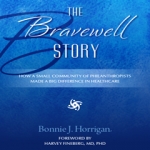 The cover quote on The Bravewell Story, a new book documenting a driving force in the history of integrative medicine, features presidential candidate Hillary Rodham Clinton: “The Bravewell Collaborative’s role in establishing a new way to think about health and medicine and shining a light on all the possibilities therein is an example of what philanthropy is capable of accomplishing at its very best.”
The quote speaks to the access and clout of the group that came together to promote a concept that was only coined in the mid-1990s: “integrative medicine.” Compared to “alternative” and “holistic,” “integrative” had a relatively unchallenging consonance with the dominant school of medicine. Popularized by author Andrew Weil, MD at his University of Arizona base, the movement began to gather steam. It took off a few years later when a group of mostly female philanthropists propelled its movement across North America and, in some cases, around the world.
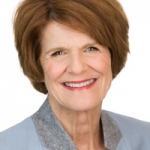 The Bravewell Story, authored by long-time Bravewell director and media consultant Bonnie Horrigan, documents a series of profoundly impactful strategic investments. These flowed from a continuously fluctuating group in the decade and a half leading to the Bravewell Collaborative’s recent sun-setting. Led by psychologist Penny George (pictured right) and Christy Mack, the group:
- Invested millions to convene in 1999-2001 and continue to back the Integrative Consortium for Integrative Medicine and Health. They supported the core-competencies in integrative medicine that were published in the esteemed Academic Medicine.
- Developed the Bravewell Fellowship Program which brilliantly established the Fellowship in Integrative Medicine at the University of Arizona as the standard of education for medical delivery organization leadership in the emerging field. The fellowship facilitated the uptake of integrative fellows across North America.
- Raised $4-million to sponsor the Bill Moyers-hosted PBS special “The New Medicine.”
- Conceived and pooled $445,000 to back the 2009 Institute of Medicine Summit on Integrative Medicine and the Health of the Public which created the largest and most diverse meeting in IOM history.
- Invested in a practice-based research network, the Bravewell Clinical Network, BraveNet, and a major outcomes project, PRIMIER, to help make the scientific case for integrative medicine outcomes.
- Set the stage for a proliferation of stronger and more confident guidance of new programs through the $1.4-million Bravewell Leadership in Integrative Healthcare program at Duke University.
All totaled, over $30-millions of philanthropic funds were raised, targeted and distributed through the Bravewell Collaborative to accomplish its goals. Other key long-time Bravewell leaders who were present at the end included Michele Mittelman, RN, MPH; Blythe Brenden; Lu and Ann Lovell; Sherry Lund; Janet and Barry Lange; and Bill Sarnoff, among others.
A remarkable characteristic of the group is captured in the statement with which Horrigan begins the last chapter: “Bravewell formed in 2002 with the intention that one day it would no longer exist.” Founding president Penny George characterized their impact this way: “We weren’t the founders of the field. But we arrived at the right time with philanthropic help […] that gave the field of integrative medicine increased credibility, which in turn had its own ripple effects.
 Comment: The leaders credit their success in part to “vetting [their] partners well” as Mack (pictured left), the second and final president, put it: “Identifying and engaging the right people has always been key to Bravewell’s success.” To Bravewell this meant, with minor exceptions, choosing to work with and through medical doctors in academic medical settings. Chiropractors, naturopathic physicians, licensed acupuncturists and the other licensed “CAM” professions and the work of their organizations to foster an integrative health and medicine future did not make the grade.
My single significant concern with Bravewell has continuously been that, while they promoted a new model of care, they did so while upholding a vertical, top-down, MD-dominant hierarchy. Strategically, the “other” consortium with the “CAM” fields, the Academic Collaborative for Integrative Health, did not merit consideration. The policy-related interprofessional Integrative Health Policy Consortium also failed to make the grade. Bravewell’s exclusiveness, given its power as a donor, sometimes fostered a chill between the two academic consortia.
What might a more inclusive view have created? Was Bravewell’s strategic “CAM-ectomy” required for their advances? Or was exclusion merely emblematic of a cultural-socio-economic preference? Perhaps one or more of the members will now chose to move independently to help propel these other critically important drivers of success for an integrative future.
The sub-title of the book is How a Small Community of Philanthropists Made a Big Difference in Healthcare. As Bravewell’s sun sets, a fair assessment would be that integrative medicine’s sun is not yet high in the sky. The big difference in medicine is still ahead. All in all, though, no question: Nice job. It’s hard to think about this last 15-year stretch without your identification of, and leadership on, multiple remarkably powerful strategic initiatives. Thank you heartily for choosing to spend your resources, your time, your energies, and your relationships in this work! You have certainly made big differences for all of us in the integrative health and medicine field.
About the Author: CJ Weber

Also on Integrative Practitioner

Dental Danger: Signs of Sleep Breathing Disorders in children and Adults, Learn the Visual Clues
Non-Member Price: $30.00 Member Price: $18.00 – 40% Off for Members Only Add to Cart Presented by: Mark Breiner, DDS,...

Integrative and Comprehensive Approach to Inflammatory Bowel Disease
Non-Member Price: $30.00 Member Price: $18.00 – 40% Off for Members Only Add to Cart Presented by: Ronald Hoffman, MD,...

Measuring Biology vs. Symptomatology: The Fully Integrated Functional Wellness Program
Non-Member Price: $30.00 Member Price: $18.00 – 40% Off for Members Only Add to Cart Presented by: Dane Donohue, DC...

Change Your Genes, Change Your Life
Non-Member Price: $30.00 Member Price: $18.00 – 40% Off for Members Only Add to Cart Presented by: Kenneth Pelletier, PhD,...

Guided Imagery – Efficacious, Portable, Scalable, User-Friendly, Self-Administered
Non-Member Price: $30.00 Member Price: $18.00 – 40% Off for Members Only Add to Cart Presented by: Belleruth Naparstek, ACSW...