





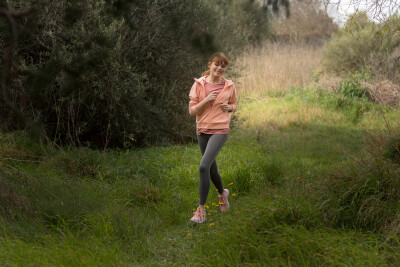
Encouraging patients in meaning and purpose for positive living
By Lorraine Gahles-Kildow, PhD
To have the personality trait or state of openness allows us to avail ourselves of new experiences and new possibilities. These types of people love learning, usually have great imaginations and are ever curious about the world around them. But what if openness is not a patient’s innate trait or tendency? Can you help them strategically immerse themselves in openness? Can you help them change their mindset to hopeful and their physical status to vitality?
Whether openness is a state or a trait, it has been shown to lead to a sense of wellbeing in the short term and a sense of ego integrity in the long term. In a 2017 study published in the Journal of Gerontology in, researchers
examined the role of “agency thinking” and pathways thinking related to hope. According to Snyder’s model, agency thinking is when we think that we can do something, while pathways thinking is that we are able to generate ways to do something. The authors, Tong, Fredrickson, Chang and Lim suggest that these are cognitions that do not always have to appear together when we have hope. Hope can also be an emotion. It broadens our thinking and expands the possibilities in view. It can help us to make positive social connections, and, if we do this with someone who is hopeful, then we accentuate our ability to find hope even in dire circumstances. So, we can have general hope for ourselves and others (agency thinking) even if we don’t know how we are going to get there (pathways thinking).
Hope Theory states that we can find hope and there are strategies to build it and or accentuate it. Some enhancing strategies are:
- To make reasonable goals and outline them clearly
- To create as many pathways as possible
- To access the motivation and energy to initiate and maintain your pursuit
- To view barriers or barrier thoughts as challenges to overcome
For the healthcare provider, there is a lesson to be learned in keeping hope alive. Even when confronted with a terminal condition or a poor prognosis, open-ended hopefulness can be a source of comfort. One of my clients experienced a severe chronic obstructive pulmonary disease (COPD) episode. When deciding with the family whether to intubate her, her doctor suggested that even though her recovery would be half, she was going in with a good baseline. Some of her other doctors said it was a very poor prognosis and showed little hope for her. The open-ended hopefulness from the first doctor helped this family make the decision to intubate her and to find more energy to support her in her recovery. In turn, when she recovered, she had more hope and positivity in her outlook on life, her family, and her future. Interestingly, the doctor’s hope for her, and her hopeful recovery, gave the staff on the unit more hope and gave a spring to their step. Hope can be contagious.
Hope can also be specific. For example, when we want to achieve a certain outcome. Or, it can be generalized: something will be good in the future, things will work out, or I will be able to deal with it are some examples of this.
When we do not get a specific hope outcome then we can go to a lesser sub goal of the original hope, thereby accepting the loss while still finding another realistic hope goal. A person may accept their dire diagnosis but hope to spend quality time with their loved ones, help them through the distress, find hope in being able to control pain, or get some much-needed rest. When we conceptualize our hopeful goals, we create a sense of vitality, an aliveness, and that motivates us to continue our journey. Our journey becomes meaningful because we find a reason for our path.
Finding meaning and purpose (MOMs) can accentuate hope so there is a reciprocal relationship between meaning and purpose and positive emotions. Hope enables us to find many pockets of positivity (POPs) along the way, no matter what path we are on. In other words, experiencing positive emotions leads us to be more sensitive to experiencing other positive emotions.
In the case of my COPD client, she became the happiest she had ever been, despite her illness and disability, because she had hope for the next day, the next breath, and the next social connection. The MOMs for her became visits from her family and friends, either in person or through social media, and she made new friends in the rehab and the hospital. The POPs she used were love, joy in the form of humor and laughter, and peace when she was free from pain and at peace with her own self-acceptance. She was open to new people and made friends with the aides and nurses. She continued to be open and curious about world events, people’s lives, and even fictional characters in her reading. She showed a certain vitality, an aliveness, in each moment of connection with others.
In the end, I learned from her. She gave me a renewed sense of hope, that, even in illness and despair, we can find the spring in us, that little blooming bud of our best possible self.
Editor’s note: Lorraine Gahles-Kildow, PhD, is a Licensed Psychologist in the State of New Jersey. She received her MPhil and PhD from the City University of New York and her M.A. from Long Island University. Her area of expertise is in cognitive behavior therapy. She has been in private practice for 18 years dealing with adults, teenagers and
About the Author: CJ Weber

Also on Integrative Practitioner

Dental Danger: Signs of Sleep Breathing Disorders in children and Adults, Learn the Visual Clues
Non-Member Price: $30.00 Member Price: $18.00 – 40% Off for Members Only Add to Cart Presented by: Mark Breiner, DDS,...

Integrative and Comprehensive Approach to Inflammatory Bowel Disease
Non-Member Price: $30.00 Member Price: $18.00 – 40% Off for Members Only Add to Cart Presented by: Ronald Hoffman, MD,...

Measuring Biology vs. Symptomatology: The Fully Integrated Functional Wellness Program
Non-Member Price: $30.00 Member Price: $18.00 – 40% Off for Members Only Add to Cart Presented by: Dane Donohue, DC...

Change Your Genes, Change Your Life
Non-Member Price: $30.00 Member Price: $18.00 – 40% Off for Members Only Add to Cart Presented by: Kenneth Pelletier, PhD,...

Guided Imagery – Efficacious, Portable, Scalable, User-Friendly, Self-Administered
Non-Member Price: $30.00 Member Price: $18.00 – 40% Off for Members Only Add to Cart Presented by: Belleruth Naparstek, ACSW...