





Traditional Chinese Medicine specific approach to liver health and disease
Photo Cred: Cottonbro/Pexels
By Melissa Carr, BSc, DrTCM
While most practitioners recognize the liver’s role in helping to remove toxins from the body, it’s often forgotten that the liver performs over 500 functions necessary to our daily living. This includes turning the nutrients we eat into the chemicals and energy our bodies need, storing glycogen and iron, regulating blood clotting, making immune factors, and producing bile needed for breaking down fats for digestion. In Traditional Chinese Medicine (TCM), the Liver, capitalized to distinguish it from the physical liver, plays an even bigger role in health and disease.
TCM Liver
The Liver can be likened to a military general, regulating routine and order. It helps manage a balance between structure and flexibility, including hormonal, sleep/wake, and hunger/eating cycles. When the Liver is healthy, it regulates the smooth flow and Qi, Blood, and the emotions.
With liver disease, a TCM practitioner must assess if the Liver Qi is moving adequately, whether the Liver is sufficiently nourished and storing Blood, what pathogenic factors may be impairing the Liver, and how the Liver is affecting other organs. This assessment is done by completing a thorough intake and looking for patterns of symptoms.
Liver Qi stagnation is a common diagnosis in our world of control, with symptoms that include pain at the sides of the body, irregular menstruation, dysmenorrhea, PMS, breast tenderness, digestive upset, sensation of lump in the throat, frequent sighing, anger, frustration, and depression.
The Liver also stores the Blood and uses this to nourish the tendons and ligaments, the eyes, and all the organs and tissues. Liver Blood deficiency can cause cramping and stiffness of the muscles and joints, blurry vision, visual floaters, dry eyes, dizziness, tingling or numbness at the limbs, and amenorrhea or scanty menstruation.
In TCM, the most common pathogenic factors to affect the Liver include Heat/Fire, Wind, and Damp-Heat. Significant Liver Qi stagnation can result in Liver Heat or Fire, causing red eyes, irritability or even rage, red face, dizziness, headache, dream-disturbed sleep, bitter taste in the mouth, and constipation. Liver Wind can arise from Liver Fire, Liver Yang Rising, or Liver Blood deficiency, causing dizziness, loss of balance, loss of consciousness, numbness or tingling sensations, headache, tremors, spasms, and stroke. Liver Damp-Heat can cause a fullness sensation in the chest or ribcage, jaundice, nausea, vomiting, loss of appetite, fever, bitter taste in the mouth, vaginal discharge, swelling of the scrotum, and inflammatory skin issues.
The Liver is paired with the Gallbladder, and both are part of the Wood element which is most active during the season of spring. A common pattern is Liver Qi stagnation attacking Spleen causing bloating, diarrhea, or loose stools, particularly during times of high stress, as is commonly seen with irritable bowel syndrome (IBS). Or Liver Qi stagnation attacking Stomach causing nausea, vomiting, or acid reflux.
As the liver has so many functions, liver disease symptoms can span a wide scope, including jaundice, nausea, vomiting, loss of appetite, changes in bowel movements, abdominal pain and swelling, swollen legs and ankles, itchy skin, fatigue, and a tendency to bruise easily.
Case Study
I recently had a patient, John, 54 years old, who, until about four months prior to our first visit, was a frequent backcountry hiker with a regular meditation practice and a healthy diet. When he walked into my office, I immediately noted that he was gaunt except for a very protruding abdomen and swollen legs.
His physician had recently diagnosed him with liver cirrhosis but was unable to find the cause because after the initial bloodwork, John had not returned for further medical care. John had a negative opinion of conventional medical care, having had some bad experiences in the past and a fear of having to undergo invasive procedures and extended hospital stays.
I asked John about any preceding illness, infection, or injury, and he could not recall any that might have contributed to his current situation. He did not drink alcohol or take any drugs, either illicit or prescribed. He had no family history of liver disease and did not work with any chemicals.
Upon palpation, his abdomen was distended and rigid. In TCM, the term commonly used is “drum distension” (gu zhang), which is conventionally known as ascites. The skin on his legs was taught, dry, and itchy from edema. Neither his legs nor his abdomen was painful, but he did find them uncomfortable, and though he generally felt his energy was good, his legs would slow him down considerably because they felt so heavy.
He said he had a decent appetite but could only eat small amounts frequently. He experienced no nausea and no stomach or abdominal pain, but he had frequent, bloody diarrhea.
He had always had two to three bowel movements a day, but in the last few years the stool had become runnier and increased to four or more movements per day. Recently, he had noticed a bit of blood in the stool. He last experienced blood in his stool about 15 years prior, and he was told it was likely from hemorrhoids.
John had been assessed a couple of months prior by both a medical doctor and naturopath as having allergies and he was put on an elimination diet. When his symptoms continued to worsen, he saw a TCM doctor who prescribed him the formula Shu Gan Wan to address Liver Qi and Blood stagnation. He had noted a small improvement on those herbs. His physician had also prescribed him some furosemide to try to help him drain some of the fluid buildup.
I diagnosed him with Liver Qi stagnation, Liver Heat, Spleen Qi deficiency, and Spleen and Liver Blood deficiency. I changed his formula to Shu Gan Wan alternating with a modified Dan Zhi Xiao Yao San to include some herbs to tonify the Spleen Qi and Blood and cool the Liver Heat. I advised that he go for further medical testing to determine if he had hepatitis and assess the cause for the liver failure.
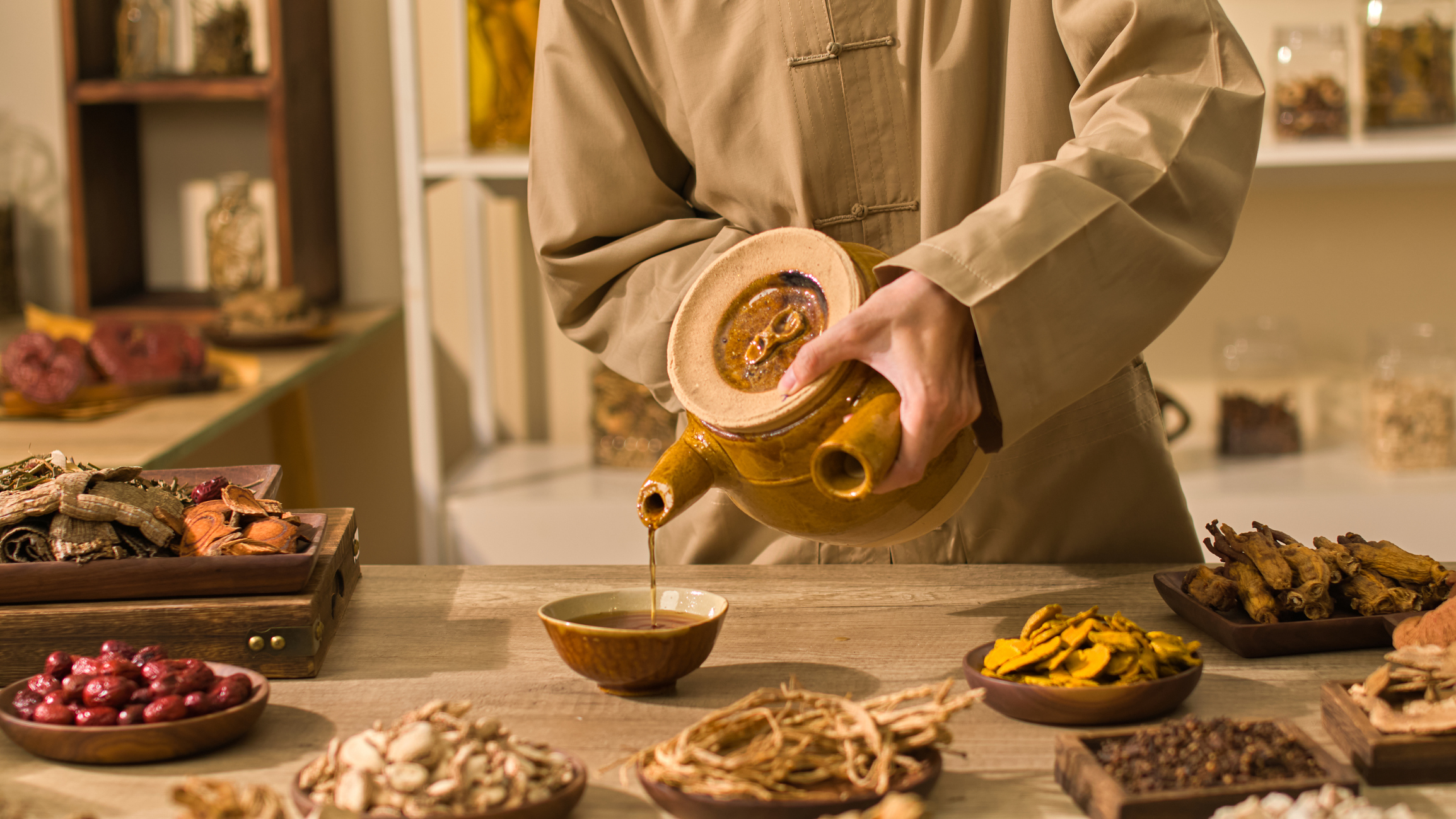
After a couple of weeks of the herbs, he noted that his legs were better at the start of his day and he could walk a bit further, his appetite was good, his complexion appeared less sallow, and his abdomen, though still protruding, was softer and moveable upon palpation. His bowel movements were slightly improved, but he was noticing more blood in the stools. I prescribed a customized concentrated powdered formula of modified Si Ni San to address the Liver Qi stagnation, Shen Ling Bai Zhu San to strengthen the Spleen Qi and treat the diarrhea, bleeding, and Dampness accumulation, and Huai Hua San to stop the intestinal bleeding. I also included yu jin (turmeric) to support the liver, yin chen hao (artemisia) to address the liver cirrhosis, and rou dou kou and bu gu zhi (to stop the diarrhea).
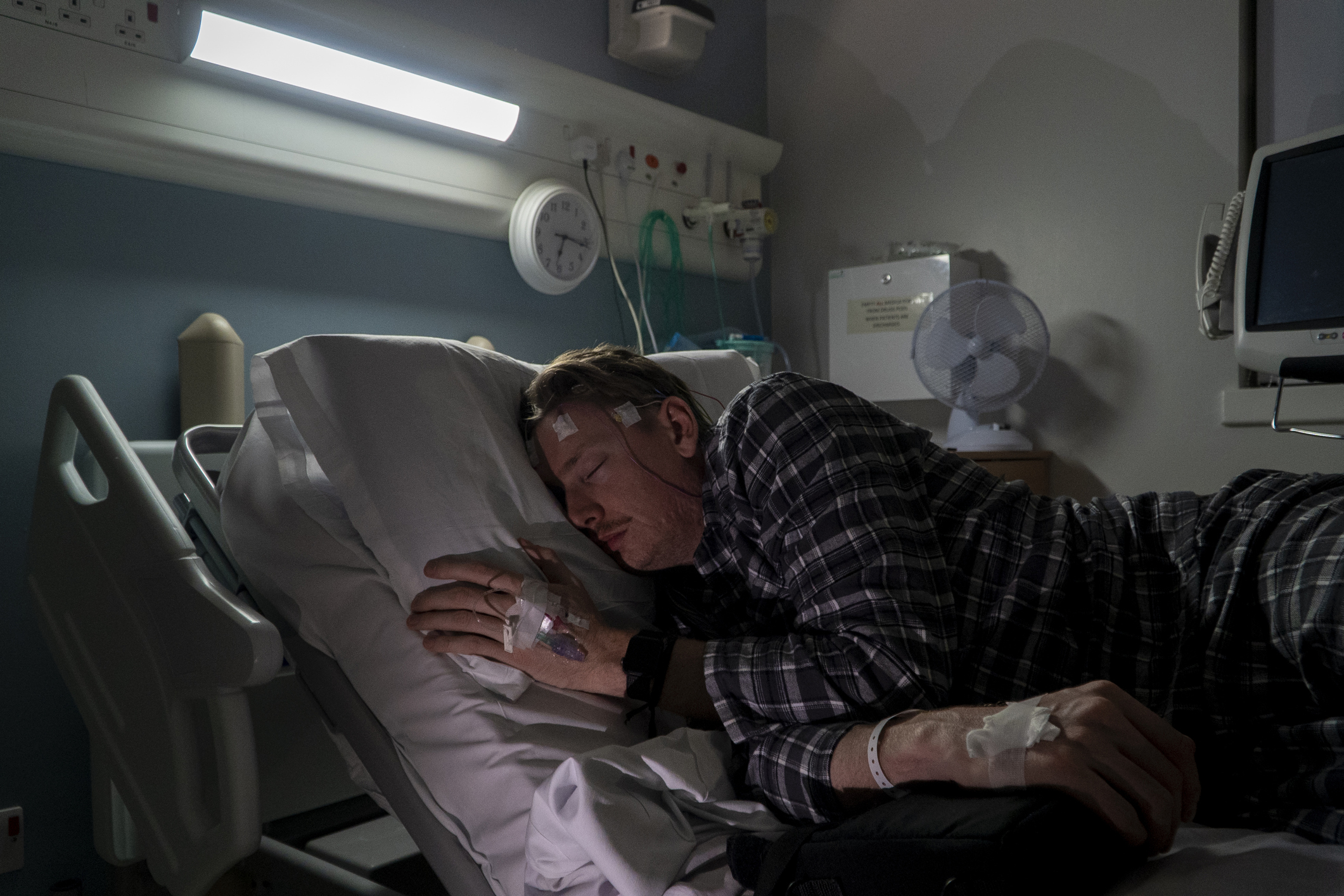
However, because of the severity of the disease, I reiterated the importance of medical testing and I also suggested that he inquire about having a paracentesis done to drain some of the abdominal fluid. He acquiesced and had 7.5 liters of fluid drained in hospital. Unfortunately, a day after the paracentesis, he collapsed and needed to be rushed to the hospital. He was diagnosed with hepatic encephalopathy, high ammonia, and very low potassium, and was unable to be fully revived for a few days. During the hospital stay, they were able to complete a colonoscopy and determined that he had significant bowel inflammation that likely contributed to the liver failure. It is currently undetermined whether he has ulcerative colitis or Crohn’s disease.
Because of the hospitalization, he was unable to take the most recently prescribed TCM herbal formula, but we will do a reassessment once he has settled enough out of the hospital. The good news is that John has been discharged from the hospital, his appetite is improving, and he is able to resume some light activities like grocery shopping.
While we can often assume that serious liver disease would result in nausea, greater loss of appetite, and more jaundice, and that liver disease is the cause of diarrhea and blood in the stools, it’s also important to recognize that the reverse can occur and that not all liver disease is the result of poor lifestyle habits, hepatitis infection, or toxin exposure. This case also highlights the importance of integrative care management that may include conventional measures, and that as non-conventional healthcare professionals, we can help guide our patients and encourage them not to reject conventional medical therapies, when appropriate.
About the Author: CJ Weber

Also on Integrative Practitioner

Dental Danger: Signs of Sleep Breathing Disorders in children and Adults, Learn the Visual Clues
Non-Member Price: $30.00 Member Price: $18.00 – 40% Off for Members Only Add to Cart Presented by: Mark Breiner, DDS,...

Integrative and Comprehensive Approach to Inflammatory Bowel Disease
Non-Member Price: $30.00 Member Price: $18.00 – 40% Off for Members Only Add to Cart Presented by: Ronald Hoffman, MD,...

Measuring Biology vs. Symptomatology: The Fully Integrated Functional Wellness Program
Non-Member Price: $30.00 Member Price: $18.00 – 40% Off for Members Only Add to Cart Presented by: Dane Donohue, DC...

Change Your Genes, Change Your Life
Non-Member Price: $30.00 Member Price: $18.00 – 40% Off for Members Only Add to Cart Presented by: Kenneth Pelletier, PhD,...

Guided Imagery – Efficacious, Portable, Scalable, User-Friendly, Self-Administered
Non-Member Price: $30.00 Member Price: $18.00 – 40% Off for Members Only Add to Cart Presented by: Belleruth Naparstek, ACSW...