




Preventing stroke with Traditional Chinese Medicine
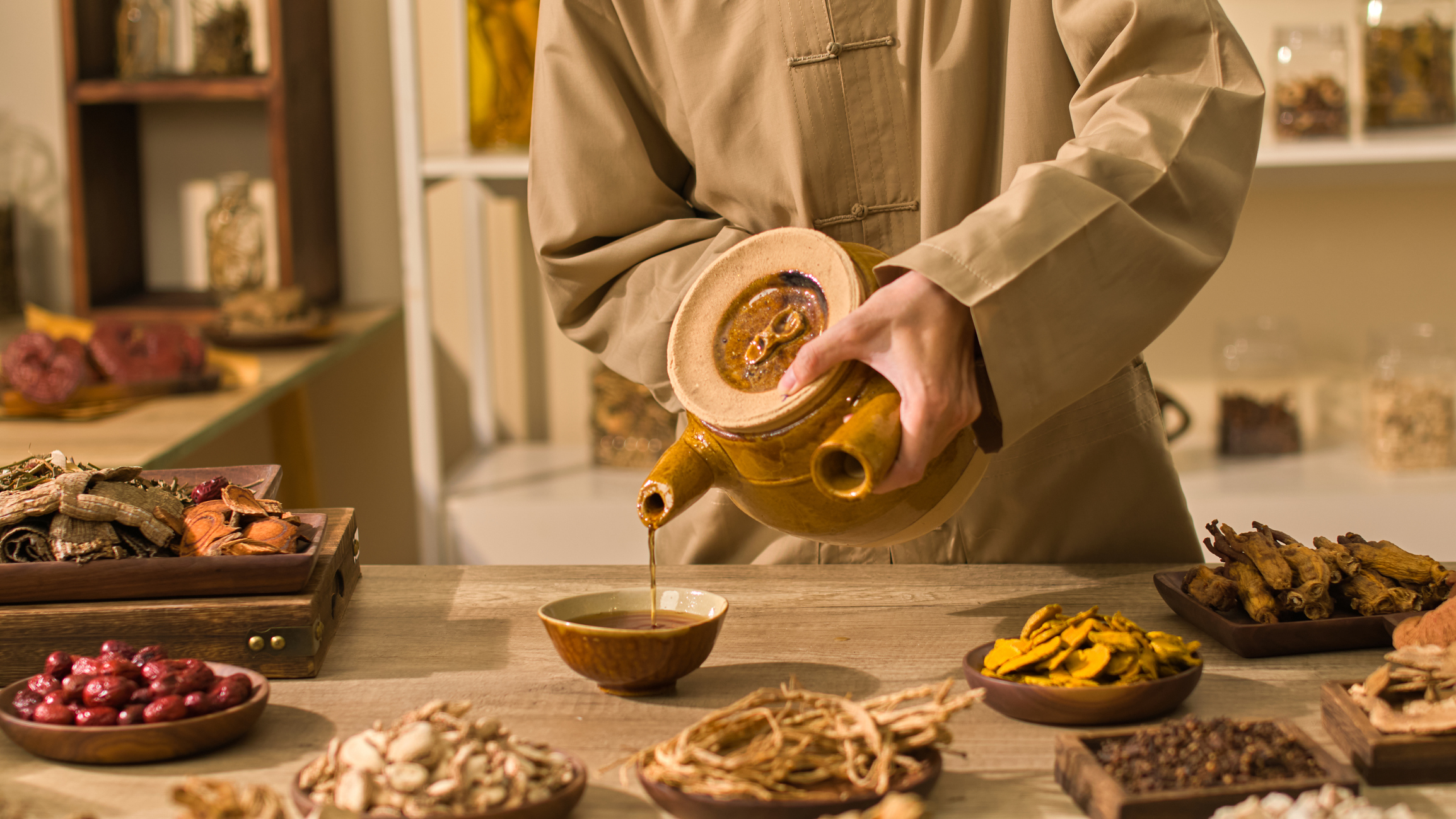
Photo Cred: Bongkarn Thanyakij/Pexels
By Melissa Carr, BSc, DrTCM
Prevention is always the highest goal when it comes to stroke recovery and rehabilitation. With about 15 percent of diagnosed strokes being preceded by a transient ischemic attack (TIA), sometimes called a mini stroke, TIAs are important signals that preventative measures should be taken.
Since the symptoms are essentially the same for stroke as TIAs, with the latter being temporary and not causing lasting damage to the brain, Traditional Chinese Medicine’s (TCM) patterns of diagnosis are similar for each. They are most commonly an obstruction of the channels caused by Wind, Phlegm, or Blood stasis.
By diagnosing the pattern of imbalance after a TIA, in addition to using standard medical therapies such as blood thinners, it is possible to use TCM approaches to treat the condition before it has the potential to evolve into a full-blown stroke. Additionally, the precursors that lent the person vulnerable to those channel obstructions can be treated or addressed with lifestyle changes.
Blood Stasis and Mini Stroke
With about 80 percent of strokes being ischemic, it’s not surprising that one of the TCM patterns of diagnosis associated with both TIA and stroke is Blood stasis. Blood stasis can be caused by head injury, trauma or ongoing stress, and sedentary lifestyle or by Qi deficiency from age, overexertion, and illness.
While the blood clot that created the TIA may have moved on, the pattern can still be identified via purplish tongue, lips, or nails; choppy pulse; varicose veins; cold extremities and poor peripheral circulation; sharp and fixed pain; palpitations; clots in menstrual blood; and cysts or masses.
With this diagnosis, there is a wide selection of TCM herbs to break up Blood stasis and move Blood, including dang gui, chuan xiong, hong hua, tao ren, dan shen, e zhu, and san leng. The formula Tong Qiao Huo Xue Tang might be used, as it is a Blood moving formula particularly suited to treat issues of the head. Acupuncture is especially useful for moving Qi and Blood, so points at the head, including the specialty of scalp acupuncture, could be selected, along with SP10, LI4, LV3, and UB17.
Lifestyle recommendations include regular exercise appropriate to the individual’s condition, stress management, and inclusion of some blood moving foods like turmeric, cinnamon, and saffron.
Phlegm and Mini Stroke
Excess Dampness and Phlegm are common causes of obstruction of the channels in TCM, and a tendency toward this pattern might be identified in those who are overweight, suffer bloating and poor digestion, and have high cholesterol. Other symptoms include foggy headedness, poor concentration, sinus congestion, cough with phlegm, nodules or cysts, a swollen tongue with teeth marks and a thick coat, and a slippery pulse.
Some of the herbs suited for treating Phlegm include zhu li, dan nan xing, tian zhu huang, and bai fu zi. A modified Er Chen Tang or Wen Dan Tang might be chosen, along with the acupuncture points ST40 and SP9.
Patients with excess Dampness and Phlegm should avoid greasy and processed foods, as well as dairy and too many cold, raw foods. They may benefit from foods like bamboo shoots, cardamom, and ginger, and from regular exercise.
Wind and Mini Stroke
More than 2,000 years ago, the classic TCM text Huang Di Nei Jing, The Yellow Emperor’s Classic of Internal Medicine, identified the condition we now recognize as a stroke. The ancient authors of this book described Wind entering the body and causing hemiplegia, difficulty with speech, and facial distortion.
Wind tends to most affect the upper part of the body or the head, just as wind most moves the upper parts of trees. It can cause troubles with movement, numbness or tingling, dizziness, blurry vision, and tinnitus. The tongue might have a tremor or be deviated to one side. In the case of a stroke or TIA, it often combines with Phlegm to block the channels.
Wind can be generated by Blood deficiency that shows as paleness, fatigue, possible anemia, amenorrhea, dizziness, and blurred vision. If, instead, it is produced by Liver Fire or Liver Yang rising, there will be Heat signs like red face, red tongue, and rapid and wiry pulse.
The most common herbs for eliminating internal Wind affecting the channels are tian ma and gou teng, such as in the formula Tian Ma Gou Teng Yin. Ban Xia Bai Zhu Tian Ma Tang is a better one if there is Wind-Phlegm obstruction. Liver and Gallbladder points are often included, such as GB20, GB21, and LV3.
When I worked in a stroke department in China, I noted that even though it was hot in the building, no one would turn on the fan or open a window. While modern TCM practitioners may not worry about wind causing a stroke, we still often recommend not sleeping with the air conditioner directly on you, and we do make good use of scarves in air-conditioned buildings and when out in colder breezy weather. This is largely because our muscles tend to get stiff and our mucus membranes dry out from air conditioners, making us more easily open to the invasion of pathogens.
In terms of TIA and stroke prevention, treatment for underlying health conditions is likely more important.
Though TIAs are common, with nearly 7.5 million worldwide each year, since they are transient, they can be difficult to diagnose. While CT scans, MRIs, carotid ultrasonography, echocardiography, or arteriography may be used, though the patient’s symptoms may have abated, and the blood clot moved along. Because of this, TCM diagnostic practices can prove useful in helping determine the best course of action for treatment and stroke prevention.
References
Yao, Q., Zhang L. (2019) Imaging Diagnosis of Transient Ischemic Attack in Clinic and Traditional Chinese Medicine. BioMed Research International. Retrieved from: https://www.hindawi.com/journals/bmri/2019/5094842/
About the Author: CJ Weber

Also on Integrative Practitioner

Dental Danger: Signs of Sleep Breathing Disorders in children and Adults, Learn the Visual Clues
Non-Member Price: $30.00 Member Price: $18.00 – 40% Off for Members Only Add to Cart Presented by: Mark Breiner, DDS,...

Integrative and Comprehensive Approach to Inflammatory Bowel Disease
Non-Member Price: $30.00 Member Price: $18.00 – 40% Off for Members Only Add to Cart Presented by: Ronald Hoffman, MD,...

Measuring Biology vs. Symptomatology: The Fully Integrated Functional Wellness Program
Non-Member Price: $30.00 Member Price: $18.00 – 40% Off for Members Only Add to Cart Presented by: Dane Donohue, DC...

Change Your Genes, Change Your Life
Non-Member Price: $30.00 Member Price: $18.00 – 40% Off for Members Only Add to Cart Presented by: Kenneth Pelletier, PhD,...
Guided Imagery – Efficacious, Portable, Scalable, User-Friendly, Self-Administered
Non-Member Price: $30.00 Member Price: $18.00 – 40% Off for Members Only Add to Cart Presented by: Belleruth Naparstek, ACSW...