








Traditional Chinese Medicine and the immune system
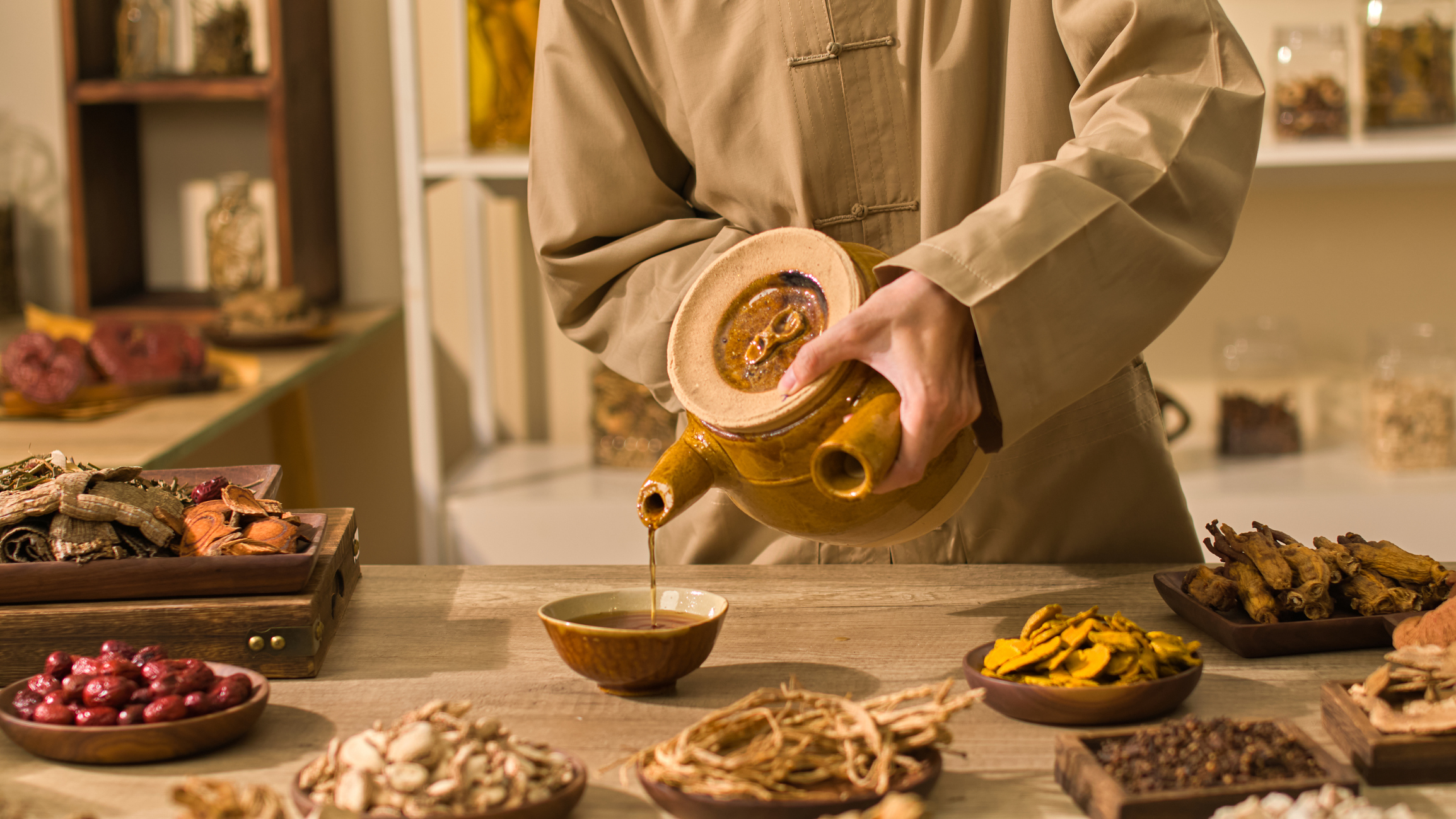
Photo Cred: Polina Tankilevitch/Pexels
By Melissa Carr, BSc, DrTCM
While there is currently no treatment or cure for the novel coronavirus (COVID-19), there are several tools at our disposal to help us stay healthy. Our primary defense instrument is our immune system. The reason why older adults, those with chronic health conditions, and the immunocompromised are at higher risk for more serious outcomes and possibly death in the face of this virus is that their immune systems are not as robust.
For thousands of years, Traditional Chinese Medicine (TCM) has tested and tried various techniques, herbs, and foods to help boost the immune system. TCM uses the organ names as part of its diagnostic system, but it isn’t equivalent to the physical organs in our bodies, so we capitalize the organ names. As such, though the immune system is diffuse throughout the body—including the skin, mucus linings, cilia, thymus, spleen, lymphatics, large intestines and appendix, tonsils, and a vast array of cells—TCM practitioners think first about the Lungs.
We call the Lungs the “delicate organs” because they are the most exposed of our internal organs to the external world, via our nose and mouth, with only mucus and cilia to trap and sweep out pathogens. The Lungs are also termed the “defense minister,” as they oversee protecting the body from external attack.
Following the five elements classification system of TCM, the Lungs fall within the metal system along with their partner, the Large Intestines. Both are identified as being associated with the emotions of sadness and grief, with “letting go,” pungent foods and herbs, the sinuses and nose, and the skin.
Because TCM follows a holistic approach, anything that affects one system can affect other systems and vice versa. For example, a weakened digestive system, which falls largely under the earth element, will result in a compromised immune system, while an imbalanced immune system might cause adrenal stress (weak water element) or inflamed tendons (wood element). It’s all connected.
Supporting the Immune System with TCM
TCM treatment starts with an intensive assessment that includes observational cues, palpation, listening, smelling, questions, and pulse and tongue assessment. From that, a TCM diagnosis is made and a treatment plan formed. Of course, as the condition changes, reassessment and adjustment of the treatment plan is formulated. Thus, while my following recommendations may help with one aspect of a person’s ability to mount a healthy immune response, each practitioner must make a full TCM assessment to apply the recommendations below.
For someone who catches frequent colds or whose recovery from an infection is slow, Lung Qi deficiency is one of the common patterns of diagnosis. This patient may also have a low or weak voice, a pale complexion, shortness of breath, a weak cough, sensitive skin, spontaneous sweating, and feel fatigue. A few acupuncture points that might be chosen to address this include LU7, LU1, ST36, and BL13.
One of the most recognized Chinese herbal formulas for helping to prevent the catching of colds for someone with weak Lung Qi is Yu Ping Feng San, which translates as Jade Windscreen Powder. It contains just three herbs: huang qi (Rx. Astragali), bai zhu (Rz. Atractylodes macrocephala), and fang feng (Rx. Saposhnikoviae), but don’t let its lack of complexity fool you. Astragalus has widespread renowned for its ability to support the immune system, and it has even been researched for its potential to increase lifespan by enhancing telomerase activity.
Bu Fei Tang, Sheng Mai San, and Bu Zhong Yi Qi Tang are three other possible Chinese herbal formulas for Lung Qi deficiency. Bu Fei Tang translates as “Tonify the Lungs Decoction,” and it is used to treat a chronic cough, shortness of breath, sweating, and fatigue.
Sheng Mai San is the root formula for Bu Fei Tang. Translating as “Generate the Pulse Powder” and with ren shen (Panax ginseng) as its chief herb, it can treat a chronic dry cough, and is particularly suitable for those with fatigue, shortness of breath, a dry mouth, thirst, and someone who is recovering from being very ill, but it is not typically used during an infection.
Bu Zhong Yi Qi Tang is most suited if there is also diarrhea, lack of appetite, fatigue, organ prolapse, or spontaneous sweating. This formula’s chief herb is astragalus, and western herbalists may also recognize some of the other herbs in it: Panax ginseng (ren shen), prepared licorice root (zhi gan cao), fresh ginger (sheng jiang), dong quai (dang gui), citrus peel (chen pi), dates (da zao), and bupleurum (chai hu), as well as bai zhu and sheng ma.
When it comes to foods for supporting the Lungs, TCM often blends the ideas of foods and herbs. Thus, the common chicken noodle soup might be augmented with the addition of astragalus, ginseng, ginger, and dates, for example.
When fending off a cold with sore throat, cough, and fever, garlic, ginger, onions, radishes, and pungent herbs like oregano, thyme, and cinnamon could be recommended. If the chest is congested with phlegm that is difficult to cough up, a TCM expectorant remedy that can now be found in some pharmacies is called Nin Jiom herbal cough syrup.
It’s important to always note if a patient has an autoimmune disorder before making any recommendations, particularly regarding herbal formulas, and of course make appropriate choices for those who are immunosuppressed, such as for those with organ transplants.
Case Study
My 63-year old patient came in asking for help in supporting her immune system. She had asthma that was managed with a puffer and was three years into her breast cancer recovery phase, having managed that with a partial mastectomy, chemotherapy, and tamoxifen. Since I had treated her for several years, I knew that she tended toward Lung Qi deficiency with a quiet voice, frequent colds that turned into a lingering dry cough, and fatigue. Her Lung pulse felt thin and weak, while her tongue was pale and thin.
I treated her with Yu Ping Feng San, modified with Sheng Mai San as she tended toward dryness of her Lungs. I recommended she include da zao (dates), gou qi zi (goji berries), beets, and cooked spinach in her diet, as she also had some Blood deficiency signs. Because she is often B12 deficient, she already takes vitamin B12 sublingual and occasionally gets B12 shots.
Of course, these days COVID-19 sits primary in the minds of healthcare professionals as well as the general public, but let’s not forget that we have some actions we can take to keep our immune systems strong now and throughout the year.
References:
Du, C., Choi, R. (2013) Yu Ping Feng San, an Ancient Chinese Herbal Decoction Containing Astragali Radix, Atractylodis Macrocephalae Rhizoma and Saposhnikoviae Radix, Regulates the Release of Cytokines in Murine Macrophages. PLoS One. Retrieved from: https://www.ncbi.nlm.nih.gov/pmc/articles/PMC3823765/#__ffn_sectitle
Liu, P., Zhao, H. (2017) Anti-Aging Implications of Astragalus Mebranaceus (Huangqi): A Well-Known Chinese Tonic. Aging Disease. Retrieved from: https://www.ncbi.nlm.nih.gov/pmc/articles/PMC5758356/#__ffn_sectitle
Yang, Z, Yan, J. (2016) Anti-inflmmatory effect of Yu-Ping-Feng-San via TGF-β1 signaling suppression in rat model of COPD. Iran J Basic Med Sci. Retrieved from: https://www.ncbi.nlm.nih.gov/pmc/articles/PMC5080430/#__ffn_sectitle
About the Author: CJ Weber

Also on Integrative Practitioner

Dental Danger: Signs of Sleep Breathing Disorders in children and Adults, Learn the Visual Clues
Non-Member Price: $30.00 Member Price: $18.00 – 40% Off for Members Only Add to Cart Presented by: Mark Breiner, DDS,...

Integrative and Comprehensive Approach to Inflammatory Bowel Disease
Non-Member Price: $30.00 Member Price: $18.00 – 40% Off for Members Only Add to Cart Presented by: Ronald Hoffman, MD,...

Measuring Biology vs. Symptomatology: The Fully Integrated Functional Wellness Program
Non-Member Price: $30.00 Member Price: $18.00 – 40% Off for Members Only Add to Cart Presented by: Dane Donohue, DC...

Change Your Genes, Change Your Life
Non-Member Price: $30.00 Member Price: $18.00 – 40% Off for Members Only Add to Cart Presented by: Kenneth Pelletier, PhD,...
Guided Imagery – Efficacious, Portable, Scalable, User-Friendly, Self-Administered
Non-Member Price: $30.00 Member Price: $18.00 – 40% Off for Members Only Add to Cart Presented by: Belleruth Naparstek, ACSW...