







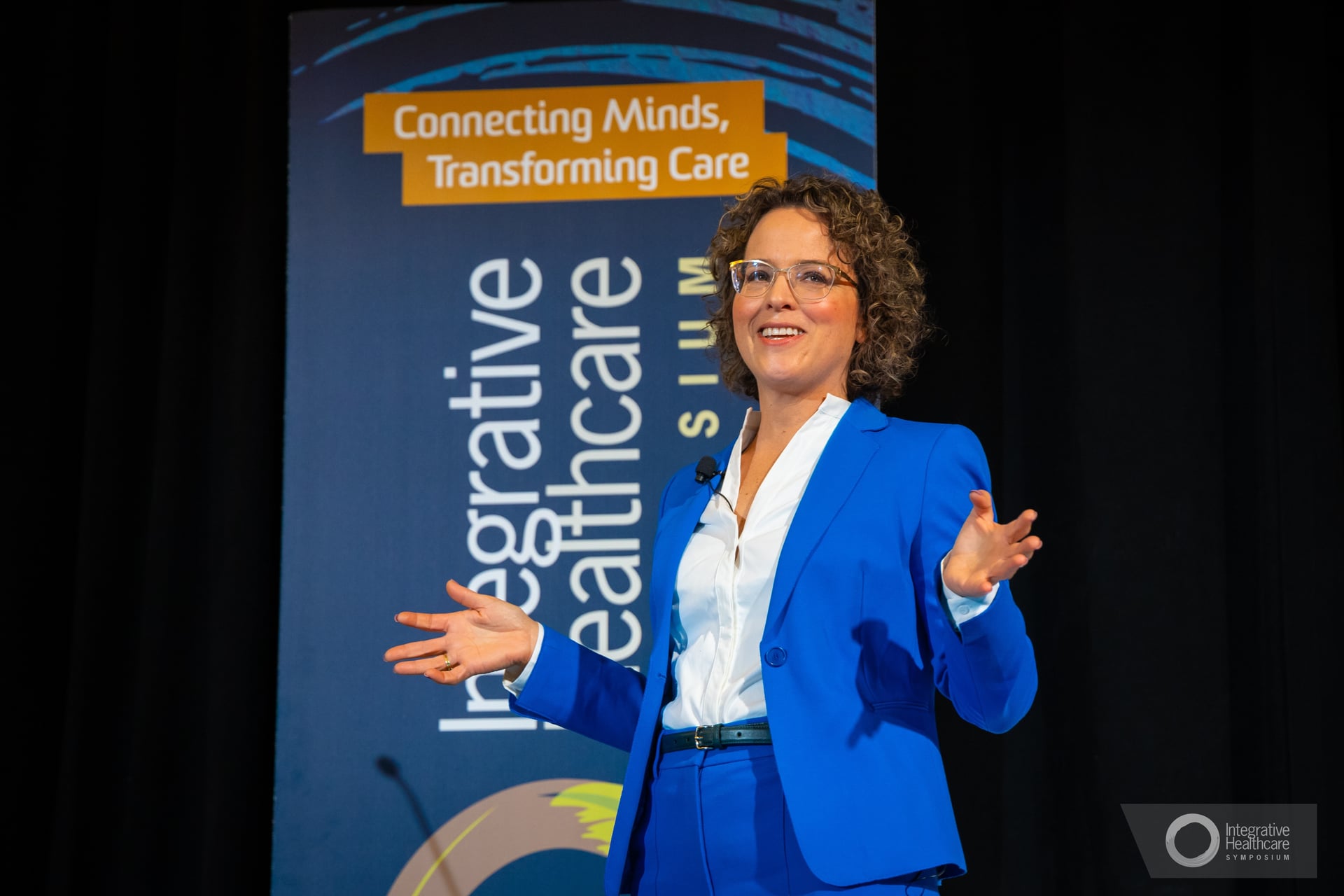



David Perlmutter, MD, FACN, ABIHM discusses new edition of “Grain Brain”
By Katherine Shagoury
When David Perlmutter MD, FACN, ABIHM, board-certified neurologist and New York Times bestselling author, originally published his book, “Grain Brain: The Surprising Truth about Wheat, Carbs, and Sugar—Your Brain’s Silent Killers,” the medical community did not actively embrace the ideas put forward. Five years later, both the research landscape and public awareness has changed significantly to recognize the power of lifestyle interventions in preventing and reversing cognitive decline.
We sat down with Perlmutter to discuss his new edition of “Grain Brain,” which will be released later this month, how science has progressed to investigate the role of carbohydrates and gluten play in health, and how the message has moved to the mainstream.
Integrative Practitioner: What have been some of the most significant changes you’ve made in the new edition?
Perlmutter: Our message at its fundamental has not really changed. What has happened in the past five years is there has been huge validation globally on the ideas that we had put forth and a tremendous amount of research and scientific support in moving forward.
Our original contention was a higher dietary sugar, carbohydrates in general, and gluten were threatening to the brain. What’s happened over the past five years is those ideas have been borne out. We put forth a notion that gluten sensitivity could happen even without having Celiac disease. Back then, that was looked upon as being something no one wanted to embrace. Even five years ago, there was plenty of literature that suggested that to be the case. Now, we’re quite familiar with the term non-Celiac gluten sensitivity, even to the extent that it was published in the Journal of the American Medical Association in 2017. That is really pushing us towards the notion that something that was never in the human diet, gluten, is not something we would suddenly be able to tolerate or would suddenly be good for us.
The other big push of our recommendations over the years has been the idea that higher blood sugar, a derivative of a higher dietary sugar consumption, would be bad for the brain. That was what we talked about, even in the subtitle of the book, “The Surprising Truth about Wheat, Carbs, and Sugar—Your Brain’s Silent Killers.” That was bold to say that, but it turns out that even when we first wrote the book, there was plenty of literature supportive of the notion that even mild elevation of blood sugar would be threatening to the brain, and that has absolutely been confirmed.
We now recognize that this major dietary shift in the developed world over the past 30 years away from dietary fat and towards higher levels of sugar and carbohydrates, has been profoundly detrimental not only towards health in general, but specifically with respect to the brain. When we see study after study demonstrating increased risk of cognitive decline—including a study published in the journal Diabetologia last year that correlates very directly the level of hemoglobin A1C, or average blood sugar, with cognitive decline—we have to take note. By in large, our blood sugar and A1C are markers of our sugar consumption. This becomes very important in a world where we do not have any treatment for Alzheimer’s disease whatsoever.
Everything that we can look at in the world of prevention, I believe, is hugely important, especially through the lens of not having any treatment for this disease. Recently, November 2, a study was published by the Journal of the American Medical Association demonstrating that not only were the two most commonly prescribed Alzheimer’s drugs ineffective, they actually are associated with speeding cognitive decline. To me, that’s [astonishing]. The very drugs people are being prescribed not only don’t work but are associated with increased rate of cognitive decline. This absolutely violates the notion of “above all do no harm.”
It’s not only that they’re not working, which would be heart-wrenching in and of itself, but they’re making people worse. For the vast majority of the 5.4 million Americans who have been diagnosed with Alzheimer’s and have been taking medications like good patients should, that’s a very sobering piece of information.
“Grain Brain” and the new revised edition are all about understanding that Alzheimer’s is, by and large, a preventable condition. Over the past five years, we’ve learned that these original ideas with reference to lowering dietary sugar, increasing dietary fat, and leveraging ketosis, physical exercise, quality of sleep, reducing stress, and taking various nutritional supplements can go a long way to keeping the brain healthy, happy, and disease-resistant.
Integrative Practitioner: Certainly, the science has changed, and the research landscape developed. What new knowledge do we have regarding gluten and dietary fat as it pertains to brain health?
Perlmutter: With respect to gluten, what we do understand is that gluten induces gut permeability in all people, not just if you happen to be gluten sensitive or a Celiac patient. There is a degree of increased gut permeability that is induced when anyone is exposed to gluten. That said, gut permeability is a key player in enhancing inflammation in the human body.
When we understand that Parkinson’s disease, Alzheimer’s disease, autism, coronary artery disease, cancer, are all inflammatory conditions, we need to do everything we can do to reduce inflammation in our bodies, and that includes eliminating gluten.
The other pathway to amping up inflammation in the human body is having a higher blood sugar. When we have high blood sugar, we change our proteins through a process called glycation, where sugar binds to protein. That’s what A1C is, for example: glycated hemoglobin, the hemoglobin protein bound to sugar. We know that when proteins are glycated, when blood sugar is elevated, it dramatically increases not only the production of inflammatory chemicals in the body, but also free radicals—damaging chemicals that damage fat, protein, and even our DNA. That’s another powerful argument with respect to keeping our blood sugars as low as possible.
We’ve just seen new research that demonstrates that women who have the highest intake of gluten during pregnancy compared to those who have the lowest intake, have an increased risk of their child becoming Type 1 autoimmune diabetic, the risk is doubled. This is a study out of Denmark that looked at close to 68,000 pregnancies over a 10-year period. Having high gluten during pregnancies is associated with doubling the risk of an autoimmune condition. That becomes very important when we recognize how immunity needs to be balanced in terms of protecting the brain. That to a significant degree, we are looking at some of these brain disorders now as being neuro-autoimmune conditions.
These are some of the ways that lifestyle is so important. The work of Kirk Erikson, PhD, a professor at the University of Pittsburg, in association with his colleagues at the University of California Los Angeles has clearly demonstrated that regular aerobic exercise is powerfully brain protective. We talked about their original work in the original version of “Grain Brain,” they have redone their studies that have been much more extensive and shown not only that memory is improved in people who exercise, but there is increased size of the brain’s memory center called the hippocampus, and higher levels of what is called brain-derived neurotrophic factor (BDNF), which enhances the growth of new brain cells and their connectivity. Research in the American Medical Association also correlates lower levels of BDNF with increased risk for dementia.
One of the most powerful studies that we’ve quoted in the new book in the journal Neurology was an incredible study that evaluated people many years ago in terms of their inflammation markers in their blood. They followed these people for 24 years and followed two things, memory and the size of their brains or brain volume. What they found was quite interesting: there was a direct correlation between having higher markers of inflammation 24 years ago and risk for brain shrinkage as well as having poorer memory function. Memory function declines and the brain shrinks in lockstep with markers of inflammation. Markers of inflammation are higher if you have higher levels of abdominal fat, if you have higher levels of blood sugar, and these are things for which we have control based upon our lifestyle choices.
These are just some of the things that have evolved since “Grain Brain” was published, but again I believe play upon what we had originally talked about.
I have had the opportunity over the past five years to speak globally about these issues, including the fact that dementia is costing us globally $1 trillion a year, higher than the market value of Apple or Google; we have no treatment; and it is largely preventable.
This is in terms of the financial implications, but how do you put a dollar figure or a metric as it relates to the emotional cost of families of loved ones who are going through this and experienced it. Since “Grain Brain” was first published, my dad died of Alzheimer’s disease. That’s another new development that entered in to the revised edition. It keeps me doing my work.
Integrative Practitioner: One the focuses of the new edition is the ketogenic diet. Why has this become a central part of your work?
Perlmutter: The ketogenic diet, keto terms in general, is one of the most rapidly searched on Google, and with good reason. It’s a very exciting way that clinicians can enhance brain function.
We’re now seeing research that indicates actual cognitive improvement in individuals on a ketogenic program, and really while we’re seeing all this new excitement, one study that demonstrates the effects of the ketogenic diet has been going on for about 2.5 million years—in other words, for almost the entire time that we have walked this planet, humans have primarily been eating in a way that has increased ketones in our bodies. It allowed us to survive, it allowed us to flourish, it protected our brains.
Over the past couple of million years, we have experienced a three-fold increase in the size of our brains. But interestingly, about 12,000 years ago, the size of the human brain began to decline. We now understand, looking at fossils, our brains are about 10 percent smaller than they were 10-12,000 years ago. Interestingly, that is when agriculture was developed and when we started to cultivate grains. Grains came in to the diet, humans began eating grains, eating higher levels of gluten, and dramatically higher levels of carbohydrates, and our brains have shrunk, and our health has declined overall.
But why is the ketogenic diet so good for the brain? There are multiple reasons. One, we have learned since the 1960s, that ketones are a brain super fuel, that when the brain cells are powered with ketones, they are able to produce energy, ATP molecules, much more efficiently gram for gram in comparing using ketones for fuel versus carbohydrates, but also do so with less production of damaging free radicals, which are kind of like the exhaust of brain metabolism. So, less exhaust, less damaging free radicals, and higher levels of these ATP molecules.
We know that a ketogenic diet that reduces inflammation in the human body, and as such it is reducing that fundamental mechanism that underlies Alzheimer’s and Parkinson’s, and diabetes, and coronary artery disease and, really, across the board all the chronic degenerative conditions. We also know that ketones specifically one ketone, beta-hydroxybutyrate, amplifies the gene transcription to make BDNF. Again, that’s key to increasing the growth of new brain cells, increasing the connection of brain cells which we could call neuroplasticity or synaptogenesis, but also BDNF is important in protecting brain cells against trauma.
A ketogenic diet helps increase insulin sensitivity. [Insulin] plays a very important role in keeping the brain functional. We need insulin functionality in the brain not only because of how it delivers glucose to the brain. Insulin in the brain also acts as a trophic hormone and improves the functionality of brain cells.
Finally, we know that beta-hydroxybutyrate acts to stimulate guanine nucleotide-binding proteins (g proteins), and these g proteins regulate immune function, regulate inflammation, regulate really the vitality and functionality of brain cells.
There are really a lot of reasons that going on a ketogenic diet directly is beneficial, and slightly indirect is that a ketogenic diet helps people lose weight. Really, well beyond the cosmetic part of that statement, being thinner, having a small abdomen, is associated with decreased risk for developing dementia. A study was done 30 years prior to determining risk for dementia, and all it did was measured how big a person’s belly was. That’s it. They followed this group of individuals for 30 years and what did they find? Those individuals who, 30 years ago, had a bigger belly, had a bigger risk for dementia. That’s really very important because it says that our outreach, our messaging, should be targeting people in their adolescents, in their teens, when they are setting themselves up for a bigger belly, for obesity. This study reveals that people in their 30s and 40s who had lots of abdominal fat, had a dramatic increased risk for becoming demented, a situation for which there is no medical treatment. That’s why this becomes important.
Integrative Practitioner: How do you incorporate fasting in to your recommendations?
Perlmutter: Fasting can take any number of forms. It might simply mean that each day you put off having your first meal until noon or later in the afternoon, and that meal is when your fast is over, we call that meal “breaking fast” or breakfast, that’s what that meal is all about. If you decide that you’re going to have your breakfast later in the day, that you’ve extended the time between your evening meal the night before, that may be 14-16 hours, and during that time, your body is creating ketones, and those ketones are doing all the great things for your brain that you want them to do. And believe me, it’s not just in the brain, but this improvement of insulin sensitivity is something your entire body will benefit from. That is fasting that can be done daily.
Beyond that, deciding not to eat for a day once a week or once a month is certainly well within reach for anyone. If you have any ongoing medical illness, it’s certainly reasonable to check with your healthcare practitioner prior to engaging in what would be nothing more than a water fast for 24 hours, nothing wrong with that.
We are seeing individuals use what is called a fasting-mimicking diet, developed by Valter Longo, PhD. Longo’s program does supply some food, but he believes he is able to mimic in terms of the biochemistry that happens, what would happen in your body if you were engaged in a complete fast. He’s done a lot of research in terms of Alzheimer’s and even cancer using his fasting-mimicking diet.
Some people use programs for three to five days of fasting, or even longer.
The idea of fasting is not well-defined, and yet the notion of fasting certainly provides us with an extremely valuable tool in terms of enhancing brain function and protecting the brain as well.
Integrative Practitioner: How do supplements factor in to the “Grain Brain” discussion?
Perlmutter: One of the supplements that is getting a lot of attention right now is something called medium-chain triglyceride (MCT) oil. It’s a type of fat that is very easily transformed in the liver into ketones. Normally, long chain fatty acids, like the types of fat that we store, or long chain fatty acids that may be part of our diet, require a little more effort on the part of the liver to be transformed in to ketones. Not only that, long chain fatty acids have to be absorbed in a more complicated way; they have to be transformed in what are called chylomicrons that have to be selectively absorbed through the gut lining. Then, these long chain fatty acids have to be coupled or activated by carnitine before they can be utilized by the liver to make these ketones.
MCTs, on the other hand, readily form ketones in the human body. Breast milk is the reason why breastfed infants have high levels of ketones in their blood, which is certainly good for brain development. But adults can take MCT oil and enhance the production of ketones immediately as well. That’s something we’re really very excited about.
Another new supplement on the scene is whole coffee fruit concentrate, which is a health food store item as well, and has been shown to dramatically increase the production of BDNF in humans, and that is certainly a plus for brain cells.
Beyond that, some tried-and-true supplements I think include vitamin D, a B-complex or, if a person has a problem with methylation [as determined through having their genome sequenced], a methylated form of B vitamins is worthwhile. Fish oil provides high levels of DHA is always a plus. I think providing a wide-spectrum probiotic is a reasonable idea as well.
Integrative Practitioner: Though the book focuses on brain health, how can these ideas be applied generally in patient practices?
Perlmutter: The first thing that practitioners need to recognize is that there is no treatment for Alzheimer’s. According to the Journal of the American Medical Association study mentioned earlier, the prescribed medications not only don’t work, but they worsen patients’ cognitive performance over time. That said, if we don’t’ have a treatment for the disease, it certainly makes the idea of prevention far more meaningful. What are the lifestyle choices that providers can recommend that are associated with decreased risk for Alzheimer’s disease? They include:
- Regular physical aerobic exercise.
- A diet that is associated with lowering blood sugar. In other words, a low-carbohydrate, low-sugar diet with higher levels of healthful fat.
- Pay strict attention to the quality and quantity of your patient’s sleep. Every adult should have a formal sleep study.
- Consider the use of certain supplements like MCT oil, vitamin D, methylated B vitamins, and a good dosage of DHA, 800-1,000 milligrams per day.
- Talk to your patients about limiting stress. We know higher levels of cortisol brought on my constant stress are associated with degeneration of the very brain cells that we depend on for our memories located in the hippocampus.
We could go on and list many more. This list should not be overwhelming and doesn’t take that long. These are very powerful tools that any practitioner can incorporate in to her or his recommendations, not just for patients who are concerned by virtue of their family history that they may be at risk for Alzheimer’s disease, but any patient. We need to embrace the notion that if we live to be age 85 years old, our risk for this disease is 50-50. That means this is a discussion we should have with all of our patients.
Editor’s note: This interview has been edited and condensed.
About the Author: CJ Weber

Also on Integrative Practitioner

Dental Danger: Signs of Sleep Breathing Disorders in children and Adults, Learn the Visual Clues
Non-Member Price: $30.00 Member Price: $18.00 – 40% Off for Members Only Add to Cart Presented by: Mark Breiner, DDS,...

Integrative and Comprehensive Approach to Inflammatory Bowel Disease
Non-Member Price: $30.00 Member Price: $18.00 – 40% Off for Members Only Add to Cart Presented by: Ronald Hoffman, MD,...

Measuring Biology vs. Symptomatology: The Fully Integrated Functional Wellness Program
Non-Member Price: $30.00 Member Price: $18.00 – 40% Off for Members Only Add to Cart Presented by: Dane Donohue, DC...

Change Your Genes, Change Your Life
Non-Member Price: $30.00 Member Price: $18.00 – 40% Off for Members Only Add to Cart Presented by: Kenneth Pelletier, PhD,...

Guided Imagery – Efficacious, Portable, Scalable, User-Friendly, Self-Administered
Non-Member Price: $30.00 Member Price: $18.00 – 40% Off for Members Only Add to Cart Presented by: Belleruth Naparstek, ACSW...