






Transcript: Technology Revolution in Functional Medicine
By Integrative Practitioner Staff
Katherine Rushlau: Welcome, everyone, to today’s episode of the IntegrativePractitioner podcast. I’m Katherine Rushlau, editor of IntegrativePractitioner, the leading online resource for news and industry insights for the Integrative Healthcare community. We’re pleased to bring you this episode as part of our Integrative Healthcare Symposium preview series, a collection of podcasts where we’ll give you a first look at some of the sessions from this year’s event.
A few quick reminders. The Integrative Healthcare Symposium takes place February 21-23, 2019, at the Hilton Midtown in New York City. IntegrativePractitioner members receive a 25 percent discount off of the standard conference pass, so make sure to register today.
I’m joined today by Dr. Jeffrey Bland. Dr. Bland is the founder and president of Personalized Lifestyle Medicine Institute, and the CEO of Kindex Pharmaceuticals. Dr. Bland, thanks so much for being here.
Jeffrey Bland: Well, it’s my privilege. I’m so looking forward to the meeting coming up at ISH, so this is a real privilege to have a chance to talk about it.
Katherine Rushlau: At this year’s conference, you’ll be talking about functional medicine in the age of genomics, biometrics, and wearable devices. Can you discuss this revolution and how it supports the delivery of functional medicine?
Jeffrey Bland: Yes, thank you. I think we all recognize, just looking around at the world, how fast this digital revolution is changing the way we live. Certainly the smart devices are a pretty evident breakthrough in technology that’s opening up the world to so many of us to things that we previously didn’t have access to. I’m reminded that even when I do international travel, and I may go to places that I would say are remote and may not be the most technologically sophisticated places in the world, but lo and behold, what do I find is people are walking around, including kids, with their smart phones. We’re becoming wired as a global community into the digital revolution.
There are certainly some adverse potentials of this, as well. I don’t want to say everything is always perfect, but what it has provided for is the democratization of information. And so, we now have access to information that previously was held by just a few and doling out in a piecemeal way when we would come to them for the information, these experts. Now, we have chances to go to the source of information virtually anywhere on the globe in 24/7 real time, and start to get answers to questions from a variety of different sources.
Beyond that, these digital tools that we have now are starting to open up the opportunity to evaluate our body’s functions in ways that we never had simple access to. Things like the wearable devices. It started off with counting the number of steps, or counting our heartrate, or looking at the way that our daily sleep patterns would be seen are now moving into things, as we’ve seen recently with the new Apple Watch, to measuring EKG patterns, to the future of measuring continuous blood sugar measurements, measuring blood pressure, measuring body composition.
We’re starting to have information about ourselves in ways that we never had before, and how our function changes over the course of a daily regime, and how different things that we do—eating, and interacting with others, and exercising, or being in different environments—how it influences our physiological function. So, in some ways, we’re starting to be introduced to what’s called the quantified human revolution, in which we’re starting to actually see ourselves as uniquely different in the way that we respond to the events that we experience in our lives.
If you couple that together with another component of the digital revolution, which is looking at our book of life that’s locked into our 23 pairs of chromosomes, half of which are coming from my biological mother, the other half from the biological father, that book of life may also be seen as a digital record of not who we are, but who we might be. And as we have our genes analyzed, the ATGC code of our inheritance, we start recognizing not just what at that moment we are, but we recognize from our genetic potential what we could be.
And I think it’s this new view of how the genes are seen, not as locking us into a specific outcome, but rather talking about the opportunities of what we might be able to achieve from this extraordinary legacy called our book of life is a new, very optimistic view of how the digital revolution is changing how we are gonna live, and see ourselves, and opportunities we have for good health and personalizing our diet, our lifestyle, our environmental exposures to things. It really gives us maximum opportunities for long life and good health.
I think that all of these together are converging to create an absolute revolution in thinking, which then spurs the revolution in the development of new industry, called the wellness and health industry, which takes us away from being a disease-centric country to being a balanced country that yes, is still concerned about treating disease, but is also equally interested in how we keep well. And I think that’s the nature of the change that we’re observing and feeling right now, and it’s what I’ll be speaking about during my talk at the Integrative Healthcare Symposium.
Katherine Rushlau: Fantastic. So, I’m catching a glimpse over at my Apple Watch and my phone. You’re right. We’re so centered on technology today. Beyond the wearable devices kind of thinking, all-encompassing of what you’re going to be talking about, what are some of the tools that you’re gonna be pointing out that allow for this more personalized care?
Jeffrey Bland: Well, I think first of all, what I hope to get across in my talk is to go back and evaluate a word that we all use, and we think we understand it, but I think it’s a much more complex word than we previously have acknowledged, and that’s the word health. Health, to me, is a little bit like the word love. We use it, all of us, but depending on how it’s used, it can have very, very different and dramatic meaning. It could be agape or it could be amore, it could be said in various different ways. Like we can say we love our environment. Well, that’s different than we say we might love our children, or love our parents, or love our partner. So, there’s different ways of the same word being seen contextually, which may have dramatically different ways that we behave in response to that different definition.
Well similarly for the world health, if you really ask a person what does health mean to them, and I’m gonna exaggerate to make a point here, but I think if you were to ask 100 different people to define for them what their definition of health is, you would get 100 different definitions. And the reason for that is that the health for one may be for them to go to their grandchild’s graduation from high school. For another person, it may be for them to successfully run a marathon. For another person, it may be to be very successful in their workplace environment so that they are a high achiever. I mean, we could go on and on and get whole different criteria for what health might be in different circumstances.
I think the only way that we really can measure health and quantify it truly is by function. And one of my themes of my presentation will be to really challenge this concept of health by saying in the absence of being able to measure it as function, we don’t really know what health is. Health is a very privileged and very personal thing. And we talk about group health, like public health, but then we talk about individual health, which is personalized.
And so, what I will really be speaking to in my talk is how do we get a handle on personalized health? And the way we do it is by understanding aspects of a person’s function. And that function could be really one of four different quadrants, and I think you can only have four different quadrants of function. That’s physical function, physiological or metabolic function, cognitive function, and behavioral function. Those four quadrants of function then define, when aggregated together, how we see our health.
So, for one person, they might consider physical function as [break in audio] of those four. Another person, it may be cognitive function. And so, this allows us then to personalize health to the needs and expectations, ambitions of a specific individual versus the generic term of health, which is let’s not be diseased, which means that we must be healthy. And I think we all recognize that health is much more than the absence of disease.
In the disease-based culture, which is what we’ve focused on over the course of the last 50 or 60 years, we’re really a disease-centric culture, which is a fear-based culture. We need to move away into a health-based culture, which is focused on things that will allow us greater function and greater abilities to do the things we want to do in life. That’s very different than just the absence of disease. That’s the presence of wellness, and it is all determined by the aspects of our function.
So, that’s gonna be a major theme of my talk is, how do we evaluate function? How do we metricize it? And then, how do we aggregate that together to become our own personal recipe for health?
Katherine Rushlau: So then, in terms of metabolic disorders, which is also gonna be kind of a focus of your talk or something that you’re highlighting, how can understanding function, focusing on function, and using the tools that you’ll be discussing be particularly helpful?
Jeffrey Bland: Yes. You know, it’s very interesting, isn’t it, that often we change our perspective, and things that we’ve been observing that we never thought were connected together then start to seem like they’re all interconnected. Let me use an example; let’s use a simple example and that is heart rate. So, we’ve all, maybe if we’ve had some kind of a device, wearable device, we’ve been measuring our heartrate when we exercise, and getting into our training zone, and being aerobically competent. And so, we say your training zone is something like 200 beats per minute minus your age in years, something like that is your training zone of your heartrate. And that’s kind of the way that we’ve used pulse and heartrate. And then, we might have also used resting pulse saying well, it’s desirable to have a lowered resting pulse, say 50 beats per minute or lower.
But now, we recognize that there’s a lot more to heartrate and heartbeat than just exercise, training, and resting heartrate. The changes in heartrate, so-called heartrate variability, and how it changes in response to different events in our life become very important markers of our resiliency, not just our cardiovascular resiliency, but our neural immunochemical resiliency. So, it’s learning how to look at some of the tools that we’ve been having available for some time from a different perspective as it relates to how we measure metabolic fitness or metabolic function through the lens of some of these functional parameters. And I think once you start using this as a lens for understanding health, it opens up all sorts of new vistas as to how we interpret data, how we look at ourselves or our patients, in the case of a healthcare provider, a how we redefine then a way of personalizing an individual’s program to meet their best needs.
Katherine Rushlau: One thing I think that integrative practitioners, functional medicine practitioners struggle with is that they’re working with patients to make lifestyle changes and health behavior changes. It can definitely be a challenge to engage patients to change fundamental tenets of their lifestyle. How can these tools support practitioners and, on the flip side, what are some of the limitations?
Jeffrey Bland: Yes, very good question. Well, one of the tools that I’ve been really exploring in our research for the last couple of years that I’m quite excited about and very optimistic about is telomere length. As you know, we have the end of our chromosomes that are kind of protected, are protecting against the injury to our book of life that are called the telomeres. And as these shorten over the course of living, the shortened telomeres provide less protection against DNA damage or damage to our book of life, and we recognize that one of the principle aspects of biological aging is injury to our book of life, to our genomic information.
Telomeres are kind of a surrogate marker for biological age, and we recognize now that telomere length based upon telomerase activity can alter under the situations of different lifestyle and health interventions. And if you start following a person based upon telomere length and how that person responds to their individual program, you can actually start tracking the effects that they’re really having on protecting their most precious asset, this genomic book of life, through the activity of daily living, how they’re actually personalizing their daily lifestyle.
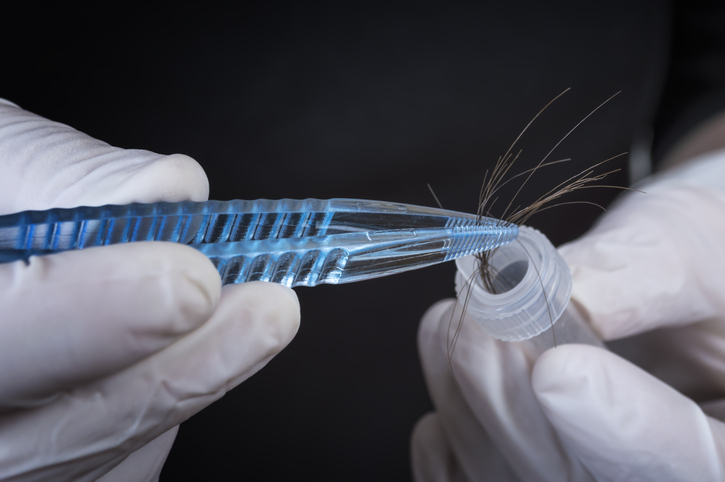
Here’s an example of a new tool that’s reasonably inexpensive that you can measure fairly non-invasively the telomere length that gives you an interrogation, at least a reference point, to start examining how you’re really affecting cellular function, and how that ties together with biological age and your relative capability of living not only longer, but healthier. So, I think this would be an example that I’m gonna be using to really show about new tools available that can really help us to interrogate how our lifestyle isn’t gonna influence our specific health outcome.
Katherine Rushlau: Kind of switching gears to the last part of the podcast here, as you might know, this year is the Integrative Healthcare Symposium’s 15th edition. So, celebrating the anniversary, thinking back at the last 15 years in integrative medicine, how, from your perspective, Dr. Bland, has the industry changed, and what are you looking ahead towards as something that’s exciting in the future?
Jeffrey Bland: This is a very, I think, epic 15th anniversary because we’re really confronted now with this interesting paradox as to where our healthcare system is going to go. And I think that the voice that has been spoken to over the 15 years of the IHS meeting has been a voice of optimism, a voice of opportunity, a voice of recognizing that we as humans are connected intimately into our lifestyles and environments, relationships, and into things that are more than just into our medicine, surgeries and high-tech intervention.
I think that the construct that this 15th anniversary really brings to us is the recognition that the more we learn and the more we bring “science” into our understanding as to how people can be healthy and totally functional, the more we recognize that it takes a broader perspective than just the absence of a pill to keep a person healthy. That there are also these interactions that have to do with the way we interact with one another, the way that we interact with the environment, the way the environment interacts with us.
We can’t be separate from the world, we are part of the world. We’re part of the system. And I think that the construct as to how we see ourselves as a living organism that lives hopefully about a century in life with high value and purpose, how we interact with the legacy of our environment is a very, very important theme that has gone through the IHS meetings over the last 15 years that differentiates it from a traditional medical seminar that’s more focused on disease and how to treat it, rather than its ethos it relates to its social environment.
So, I think that where we are right now is at a time of great change, where we recognize that all the solutions to healthcare are not gonna come out of new pharmaceutical and surgical technologies. They’re gonna come out of an integrative approach towards understanding function.
Katherine Rushlau: Fantastic. Well, thank you so much, Dr. Bland. It’s been a pleasure speaking with you and listening to your very valuable insights. We’re looking forward to your session in February.
Jeffrey Bland: I’m looking forward to it, as well. Thank you so much.
Editor’s note: This is a transcript of the Integrative Practitioner Podcast episode, “Technology Revolution in Functional Medicine.” Click here to listen to the full episode. The views and options expressed in these podcasts are those of the speaker(s) and do not necessarily reflect the official policy or position of Integrative Practitioner.
About the Author: CJ Weber

Also on Integrative Practitioner

Dental Danger: Signs of Sleep Breathing Disorders in children and Adults, Learn the Visual Clues
Non-Member Price: $30.00 Member Price: $18.00 – 40% Off for Members Only Add to Cart Presented by: Mark Breiner, DDS,...

Integrative and Comprehensive Approach to Inflammatory Bowel Disease
Non-Member Price: $30.00 Member Price: $18.00 – 40% Off for Members Only Add to Cart Presented by: Ronald Hoffman, MD,...

Measuring Biology vs. Symptomatology: The Fully Integrated Functional Wellness Program
Non-Member Price: $30.00 Member Price: $18.00 – 40% Off for Members Only Add to Cart Presented by: Dane Donohue, DC...

Change Your Genes, Change Your Life
Non-Member Price: $30.00 Member Price: $18.00 – 40% Off for Members Only Add to Cart Presented by: Kenneth Pelletier, PhD,...
Guided Imagery – Efficacious, Portable, Scalable, User-Friendly, Self-Administered
Non-Member Price: $30.00 Member Price: $18.00 – 40% Off for Members Only Add to Cart Presented by: Belleruth Naparstek, ACSW...