








An integrative approach could curb hair loss due to alopecia
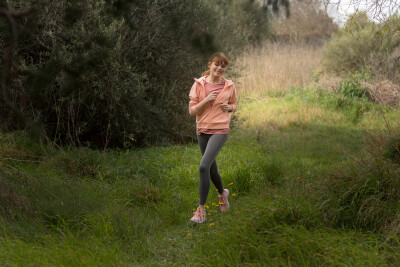
Photo Cred: Elina Fairytale/Pexels
By John McCormack
Jodi Weisberg started losing her hair when she was just eight years old. By the time she turned 30, she was completely bald. Through the many years that she suffered with alopecia areata, she tried all sorts of treatments but nothing seemed to work.
“When I was a child, I had injections into my scalp, which is a standard protocol,” Weisberg said. “I took steroids. I was one of the early users of minoxidil, which was initially used as a heart medicine but then they discovered that heart patients were growing hair. So, it was marketed to dermatologists to use with alopecia. None of these ever worked for me.”
So, when Weisberg was about 40 years old, she turned to functional medicine. With this holistic approach, she has been able to grow most of her hair back. The approach proved to be so powerful that Weisberg wanted to help other people discover its benefits as well. As a result, she earned credentials as a Certified Holistic Health Coach (CCHC) and American Association of Drugless Practitioners (AADP) professional and now works with many people with alopecia and other conditions through Your Wellness Partner, her health coaching practice.
Understanding alopecia
Alopecia areata is a common autoimmune skin disease, causing hair loss on the scalp, face, and sometimes other parts of the body. The disease presents as either alopecia areata patchy, the most common form, with one or more coin-sized hairless patches on the scalp or other areas of the body; alopecia totalis, with total loss of the hair on the scalp; or alopecia universalis, with complete loss of hair on the scalp, face, and body. Often first appearing during childhood, it affects about 6.8 million people in the United States, according to the National Alopecia Areata Foundation (NAAF).
An integrative holistic approach to alopecia treatment is gaining popularity.
“In California, we are pretty open to working with integrative practitioners as it ultimately benefits the patients,” said Natasha Mesinkovska MD, PhD, chief scientific officer of NAAF and vice chair, clinical research, department of dermatology at the University of California. “We can work together to try to figure out if there is a systemic issue contributing to the autoimmune process – if there are allergies, food sensitivities, or abnormalities in gut microbiome.”
Such an approach considers the body as a system, examines the root causes of the disease, and focuses on a variety of factors that could have an impact on health such as sleep, physical activity, stress, water intake, and mental health.
Finding the cause
Naturopathic physicians, for example, routinely identify underlying causes of alopecia so they can go beyond palliative care when addressing symptoms, according to Jaquel Patterson, ND, MBA, medical director, Fairfield Family Health, Connecticut.
Integrative practitioners “look at stress, hormones, genetics, endocrine system, diet, lifestyle and look to see what is possibly triggered before a flare. This ultimately can prevent flares in the future. Alopecia is an autoimmune condition meaning there is a dysregulation in which your body mistakenly attacks the hair follicles, [naturopathic doctors] want to know why that is happening in the first place,” Patterson said.
To identify the root cause of the condition, practitioners can administer comprehensive blood work including complete blood count with differential, iron, and total iron-binding capacity (TIBC), and ferritin tests. In addition, clinicians can test for minerals such as red blood cell (RBC) zinc, RBC magnesium, and selenium; levels of vitamin A, vitamin D, and vitamin B7, B5, B6 and B12; thyroid functioning; estrogen, testosterone, cortisol, and dehydroepiandrosterone sulfate (DHEA-S) hormonal levels; and other autoimmune markers such as antinuclear antibodies, according to Patterson.
“It is also important to look at gut health and food allergies or sensitivities,” Patterson said. The gut is often a reflection of what is going on externally on the skin and food sensitivities or intolerances [are] often linked to alopecia. Over half of autoimmune patients have food allergies/sensitivities/intolerances.”
Treating holistically
Currently, there is no cure for alopecia. However, it is commonly treated with drugs that are intended to block immune system attacks while stimulating hair growth. These drugs can be effective for people with mild hair loss but often fall short for those with more severe hair loss. Oral and topical treatments are also available, according to NAAF.
Conventional medicine providers often rely on steroid injections to treat alopecia. While such treatment can help with a flare up, it does little to resolve the underlying cause of the condition, Patterson said. As such, Patterson often takes a more holistic approach and treats the condition with amino acids and key nutrients such as vitamin A, vitamin D, vitamin E, selenium, zinc, and B vitamins as well as anti-inflammatories.
A comprehensive review of clinical studies published in The Journal of Clinical and Aesthetic Dermatology, found that “despite the need for more long-term, well-designed, randomized, controlled studies, several botanical and natural ingredients do show promise” in alopecia treatment.
The article pointed to studies that found promise with natural products such as:
- Garlic Oil. In a trial of 40 patients, topical five percent garlic gel in combination with betamethasone was compared to a placebo. After three months, good to moderate responses were observed in 95 percent of those treated with the garlic gel compared to just five percent with placebo.
- Olive oil. A case report demonstrated clinically significant improvements in psoriatic alopecia when olive oil was used as a supplement to treatment.
- Pumpkin seed oil. A randomized, double-blind, placebo-controlled trial examined the efficacy and tolerability of pumpkin seed oil for the treatment of hair growth in male patients with mild to moderate hair loss. After 24 weeks of treatment with pumpkin seed old, male patients’ self-rated improvement scores were higher in a group that had received the pumpkin seed oil compared to a placebo group.
- Rosemary oil. A single-blind, randomized clinical trial investigated the clinical efficacy of rosemary oil in the treatment of alopecia and compared its effects to minoxidil two percent ointment. The study provided evidence of the efficacy of rosemary oil as an alternative treatment option for alopecia.
- Aromatherapy oils such as thyme, rosemary, lavender, cedarwood oil, and evening primrose oil. This 12-week study led to clinically significant (moderate to dense) hair growth in up to 75 percent of patients treated with aromatherapy oils, whereas 30 percent of placebo patients experienced hair growth.
The review article also cited studies that illustrated the effectiveness of mind and body treatments such as acupuncture, aromatherapy/massage, hypnotherapy, and psychotherapy.
Mesinkovska asserted that functional medicine and alternative treatments should be used in conjunction with more traditional therapies. Integrative practitioners are often in a better position to work with patients on these holistic concerns as they are “capable of figuring out the whole mind-body connection. Then they can connect patients with and provide guidance on services that address overall wellbeing, such as diet, meditation, and acupuncture,” Mesinkovska said. “Those things are much better handled by integrative practitioners, and they have more time to address the issues in detail. So, I think it is a great idea for conventional physicians to work together with integrative health practitioners particularly in patients with chronic conditions, such as alopecia areata.”
Addressing mental health concerns
Mesinkovska and Weisberg both point to the fact that greater awareness around alopecia is needed. The disease largely flew under the radar until the recent Academy Awards incident where Will Smith slapped Chris Rock in response to a joke that the comedian made about Smith’s wife, Jada Pinkett Smith, who suffers from alopecia.
The condition perhaps was previously unknown because in comparison to other autoimmune diseases, alopecia is not as physically debilitating or life threatening. It does, however, pack a punch from a mental health perspective.
“The average person afflicted with this disease is on the younger side. Patients are at that time in life, when they are going to college, getting their first job, dating, getting married. Thus, the psychosocial impact is tremendous,” Mesinkovska said.
Unfortunately, one young patient recently committed suicide after being bullied about her alopecia. As such, the need to address the full spectrum of challenges that those afflicted with alopecia commonly face has never been clearer, Weisberg said.
“Because alopecia on the surface appears to be simply cosmetic, not enough attention and focus has been brought to it. Even though it’s not fatal, it’s not simply cosmetic,” she said. “The impact of alopecia in our society perhaps is more in the mental health realm than physical health. There’s a lot of pressure when living with alopecia, a lot of impact emotionally and mentally, just because you look different.”
John McCormack is a Riverside, Illinois–based freelance writer who routinely covers healthcare information technology, policy and clinical care issues. While he often writes about complex topics, he always looks to find the human stories that everyone  – from healthcare executives to providers to patients – can easily relate to. McCormack’s work has appeared in a variety of healthcare consumer and business-to-business publications.
About the Author: CJ Weber

Also on Integrative Practitioner

Dental Danger: Signs of Sleep Breathing Disorders in children and Adults, Learn the Visual Clues
Non-Member Price: $30.00 Member Price: $18.00 – 40% Off for Members Only Add to Cart Presented by: Mark Breiner, DDS,...

Integrative and Comprehensive Approach to Inflammatory Bowel Disease
Non-Member Price: $30.00 Member Price: $18.00 – 40% Off for Members Only Add to Cart Presented by: Ronald Hoffman, MD,...

Measuring Biology vs. Symptomatology: The Fully Integrated Functional Wellness Program
Non-Member Price: $30.00 Member Price: $18.00 – 40% Off for Members Only Add to Cart Presented by: Dane Donohue, DC...

Change Your Genes, Change Your Life
Non-Member Price: $30.00 Member Price: $18.00 – 40% Off for Members Only Add to Cart Presented by: Kenneth Pelletier, PhD,...

Guided Imagery – Efficacious, Portable, Scalable, User-Friendly, Self-Administered
Non-Member Price: $30.00 Member Price: $18.00 – 40% Off for Members Only Add to Cart Presented by: Belleruth Naparstek, ACSW...