








Incorporating botanicals into cognitive decline protocols
Photo Cred: Tara Winstead/Pexels
By Carolina Brooks, BA, IFMCP
I do not subscribe to the idea of a one-size-fits-all protocol and although I have done specialist training with various leaders in the field of cognitive decline, I am neither a neurologist nor am I a psychiatrist. Recommendations for botanicals are often limited to supplements in specific dosages, which does help ensure safety as potential interactions of many commercially available brands can be checked against medications in various online databases, but this limits the therapeutic benefits of using herbs in supplement form, or in doses that have no medicinal impact.
Some of the botanicals I use with patients suffering cognitive decline are herbs we easily find in our kitchen and so we start getting our patients to incorporate into a daily routine by adding to cooking, or drinking as teas at a strong therapeutic dose. These plants include rosemary (Rosmarinus officinalis), green tea (Camellia sinensis), turmeric (Curcuma longa), and lemon balm (Melissa officinalis) which contain antioxidant compounds, and can modulate neuroinflammation.
Rosemary’s key compounds include essential oils, flavonoids, polyphenolic diterpenes, rosmarinic and carnosic acid. It is a powerful anti-inflammatory, antimicrobial, hepatoprotective, anticancer, and antioxidant herb, which also improves cerebral circulation by improving capillary flow.
A 2016 review in Evidence-based Complementary and Alternative Medicine discussed rosemary’s therapeutic potential In Alzheimer’s disease (AD) and Parkinson’s disease (PD) as a nuclear factor erythroid 2-related factor 2 (Nrf2) activator to protect neurons against excessive oxidative stress and glutamate toxicity. Rosemary may support metal chelation, and boosts acetylcholine signaling. Additionally, a 2020 paper in Iranian Journal of Basic Medical Sciences discussed rosemary’s ability to modulate dopamine, serotonin, norepinephrine, and gamma-aminobutyric acid (GABA) activity on central nervous system function, including pain perception, memory, learning, and mood regulation.
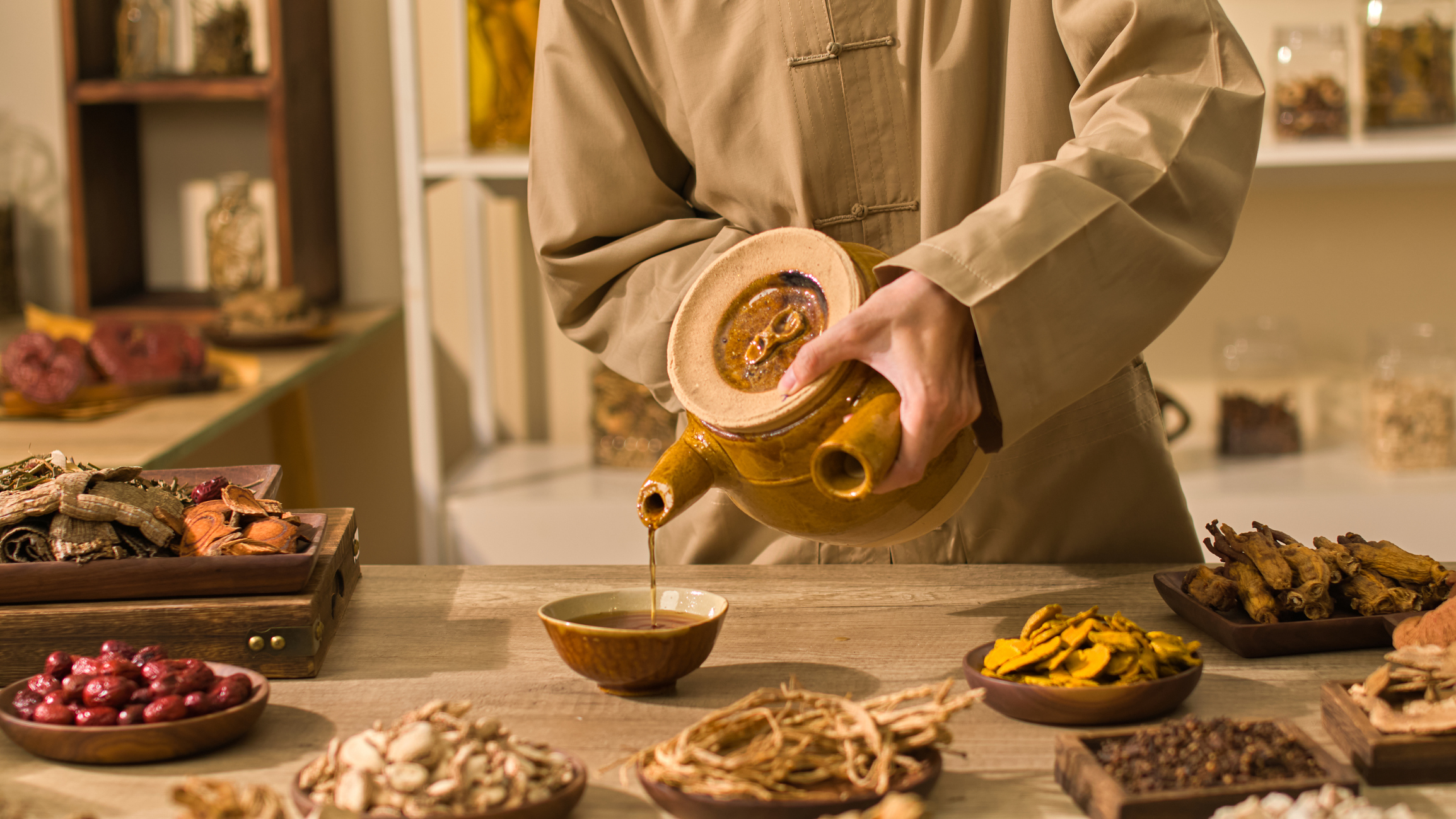
Many of the herbs I use in clinic are adaptogens and have been traditionally used in Ayurveda, Traditional Chinese medicine (TCM), Native American, and rainforest medicine systems for hundreds if not thousands of years. A 2021 review in Biomolecules discusses many of these plants and their ability to block β-amyloid peptide (Aβ) production, inhibit neural cell death, restore synaptic function, stimulate neurogenesis, improve auditory-verbal working memory and executive function, delay brain aging, promote dendritic growth, reduce gliosis and improve mitochondrial function. The most clinically efficient herbs mentioned in this paper include ginkgo (Ginkgo biloba), ashwagandha (Withania somnifera), bacopa (Bacopa monnieri), gotu kola (Centella asiatica), saffron (Crocus sativus), and turmeric (Curcuma longa).
Although many of the products used in these studies were standardized extracts, if using the root of the plant, they are best taken as powders in a base such as coconut oil or plant milk for better absorption. The review also states that no studies have been carried out on humans for memory loss and cognitive decline associated with Alzheimer’s disease with cat’s claw, although preclinical studies show promise, I have found cat’s claw incredibly effective in clinic not only for improving memory and cognitive function, but for arthritis and inflammatory bowel disease.
Other herbal compounds which are often included in nootropic formulations include vinpocetine, from lesser periwinkle (Vinca minor) and huperzine A (HupA), an alkaloid isolated from toothed clubmoss (Huperzia serrata).
I use vinpocetine and lesser periwinkle in clinic with cancer patients, and it has the added benefit of being beneficial with cognitive dysfunction associated with chemotherapy. A 2016 paper in Natural Product Communications stated that the health benefits of vinpocetine had been proven in scientific studies to facilitate learning and memory, and prevent cognitive deficit associated with dementia. The paper also states that vinpocetine is only available in Europe as a prescription medication for the treatment of cognitive dysfunction, as a cerebral vasodilator, and for cerebrovascular disease, banned in Australia, New Zealand, and Canada as it is considered a potentially harmful nootropic with cognitive enhancing abilities.
A 2012 paper in Acta Pharmacologica Sinica discusses HupA’s activity as a selective and reversible acetylcholinesterase (AChE) inhibitor, its neuroprotective and cholinergic activity but suggests that this compound works best in a slow-release formulation and in combination with other compounds. Further, a 2014 review in Frontiers in Aging Neuroscience discussed the recent discovery that HupA can reduce brain iron accumulation in the brain, which is considered a primary cause of neuronal death in neurodegenerative disorders. HupA also upregulates nerve growth factor, a neurotrophin that plays a role in protecting basal forebrain cholinergic neurons from age-related cognitive decline, and regulating amyloid gene expression and protein processing, thus slowing down the course of neuronal death and cognitive decline.
When I choose herbs, I will always choose to blend a combination of herbs which not only focus on improving cognitive function and symptoms of cognitive decline, but can also address underlying drivers and concomitant health issues. The patients I see are often complex, suffering from autoimmune conditions such as Hashimoto’s thyroiditis or Crohn’s, hypertension, or have a recent history of cancer, so I choose herbs which will have multiple actions and benefits as we see faster improvements when we work on the underlying disease processes in a more targeted fashion.
References
French, J. M., King, M. D., & McDougal, O. M. (2016) Quantitative Determination of Vinpocetine in Dietary Supplements. Natural Product Communications. Retrieved from: https://www.ncbi.nlm.nih.gov/pmc/articles/PMC5345962/
Ghasemzadeh Rahbardar, M., & Hosseinzadeh, H. (2020) Therapeutic effects of rosemary (Rosmarinus officinalis L.) and its active constituents on nervous system disorders. Iranian Journal of Basic Medical Sciences, 23(9). Retrieved from: https://doi.org/10.22038/ijbms.2020.45269.10541
Gregory, J., Vengalasetti, Y. V., Bredesen, D. E., & Rao, R. V. (2021) Neuroprotective Herbs for the Management of Alzheimer’s Disease. Biomolecules. Retrieved from: https://doi.org/10.3390/biom11040543
Habtemariam S. (2016) The Therapeutic Potential of Rosemary (Rosmarinus officinalis) Diterpenes for Alzheimer’s Disease. Evidence-based Complementary and Alternative Medicine. Retrieved from: https://doi.org/10.1155/2016/2680409
Qian, Z. M., & Ke, Y. (2014) Huperzine A: Is it an Effective Disease-Modifying Drug for Alzheimer’s Disease?. Frontiers in Aging Neuroscience, 6, 216. Retrieved from: https://doi.org/10.3389/fnagi.2014.00216
Zhang H. Y. (2012) New insights into huperzine A for the treatment of Alzheimer’s disease. Acta Pharmacologica Sinica, 33(9), 1170–1175. Retrieved from: https://doi.org/10.1038/aps.2012.128
About the Author: CJ Weber

Also on Integrative Practitioner

Dental Danger: Signs of Sleep Breathing Disorders in children and Adults, Learn the Visual Clues
Non-Member Price: $30.00 Member Price: $18.00 – 40% Off for Members Only Add to Cart Presented by: Mark Breiner, DDS,...

Integrative and Comprehensive Approach to Inflammatory Bowel Disease
Non-Member Price: $30.00 Member Price: $18.00 – 40% Off for Members Only Add to Cart Presented by: Ronald Hoffman, MD,...

Measuring Biology vs. Symptomatology: The Fully Integrated Functional Wellness Program
Non-Member Price: $30.00 Member Price: $18.00 – 40% Off for Members Only Add to Cart Presented by: Dane Donohue, DC...

Change Your Genes, Change Your Life
Non-Member Price: $30.00 Member Price: $18.00 – 40% Off for Members Only Add to Cart Presented by: Kenneth Pelletier, PhD,...
Guided Imagery – Efficacious, Portable, Scalable, User-Friendly, Self-Administered
Non-Member Price: $30.00 Member Price: $18.00 – 40% Off for Members Only Add to Cart Presented by: Belleruth Naparstek, ACSW...