






The science of sleep
By Karen Malkin
In an ideal world, we’d simply drop off into a peaceful slumber every night, however, sleep—or a lack of good sleep—can often cause you to feel bad emotionally and physically. In fact, research shows that sleep is a complex state that affects a wide range of your body’s mechanisms, including:
- Brain plasticity
- Memory
- Emotional processing
- Cardiovascular function
- Respiratory function
- Cellular function
- Immune function
A large study also shows the specific interconnectivity of insomnia and depression. It’s clear that sleep affects your overall wellness.
About Insomnia
Today, with more than 40 million Americans struggling with insomnia, sleep disorders are at epidemic proportions. And they not only effect adults (they are especially common in women); up to 25 percent of children also suffer from sleep disorders.
Those who suffer from insomnia—which is defined as a having difficulty sleeping for more than four weeks—are commonly hyper-aroused and have an increased metabolic rate across the 24-hour circadian cycle. This may explain why they are less sleepy during the day by objective measures than “normal” sleepers. But what are some of the causes of insomnia?
|
Common Medical Conditions |
Other Common Contributors |
|
Gastroesophageal reflux disease |
Caffeine |
|
Restless leg syndrome |
Alcohol |
|
Chronic pain |
Prescription and over-the-counter drugs |
|
Sleep apnea and snoring |
|
Shift work has been widely recognized as a significant disruptor of the circadian cycle and is associated with increased risk for physical and mental illness, especially gastrointestinal disorders and depression.
10 Tips for Quality Sleep
To help patients combat insomnia, here are some specific areas of sleep hygiene you may want to focus on:
1. Follow the rhythm of life.
Establish a regular bed and rising time, get exposure to early morning sunlight and dim evening light, and maintain regular times for meals and exercise. Although napping has health benefits, it can worsen the effects of insomnia.
2. Manage intake of caffeine, nicotine, alcohol, and other drugs.
These are all sleep disruptors. Recommendations about caffeine may not be conservative enough given its significant half-life.
3. Avoid exercise before bed.
Regular cardiovascular exercise promotes healthy sleep, but not three to four hours prior to bed—it raises your core body temperature and can interfere with sleep.
4. Avoid high glycemic and hard-to-digest foods in the evening.
Instead, opt for complex carbohydrates, such as brown rice and sweet potato. They may help transport tryptophan, a precursor to melatonin.
5. Create a healthy sleep environment.
Keep your bedroom cool (about 68 degrees Fahrenheit), completely dark, quiet, and as “green” possible. If possible, use high-efficiency particulate air (HEPA) filtration to clean the air, and choose organic and non-toxic bedding and mattress.
6. Limit screen time before bed.
Blue light from your computer and phone screens can cause melatonin suppression and disrupt sleep. Smartphones offer a blue light filter that can be enabled by the user and glass lenses now offer blue-light filtering.
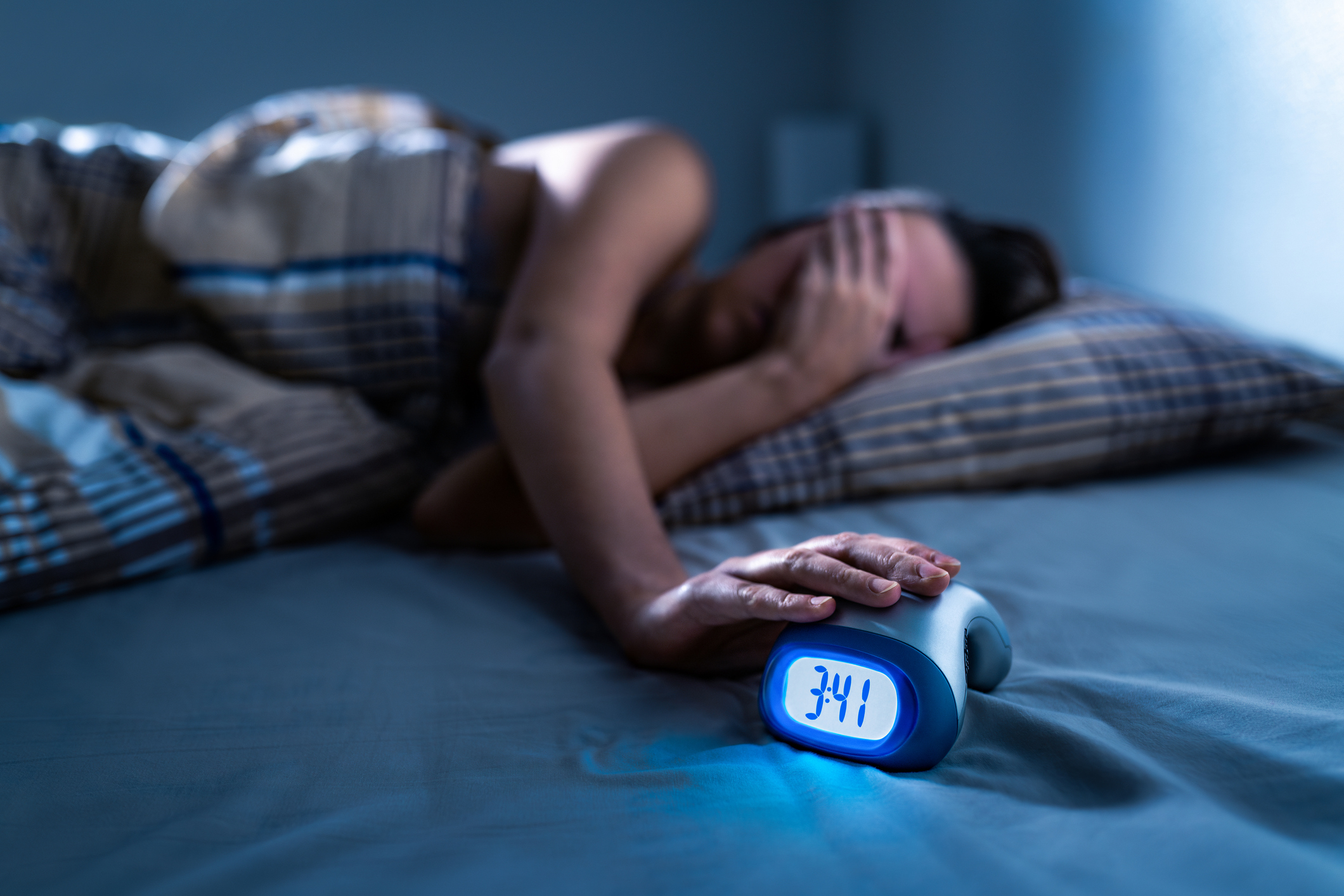
7. Move your clock.
Clock watching merely stimulates wakefulness. Ideally, position the clock away from the bed.
8. Use mind-body techniques to manage hyperarousal. Cognitive behavioral therapy (CBT) addresses sleep-related dysfunctional thoughts that trigger arousal. An excellent resource is a free app called “CBT-i Coach” that provides various relaxation techniques. For best results, couple that with modalities such as mindfulness meditation, muscular relaxation, self-hypnosis, breathing exercises, and guided imagery.
9. Using your bed only for sleep and sex. Minimize wakeful time spent there by going to bed only when sleepy. If more than 15-20 minutes of nighttime wakefulness occurs, get out of bed, do a non-stimulating activity, and then return to bed once you feel sleepy.
10. Consider supplementation. Short-term supplementation with herbs like valerian, passionflower, lemon balm, lavender, chamomile, or hops can be helpful. Melatonin is useful in older populations or if you have circadian irregularities. Always couple this with other sleep hygiene recommendations.
Quantity of Sleep: How Much Is Enough?
It is a fallacy that we need less sleep as we get older, according to Param Dedhia, MD, director of sleep medicine at Canyon Ranch in Tucson, Arizona. Most adults need seven to nine hours of sleep a night, but it evolves throughout adulthood, with older people getting less deep sleep. They are also more arousable at night. However, they can better cope with arousals.
The gold standard is to get all of your sleep at night, but naps can be a good option if you need to reach the seven to nine-hour benchmark. With naps, Dedhia emphasized that it’s best to include as part of a routine, in a duration anywhere from 10 to 30 minutes, which should be personalized. Note that naps that are too long or too close to bedtime can ultimately be detrimental to your overall sleep hygiene.
Inadequate sleep poses a serious danger if you are driving. In fact, staying awake for 18 hours or only gettings six hours of sleep is the equivalent to having a blood alcohol level of 0.05. The legal limit for driving under the influence of alcohol is 0.08, while commercial drivers have a limit of 0.04.
Other consequences of poor sleep include decreased tolerance for pain and hunger, says Dedhia. The following sleep and/or stress chemicals do double duty as hunger chemicals:
|
Cortisol |
Signals stress |
|
Hypocretin / Orexin |
Difficulty staying awake |
|
Neuropeptide Y |
Carbohydrate craving |
|
Gallanin |
Fat craving |
|
Ghrelin |
Immediate hunger signal |
To avoid cravings during the day, it’s best to do all you can to clock your seven to nine hours of sleep each night. But ultimately, it’s impossible to force sleep. We can set the stage and be receptive to it, but we cannot intentionally “go to sleep.” Letting go and succumbing to slumber may be the most important thing we can do to get that perfect night’s sleep.
References
Guglielmo, B. and Silvana, P. (April 22, 2013). “Sleep and obesity.” Current Opinion in Clinical Nutrition & Metabolic Care. Retrieved from https://www.ncbi.nlm.nih.gov/pmc/articles/PMC3632337/
Hale, L. and Guan, S. (June 21, 2015). “Screen time and sleep among school-aged children and adolescents: a systematic literature review.” Sleep Medicine Reviews. Retrieved from https://www.ncbi.nlm.nih.gov/pubmed/25193149
Pavlova, M., and Sheikh, L.S. (September 31, 2011). “Sleep in women.” Seminars in Neurology. Retrieved from https://www.ncbi.nlm.nih.gov/pubmed/22113512
Sivertsen, B., Lallukka, T., Petrie, K.J., Steingrímsdóttir, O,A., Stubhaug, A., and Nielsen, C.S.. (August 15, 2015). “Sleep and pain sensitivity in adults.” The Journal of the International Association for the Study of Pain. Retrieved from https://www.ncbi.nlm.nih.gov/pubmed/25915149
Sivertsen, B., Salo, P., Mykletun, A., Hysing, M., Pallesen, S., Krokstad, S., Nordhus, I.H., and Overland, S. (September 1, 2012). “The Bidirectional Association Between Depression and Insomnia: The HUNT Study.” Journal of Biobehavioral Medicine. Retrieved from https://www.ncbi.nlm.nih.gov/pubmed/22879427
Vriend, J., and Corkum, P. (June 24, 2011). “Clinical management of behavioral insomnia of childhood.” Psychology Research and Behavior Management. Retrieved from https://www.ncbi.nlm.nih.gov/pmc/articles/PMC3218792/
Watson, N. F. (June 1, 2015). “Recommended Amount of Sleep for a Healthy Adult: A Joint Consensus Statement of the American Academy of Sleep Medicine and Sleep Research Society.” Sleep. Retrieved from https://www.ncbi.nlm.nih.gov/pubmed/26039963
Williamson, A.M. and Feyer, A.M. (June 15, 2000). “Moderate sleep deprivation produces impairments in cognitive and motor performance equivalent to legally prescribed levels of alcohol intoxication.” Occupational and Environmental Medicine. Retrieved from https://www.ncbi.nlm.nih.gov/pmc/articles/PMC1739867/pdf/v057p00649.pdf
About the Author: CJ Weber

Also on Integrative Practitioner

Dental Danger: Signs of Sleep Breathing Disorders in children and Adults, Learn the Visual Clues
Non-Member Price: $30.00 Member Price: $18.00 – 40% Off for Members Only Add to Cart Presented by: Mark Breiner, DDS,...

Integrative and Comprehensive Approach to Inflammatory Bowel Disease
Non-Member Price: $30.00 Member Price: $18.00 – 40% Off for Members Only Add to Cart Presented by: Ronald Hoffman, MD,...

Measuring Biology vs. Symptomatology: The Fully Integrated Functional Wellness Program
Non-Member Price: $30.00 Member Price: $18.00 – 40% Off for Members Only Add to Cart Presented by: Dane Donohue, DC...

Change Your Genes, Change Your Life
Non-Member Price: $30.00 Member Price: $18.00 – 40% Off for Members Only Add to Cart Presented by: Kenneth Pelletier, PhD,...
Guided Imagery – Efficacious, Portable, Scalable, User-Friendly, Self-Administered
Non-Member Price: $30.00 Member Price: $18.00 – 40% Off for Members Only Add to Cart Presented by: Belleruth Naparstek, ACSW...