






The brain from a Traditional Chinese Medicine perspective
By Melissa Carr, BSc, DrTCM
There’s an inside joke that Traditional Chinese Medicine has two hearts and no brain. However, in TCM most of the organs as delineated in this medical system are responsible for at least one brain function.
So, when we address the health of any organ, we are also addressing brain health, physical, mental, and emotional, all interlinked.
The Overthinking Brain
When most people reflect on the brain, it’s the thinking aspect of the forebrain—planning, organizing, and concentrating—that is considered, and each of these thinking aspects is relegated to different organs.
In TCM, the Spleen is the main organ for processing thoughts. It is treated when someone has fatigue, problems with concentrating, foggy-headedness, and worry. When the Spleen is weak, the patient is likely to be experiencing digestive woes like bloating, flatulence, and loose stools, as their ruminating efforts are spent in their heads instead of their digestive systems.
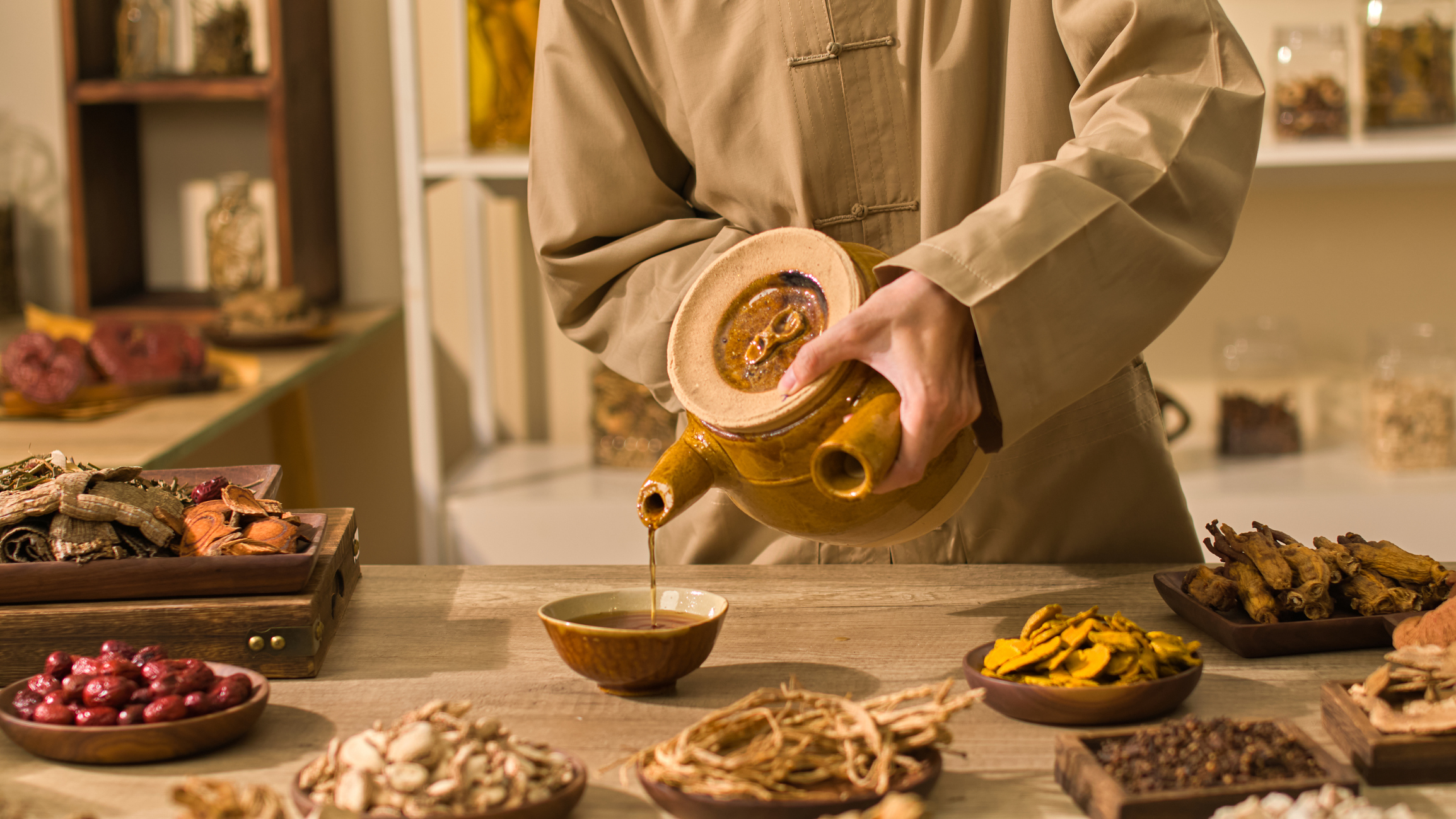
While TCM practitioners may prescribe herbal formulas, there are many approaches other health practitioners can employ when they see patients with this pattern of imbalance. Suggest easier to digest foods as well as ones that are said to support the Spleen, including soups, stews, slow cooked meals, root vegetables, pumpkin, squash, fermented foods, and naturally sweet foods like dates, while limiting processed, greasy, and overly sweet foods. Of course, it’s always a good idea, but for this particular pattern, it’s especially helpful to recommend practicing mindful eating, focusing on taking in food and not on multitasking with work, driving, or other focus-taking activity during mealtimes.
Though digestive enzymes, probiotics, a change in diet, and various other supplements can treat the gastrointestinal issues, if the overthinking and worry are not addressed, improvement will be limited. In addition to relaxing treatments like acupuncture, it’s also key that the patient find ways to wind down at home, with meditation, breath work, mindful movement practice, or enjoyable hobby.
To Be or Not to Be
When it comes to decision making, there are many thinking actions that come into play, so the Spleen is still involved. However, it is the Gallbladder that makes the decisions, providing judgement, and offering courage and willpower.
Patients struggling with a weak Gallbladder may have a difficult time making decisions. They might procrastinate, act timidly, waver back and forth, and/or lose sight of the big picture as they become overly concerned with the small details. Other symptoms include dizziness, tinnitus, pain in the sides of the body, restless sleep, blurry vision, and being easily startled.
When the Gallbladder is in excess, people are prone to making rash decisions, with impatience, and often with anger, frustration, or irritability. Depending on the type of excess, these people may also suffer from eye pain or redness, side body pain, migraines or headaches on the sides of the head, hypochondriac pain, bitter taste, vertigo, dizziness, tinnitus, jaundice, thirst without a desire to drink, frequent sighing, alternating feeling hot and cold, insomnia, excessive dreaming, and digestive issues like nausea and poor appetite.
Because the Gallbladder and the Liver are connected, treat both when addressing Gallbladder issues. Dietary recommendations may include eating lots of dark leafy greens, cruciferous vegetables, artichoke, dandelion greens or tea, beets, radishes, celery, fermented foods, lemon, lime, turmeric, and fennel. High quality fats are also recommended, though in small amounts if the gallbladder has been removed or is diseased.
Working through anger and resentment issues is also key here. The Liver and Gallbladder control the tendons and ligaments as well as the sides of the body (turn left or right, choosing a side), therefore improving flexibility and stretching while also strengthening the muscles can help too.
Finally, getting to sleep early enough to be sound asleep by 11 p.m. helps support the Gallbladder and Liver, as they are most active, according to TCM principles, from 11-1 a.m. and 1-3 a.m., respectively.
Memories Light the Corners of My Mind
There are so many types of memory, from the short-term memory of repeating back someone’s name during an introduction to the long-term memories of remembering that name years later or knowing how to shake someone’s hand without thinking about it.
TCM focuses on three main organs when discussing memory: Spleen, Kidneys, and Heart. The Spleen’s role in memory is mostly in remembering things through focusing, studying, and memorizing data, particularly short-term storage, such as one would for a test. One of the main issues when people say they have a poor memory is that they may not have been really paying attention when the information was coming in. For example, at an introduction, they may be thinking mostly of how they are going to respond when someone says their name. If a person is unable to focus on the name long enough to store it, they won’t be able to retain that as a memory. Recommendations for this type of memory problem are listed above with the section on the overthinking brain.
The Kidneys are more concerned with longer-term data storage. As we age, the energies of all our organs decline, but as the source of our constitutional energy as well, the Kidney energy decline is often one of the most obvious. Dementias become more common as we get older, and so, while we may initially forget to turn off the stove, as the Kidney energy decreases, we may eventually forget the names and faces of those we’ve known our whole lives.
Concurrent with memory lapses, Kidney deficiency can also cause weaker bones, problems hearing, greying hair, sore lower back, weak lower limbs, low sex drive, and a tendency toward being fearful.
Though some level of Kidney energy decline in simply part of the aging process, TCM recommends eating nuts and seeds, which are both are rich in omega 3 fatty acids, as well as legumes, seaweeds, root vegetables, sprouted foods, eggs, and bone soups. Tapping or massaging the back over the kidneys area is said to help stimulate this system. It’s also suggested to not overspend one’s energy with overwork, too many adrenaline-provoking activities, too much sex, and too many late nights.
Riding a bike, driving to work, catching a ball, playing guitar, and typing a document are all activities that a person might be able to do without having to think about it. It comes naturally. But at some point, these activities had to be learned and remembered. This is the domain of the Heart, and other signs the Heart is struggling is with palpitations, insomnia, dizziness, anxiety, and mental restlessness.
It’s interesting that today we find supplements—including gingko, vinpocetine, and pyrroloquinoline quinone (PQQ)—that support brain function do so by improving blood circulation to the brain. Other things that are especially helpful in supporting this aspect of brain and heart health include dark chocolate, resveratrol (grapes, red wine, and raspberries), omega 3 fatty acids, and—so important—exercise.
There’s So Much More
Clearly, the brain is a busy organ, with many more functions than the few covered here. The key thing to remember, using your Spleen, Kidneys, and Heart, is that to maintain good brain health, it’s necessary to address all the organs, and vice versa.
About the Author: CJ Weber

Also on Integrative Practitioner

Dental Danger: Signs of Sleep Breathing Disorders in children and Adults, Learn the Visual Clues
Non-Member Price: $30.00 Member Price: $18.00 – 40% Off for Members Only Add to Cart Presented by: Mark Breiner, DDS,...

Integrative and Comprehensive Approach to Inflammatory Bowel Disease
Non-Member Price: $30.00 Member Price: $18.00 – 40% Off for Members Only Add to Cart Presented by: Ronald Hoffman, MD,...

Measuring Biology vs. Symptomatology: The Fully Integrated Functional Wellness Program
Non-Member Price: $30.00 Member Price: $18.00 – 40% Off for Members Only Add to Cart Presented by: Dane Donohue, DC...

Change Your Genes, Change Your Life
Non-Member Price: $30.00 Member Price: $18.00 – 40% Off for Members Only Add to Cart Presented by: Kenneth Pelletier, PhD,...

Guided Imagery – Efficacious, Portable, Scalable, User-Friendly, Self-Administered
Non-Member Price: $30.00 Member Price: $18.00 – 40% Off for Members Only Add to Cart Presented by: Belleruth Naparstek, ACSW...