



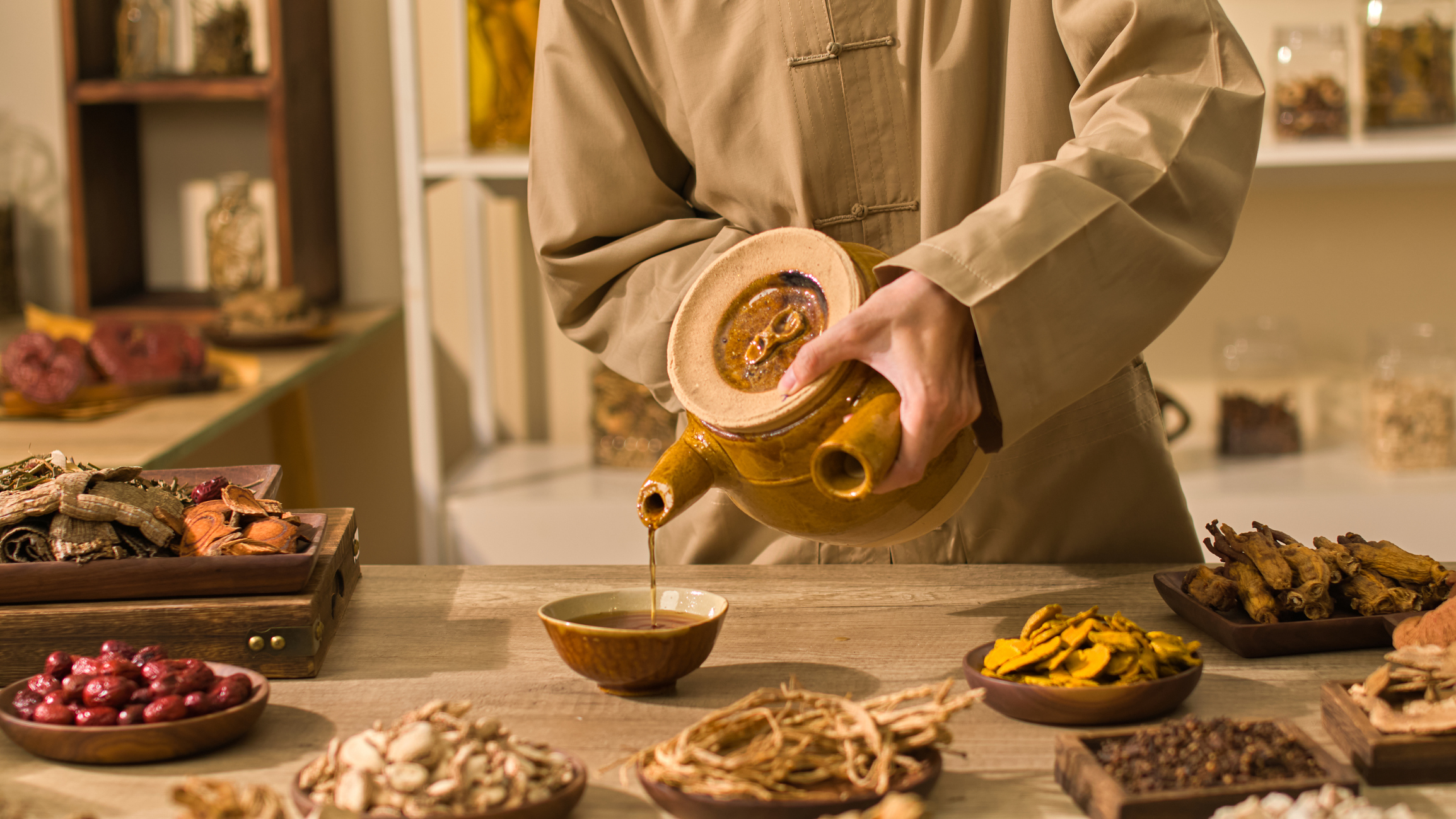


Traditional Chinese Medicine presence in COVID-19 literature
Photo Cred: xb100/Freepik
By Melissa Carr, BSc, DrTCM
Viral epidemics are not a new phenomenon. While the worldwide spread of infectious diseases is now faster and more prevalent because of increased air travel, our ancestors had to deal with infectious spread for centuries.
Chinese medical literature has recorded over 500 epidemics of varying severity between 243 BCE to 1949. Vaccines, antibiotics, and antiviral medications are all part of the modern repertoire of treatment methods, but they are not the only approaches.
Two of the four most recognized Traditional Chinese Medicine (TCM) classic texts are about epidemic infections. The Shang Han Lun (Treatise on Cold Damage) was written over 2,000 years ago to explain externally contracted febrile diseases and to provide prescriptive treatments, many of which are still in use today.
Wen Bing Xue (Warm Disease Theory) describes what it called Pestilence Qi (Li Qi) as having a role in communicable diseases, asserting that Warm pathogens enter the body through the mouth and nose. It offers information about disease causes, pattern diagnosis, and treatment strategies.
One of the greatest strengths of Traditional Chinese Medicine (TCM) is its focus on treating the individual. This means, however, that performing a randomized, double-blind, large scale study with just one or two variables is extremely complicated. Instead, many of the studies include a variety of herbal formulas and smaller subject numbers for each trial. There are also reports about the use of TCM formulas by hospital staff to help prevent infection.
According to John Chen, PhD, a lecturer in both TCM and pharmacology, his reviews found reports on no less than 11 different TCM patterns of diagnosis and at least 18 main herbal formulas associated with the novel coronavirus (COVID-19). This is reflective of the fact that this virus has demonstrated a wide array of symptoms and severity, from mild cough to respiratory failure, diarrhea, stroke, and death.
Nevertheless, because of the huge numbers of affected people, researchers and clinicians have needed to simplify and compartmentalize COVID-19 TCM patterns of diagnosis and treatment so that greater numbers of patients could more readily receive therapy. The consensus for the most common TCM pattern of diagnosis leans toward Damp-Toxin with Stagnation and Deficiency.
Damp, according to TCM, can cause phlegm and sticky secretions, congestion, diarrhea, and digestive upset. It tends to linger and is difficult to remove. Toxicity (Du) is characterized by its rapid spread and lethality. Stagnation can be caused by a variety of factors including Damp, and it causes pain, poor circulation, impairs recovery, and may be associated with the blood clots that are sometimes seen with this virus. Deficiency can be of Qi, Blood, Yin, Yang, or Jing, and is identified as weakness often associated with advanced age, chronic illness, or some of the comorbidities that we have identified as lending a person to be of higher risk for severe outcomes with this infection.
Though a variety of pharmacological therapies were also in place, including antivirals, broad spectrum antibiotics, corticosteroids, and convalescent plasma, in mid-March, it was reported that more than 85 percent of SARS-CoV-2 patients in China were receiving TCM treatment.
Zhang Bo-li, PhD, a co-leader in the national epidemic treatment and control group in Wuhan, described five stages for the novel coronavirus patients: mild, moderate, serious, critical, and recovery:
- Early-stage Damp pathogen. Cold-Damp or Damp-Heat in the Lungs. No fever or low-grade fever, muscle soreness or pain, cough with little phlegm, heavy sensation in the head and body, and sore throat. The tongue is light red with a white, thick, and greasy coating.
- Damp-Toxin in the Lungs or Cold-Damp in the Lungs. Cough with little phlegm or yellow phlegm, chest tightness, shortness of breath, low-grade fever, fatigue, and loss of appetite. The tongue coating is yellow-greasy or white-greasy.
- Epidemic Toxin blocking the Lungs. Toxic-Fire at Qi and Ying levels. Fever with irritability and thirst; wheezing, shortness of breath, or rough breathing; yellow, sticky, or scant phlegm, possibly with traces of blood; fatigue; delirium or loss of consciousness; and poor appetite. The tongue is red with a yellow, greasy coating.
- Internal Block and External Desertion. Difficulty breathing, panting with slightest exertion, mechanical ventilation required; unconsciousness or irritability and agitation; sweating with cold extremities. The tongue is dark purple with a thick, greasy, or dry coating.
- Lung and Spleen Qi deficiency. Qi and Yin deficiency. Weakness, shortness of breath, dry cough with little phlegm, palpitations, fullness sensation in the abdomen, and poor appetite. The tongue is pale and swollen or dry.
The approach he describes includes a combination of Western medicine and TCM. In mild to moderate cases, they would use TCM herbs. They measured the ratio and number of neutrophils and lymphocytes in the blood, as indicators of the function of the immune system. Where immune function was low, they might prescribe Lian Hua Qing Wen and Jin Hua Qing Gan formulas. Lian Hua Qing Wen is a combination of two classic formulas, Ma Xing She Gan Tang and Yin Qiao San, and it was also used successfully during the 2002-2003 SARS outbreak. Jin Hua Qing Gan was used during the 2009 H1N1 influenza pandemic to improve white blood cells and lymphocytes counts.
For severe cases, they would use TCM herbs in addition to Western medicine treatments, such as Sheng Mai Yin injections to help stabilize oxygen saturation levels or Xue Bi Jing injections to help decrease inflammation during the cytokine storm.
The herbal formula Qing Fei Pai Du Tang is one of the most used formulas. A combination of four classic formulas from the Shang Han Lun, not all its herbs are readily available in North America. However, according to Bo-li, ma huang could be replaced by xiang ru (3-10g) and xi xin replaced by gan jiang (6g).
According to one study led by China’s State Administration of Traditional Chinese Medicine, of 701 confirmed hospital cases of COVID-19 treated with Qing Fei Pai Du Tang for six days, 181 were cured, 268 showed improvement, and 212 remained stable.
Qing Fei Pai Du Tang (Clear the Lung and Eliminate Toxins Decoction)
-
ma huang (herba Ephedrae) 9 grams
-
zhi gan cao (radix et rhizoma Glycyrrhizae prepared with honey) 6 grams
-
ku xing ren (semen Armeniacae amarum) 9 grams
-
shi gao (Gypsum fibrosum) 15-30 grams (pre-decoct)
-
gui zhi (Ramulus cinnamomi) 9 grams
-
ze xie (rhizoma alismatis) 9 grams
-
zhu ling (Polyporus) 9 grams
-
bai zhu (rhizoma Atractylodis macrocephalae) 9 grams
-
fu ling (Poria) 15 grams
-
chai hu (radix Bupleuri) 16 grams
-
huang qin (radix Scutellariae) 6 grams
-
jiang ban xia (rhizoma Pinelliae prepared with ginger and alum) 9 grams
-
sheng jiang (rhizoma Zingiberis recens) 9 grams
-
zi wan (radix et rhizoma Asteris) 8 grams
-
kuan dong hua (flos Farfarae) 9 grams
-
she gan (rhizoma Belamcandae) 9 grams
-
xi xin (radix et rhizoma Asari) 6 grams
-
shan yao (rhizoma Diosoreae) 12 grams
-
zhi shi (fructus Aurantii immaturus) 6 grams
-
chen pi (pericarpium Citri reticulatae) 6 grams
-
guang huo xiang (herba Pogostemonis) 9 grams
According to a 2020 article in the Chinese Medicine Journal, other scientific studies of many of the herbs prescribed in these ancient textbooks now show antipathogenic or immunomodulating effects. Some of the compounds investigated from these herbs include quercetin, saikosaponins, kaempferol, beta-sitosterol, luteolin, scutellarein, and baicalin, though most herbalists will assert that use of the whole plant or plant part is more valuable.
Also of interest in this article is the authors noted the importance of intestinal microflora to reduce intestinal bacterial migration to the lungs and secondary infection. Recent research has investigated a gut-lung axis in animal models of sepsis and acute respiratory distress syndrome, part of the pathological results of the cytokine storm in severe and critical coronavirus patients. TCM has long connected the Lungs and Large Intestines, as they are paired organs.
Our current situation with COVID-19 is complex and symptoms can vary widely, so it’s important to assess each individual and apply the appropriate combination of Western therapies. As much study and experience has come from TCM’s centuries of managing infectious diseases and more recent treatment of H1N1, SARS, and COVID-19, research indicates that it may also be appropriate to investigate the addition of Chinese herbs for therapeutic treatment and prevention.
References
Ang, L., Lee, H.W. (2020) Herbal medicine and pattern identification for treating COVID-19: a rapid review of guidelines. Integrative Medicine Research. Retrieved from: https://www.sciencedirect.com/science/article/pii/S2213422020300391?fbclid=IwAR37vi7DFqwrcAIFPXtJJvvdpLUU4zhuPnihoQ610cPQt8RVYlKmiRuAEyQ#
Chen, J.K., Hsu, L. (2020) How COVID-19 (2019-nCoV) is Currently Treated in China with TCM. Retrieved from: https://www.elotus.org/article/how-covid-19-2019-ncov-currently-treated-china-tcm
Dang, A.T., Marshland, B. (2019) Microbes, metabolites, and the gut-lung axis. Mucosal Immunology. Retrieved from: https://www.nature.com/articles/s41385-019-0160-6
Jia, W., Wang, C. (2015) Qualitative and Quantitative Analysis of the Major Constituents in Chinese Medical Preparation Lianhua-Qingwen Capsule by UPLC-DAD-QTOF-MS. The Scientific World Journal. Retrieved from: https://doi.org/10.1155/2015/731765
Lin, L-T., Hsu, W-C. (2014) Antiviral Natural Products and Herbal Medicines. Journal of Traditional and Complementary Medicine. Retrieved from: https://www.ncbi.nlm.nih.gov/pmc/articles/PMC4032839/
Luo, E. (2020) Treatment efficacy analysis of traditional Chinese medicine for novel coronavirus pneumonia (COVID-19): an empirical study from Wuhan, Hubei Province, China. Chinese Medicine. Retrieved from: https://cmjournal.biomedcentral.com/articles/10.1186/s13020-020-00317-x#citeas
Marshland, B., Trompette, A. (2015) The Gut-Lung Axis in Respiratory Disease. Annals of the American Thoracic Society. Retrieved from: https://www.atsjournals.org/doi/full/10.1513/AnnalsATS.201503-133AW
Ochs, S., Garran, T. (2020) Chinese Medicine and COVID-19: Results and Reflections from China. Retrieved from: http://passiflora-press.com/product/chinese-medicine-and-covid-19/?fbclid=IwAR1JWF8H5M1dv8oQkkhuaoTEgOZA-yApIBFRjKsoMgMf3hZ0WNDHlFBBp1A
Ren, J-L., Zhang, A-H. (2020) Traditional Chinese medicine for COVID-19 treatment. Pharmacological Research. Retrieved from: https://www.sciencedirect.com/science/article/pii/S1043661820307556?via%3Dihub#bib0015
Yan, X., Wei, Z. Translated by Heiner Fruehauf. (2020) The Dampness Epidemic: Exploring the Clinical Characteristics of COVID-19 in Shanghai. Shanghai Journal of TCM and Pharmacology. Retrieved from: https://classicalchinesemedicine.org/dampness-epidemic-exploring-clinical-characteristics-covid-19-shanghai/
Yang, Y. Islam, S. (2020) Traditional Chinese Medicine in the Treatment of Patients Infected with 2019-New Coronavirus (SARS-CoV-2): A Review and Perspective. International Journal of Biological Sciences. Retrieved from: https://www.ncbi.nlm.nih.gov/pmc/articles/PMC7098036/
Editor’s note: Click here for more information and ongoing COVID-19 updates for integrative healthcare professionals. Photo courtesy of Freepik.
About the Author: CJ Weber

Also on Integrative Practitioner

Dental Danger: Signs of Sleep Breathing Disorders in children and Adults, Learn the Visual Clues
Non-Member Price: $30.00 Member Price: $18.00 – 40% Off for Members Only Add to Cart Presented by: Mark Breiner, DDS,...

Integrative and Comprehensive Approach to Inflammatory Bowel Disease
Non-Member Price: $30.00 Member Price: $18.00 – 40% Off for Members Only Add to Cart Presented by: Ronald Hoffman, MD,...
Measuring Biology vs. Symptomatology: The Fully Integrated Functional Wellness Program
Non-Member Price: $30.00 Member Price: $18.00 – 40% Off for Members Only Add to Cart Presented by: Dane Donohue, DC...

Change Your Genes, Change Your Life
Non-Member Price: $30.00 Member Price: $18.00 – 40% Off for Members Only Add to Cart Presented by: Kenneth Pelletier, PhD,...
Guided Imagery – Efficacious, Portable, Scalable, User-Friendly, Self-Administered
Non-Member Price: $30.00 Member Price: $18.00 – 40% Off for Members Only Add to Cart Presented by: Belleruth Naparstek, ACSW...