





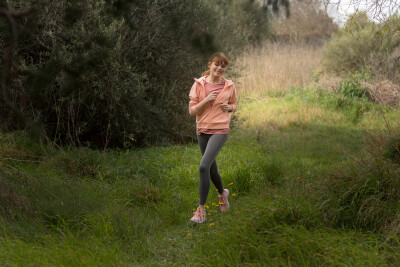
Green light devices show potential for alleviating pain
Photo Cred: Neenu Vimalkumar/Unsplash
By Erin Archer
There is ongoing research into utilizing green light for help with pain management, and new products utilizing green light continue to be developed. What does the research on these technologies indicate, and how might these technologies help patients in the future?
Mohab Ibrahim, MD, PhD is a professor in the departments of anesthesiology, neurosurgery, and pharmacology, and the medical director of the Comprehensive Pain and Addiction Center at the University of Arizona. When he noticed that the park helped to diminish the pain of his headache, just as his brother’s garden helped his brother’s headaches, he wondered if the trees might be secreting something. “My background is in pharmacology,” he said. “So, I thought ‘Maybe the trees are releasing some kind of chemicals into the air. We get many of our medicines from trees anyway.’”
Ibrahim knew that taking an air sample in an open park would yield tens or possibly hundreds of thousands of chemicals, and that testing them would take several lifetimes. What else did the public park and his brother’s garden have in common? The simple answer seemed almost silly.
“What about the color green?” Ibrahim asked. “It would be a really simple question to scientifically test. We’ll expose some rats to the color green and other colors of light as well. When we did, we noticed that with exposure to green, they became less responsive to painful stimulus. So, we repeated that experiment several times and every time, we got the same result with green light.”
Research
They used strips of green light-emitting diodes (LEDs) attached to the outside of the rats’ cages (so the rats could not chew them) in dark rooms with food and water but no other light, starting at three to four hours per day and working up to eight hours per day. The rest of the time, the rats were exposed to usual fluorescent light. Ibrahim’s team published their findings in a 2017 article in the journal Pain.
After showing analgesic effects in rats, Ibrahim’s group went on to research green light in people with fibromyalgia, presenting the study’s promising findings in a 2021 study in Pain Medicine. Ibrahim helped to create a model showing how green light could help to reverse the hypersensitivity of HIV-related neuropathy, published in a 2021 study in The Journal of Pain. Ibrahim also was part of a team showing green LEDs’ efficacy in helping migraine headaches, in a study published in the journal Cephalalgia in 2021. In each case, the frequency and severity of pain was generally cut by at least half.
Padma Gulur, MD, professor of anesthesiology and director of pain management strategy, and opioid surveillance at Duke University, is also studying the analgesic effects of light, using special glasses. In a 2021 clinical trial, Gulur’s team assessed clear light, blue light, and green light for chronic pain and also post-operative pain, but also found only green light was analgesic.
“By addressing the pain pathways and reducing anxiety/fear components of pain, green light is showing promise as an adjuvant therapy to manage pain and reduce reliance on opioids,” Gulur said.
Research is showing that at the central nervous system level, there appears to be an up-regulation of endogenous opioids by green light, as discussed by Ibrahim and others in The Journal of Pain. Endogenous opioids are one of the mechanisms at play, but there may be others. In the rat study discussed above, Ibrahim’s team experimented with reversing analgesia in rats by giving them the opiate-blocking drug naloxone, proving that some of the effect was due to the role of opioid receptors.
“We learn new stuff every day, but it seems to work through the visual system connecting the neuronal connections in the eye all the way to the pain centers in the brain. It seems that these centers are somehow affected by the frequency or wavelength of green light exposure,” Ibrahim said.
Based in the finding of her own research, Gulur agreed. “It’s definitely through a visually mediated pathway with a role perhaps for melanopsin, but we are researching mechanisms currently.” Melanopsin is a type of light-sensitive protein that is found in the retina of the eye.
Because the effect is happening at the central level, Ibrahim suspects that pain mediated by central pathologies like migraine headaches or fibromyalgia may benefit most from exposure to green light.
“What really excites me is that we are able to show that [with] exposure to light, a very benign stimulus and low-energy light that does not hurt the eyes for most people, we’re able to change biological systems. We’re seeing cellular and molecular changes based on exposure by the eyes,” said Ibrahim.
In addition to opioid receptors, Ibrahim said that they saw changes in calcium channels and some changes in protein expression. (Some of them were up-regulated and some were down-regulated, and some of them were involved in the pain processing.) Ibrahim has more research in the works, which is currently under review.
“We’re just scratching the surface of a potentially whole new field of medicine—’photomedicine’, if you will,” he said.
Exposure and safety
Should people with pain just expose themselves to green light or to nature? If someone has chronic pain, Ibrahim suggested that patients find a pain physician because some chronic pain may be due to a mechanical issue, like a herniated disk or a torn meniscus in the knee which can be mechanically addressed and cleared.
But he also concedes that the Japanese practice of shinrin-yoku (“forest bathing” a guided experience of being in nature using all five senses) may also be beneficial.
“If they have a steady gait and are ok to walk, I think it’s a good activity to go to the park and to green areas. Fresh air and physical activity by themselves can do wonders, not just for the pain but for the psyche, for the anxiety and depression that may come with pain,” Ibrahim said.
Of the patients Ibrahim has recruited so far, there have been no side effects of green light exposure. Still, he recommends that if someone has an eye pathology, consult an ophthalmologist first. Researchers are also still trying to figure out the optimal dose.
“Just because one is good doesn’t mean two is better.,” Ibrahim said. “We are still trying to optimize the amount of time for exposure, the intensity of the light. While we’ve never had anyone reporting any side effects, it doesn’t mean it’s 100 percent safe.”
Some green light therapy products are already available commercially, such as a green light-emitting diodes (LED) lamp developed by Harvard neuroscientist Rami Burstein, PhD, marketed to help with migraine headaches and better sleep. In Ibrahim’s studies, he utilized strips of green LEDs. In Gulur’s research, she has been working on developing wearable glasses that filter green light. More devices utilizing green light therapy should be anticipated in coming years.
“We still need to understand how it works,” Ibrahim said. “Because if we know how it works, we can probably make it better.”
Erin Archer is a Registered Nurse and freelance writer  who lives in Tucson, Arizona. For over a decade, she has worked in communicable disease and also written about all manner of health topics. She has written for Institut Pasteur, everydayhealth.com, the Catholic Health Association, and others and performed original research published in the Journal of Holistic Nursing. She is passionate about writing about mental and physical health and looks forward to writing more content regarding her long-time passion of integrative medicine. When not working as a public health nurse or writing, she can be found in her garden with her two rescue dogs.
About the Author: CJ Weber

Also on Integrative Practitioner

Dental Danger: Signs of Sleep Breathing Disorders in children and Adults, Learn the Visual Clues
Non-Member Price: $30.00 Member Price: $18.00 – 40% Off for Members Only Add to Cart Presented by: Mark Breiner, DDS,...

Integrative and Comprehensive Approach to Inflammatory Bowel Disease
Non-Member Price: $30.00 Member Price: $18.00 – 40% Off for Members Only Add to Cart Presented by: Ronald Hoffman, MD,...

Measuring Biology vs. Symptomatology: The Fully Integrated Functional Wellness Program
Non-Member Price: $30.00 Member Price: $18.00 – 40% Off for Members Only Add to Cart Presented by: Dane Donohue, DC...

Change Your Genes, Change Your Life
Non-Member Price: $30.00 Member Price: $18.00 – 40% Off for Members Only Add to Cart Presented by: Kenneth Pelletier, PhD,...
Guided Imagery – Efficacious, Portable, Scalable, User-Friendly, Self-Administered
Non-Member Price: $30.00 Member Price: $18.00 – 40% Off for Members Only Add to Cart Presented by: Belleruth Naparstek, ACSW...