


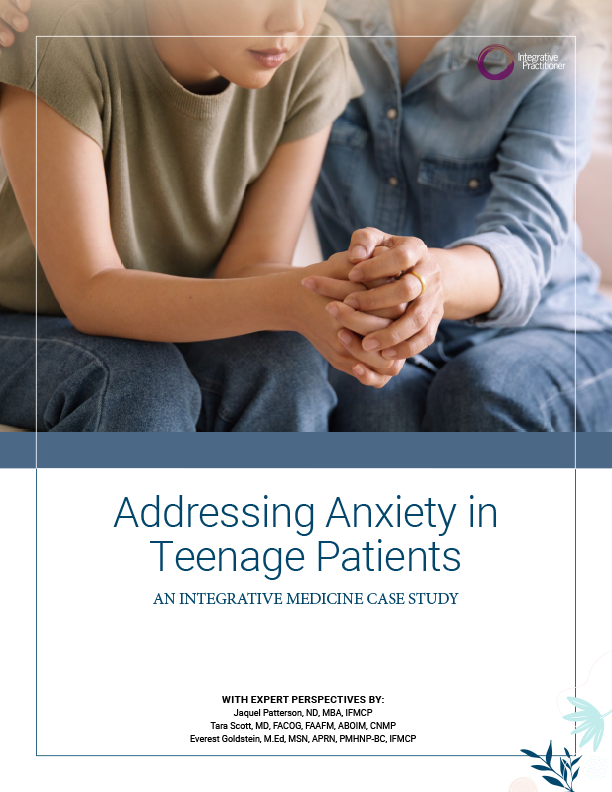

Steve Southwick, MD, on building resilience
Photo Cred: Hainguyenrp/Pixabay
By Bill Reddy, LAc, DiplAc
People are, in general, far more resilient than they think, said Steven Southwick, MD, professor of psychiatry, post traumatic stress disorder (PTSD), and resilience and the Yale School of Medicine and author of the book “Resilience: The Science of Mastering Life’s Greatest Challenges.”
Resilience is something that can be learned and is, in large part, a set of skills, he said. Integrative practitioners have a unique role to play serving as or identifying resilient role models for their patients to help them negotiate tough times and learn to grow from adversity.
Southwick has worked closely with the military in the Clinical Neurosciences Division of the Department of Veteran’s Affairs National Center of PTSD. We sat down with Southwick to discuss his research and how to help patients build resilience in an ever-changing world.
Integrative Practitioner: What do you feel is the most significant finding since you started researching resilience?
Steven Southwick: Resilience, to a significant degree, can be learned by nearly anyone. While there is a genetic component, the way one is raised, the experiences one has, and the practices one engages in are central to resilience.
The American Psychological Association’s definition of resilience is “the process of adapting well in the face of adversity, trauma, tragedy, threats, or even significant sources of stress,” [which can also be summarized as] the ability to modulate and constructively harness the stress response. Resilience is the ability to bend, but not break, under high stress, to bounce back, and hopefully even to grow and learn from adversity. It is extremely important in a person’s life.
Resilience is this complex construct. Often it’s talked about as a process. It’s possible for an individual to be resilient in some domains of life and not in others. For example, I might be resilient in my work life but not so much in my family life. Additionally, my resilience may differ from one phase of my life to another. I may be more resilient as a younger person or perhaps more so as an older person.
A person’s resilience is determined by many factors. Ideally, people are being raised in such a way that they are neither neglected nor abused, but at the same time are exposed to challenges. [Experts have coined the term] “good-enough mothering,” which is, in my opinion, [the best approach for parents, coaches, and mentors]—you’re not neglecting the child or the mentee, but you’re also not overprotecting and allowing them to confront, manage, and master various challenges.
I believe… each of us is far more resilient than we know, and that there’s a reservoir of resilience inside of us that we often do not tap into until we have to. But it’s there.
Resilience can also be learned and [I believe] it is a set of skills, [which myself and colleagues learned through] studying [PTSD] for many years. Then we shifted into studying resilience as well. We interviewed many very resilient individuals…special forces instructors, former prisoners of war, and civilians who had been through very difficult times and were nevertheless functioning extremely well. We kept hearing the same themes over and over and we boiled it down to 10 resilience factors.
Integrative Practitioner: What are some of the most important resilience factors patients need to overcome adversity?
Steven Southwick: The resilient people that we got to know all had resilient role models. They learned from these role models by being with them, by studying them, and by imitating them. We all learn through imitation to a much greater degree than we realize. What we recommend is [for patients to] find individuals they admire. They don’t have to be alive necessarily, and the patient doesn’t have to necessarily know them. We recommend talking to the person and finding out what they do to negotiate adversity. So, role models are very important.
Integrative Practitioner: What part does positive emotions play in resilience?
Steven Southwick: Positive emotions are essential. We have an attention bias towards anything that could be harmful. There’s a natural tendency to scan for the negative or threatening in the environment. his means that most of us who aren’t natural optimists, must work at being optimistic. Optimism is strongly associated with physical health, mental health, creativity, expansion, and social connection, because people like to be around optimists. Optimism and pessimism are highly infectious. Some social network studies show that the number of optimistic or pessimistic friends one has can have a dramatic impact on mood. Optimism involves believing that even though you’re in the midst of something extremely painful and challenging, you will be able to succeed in some way.
Integrative Practitioner: What other factors play a role in developing resilience?
Steven Southwick: Another very important factor is the ability to regulate emotions, fear in particular. [While experiencing fear is not the problem in an of itself], when we let fear hang around too long, the prefrontal cortex becomes flooded with catecholamines, like norepinephrine and dopamine. High levels of these neurochemicals no longer help us focus and regulate emotions, but instead they tend to take the prefrontal cortex offline, which can be a dangerous situation.
The brain has a mechanism that when norepinephrine and dopamine get very high, they engage a different set of postsynaptic alpha receptors and tend to take the prefrontal cortex offline, so the individual is all fight-or-flight. While that may be fine for a moment, [it inhibits] rational decision making and it’s not good to stay in that state for very long.
What special forces and other resilient people recommend is to learn how to face fears. Otherwise, life is very constricting because we don’t try many things that we’d like to experience. [To face fears, we recommend patients] first look at them, don’t run away from them, and learn whatever skills are needed to get past the fear. Practice those skills and then approach the fear, when possible, with a trusted friend or colleague, because it’s much easier to face fear with someone who you trust and care about. It’s one of the great lessons of the courage of soldiers, the people you’re with and who you trust can make you much stronger.
Integrative Practitioner: What do naturally resilient people have in common?
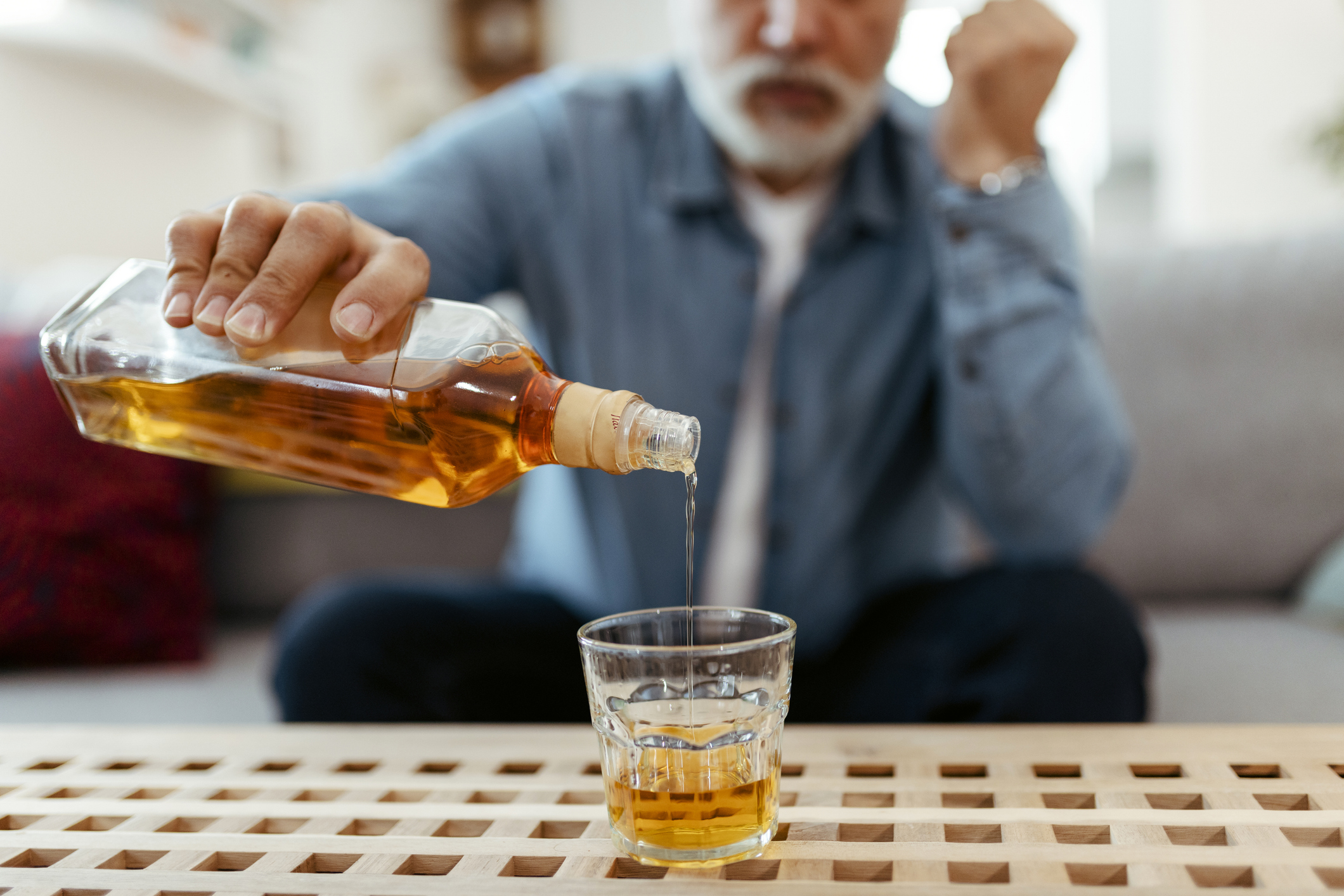
Steven Southwick: Resilient people tend to have more active coping styles than passive coping styles. By passive, I mean denying that there is a problem, avoiding anything that you’re afraid of, using substances when you’re stressed or afraid, blaming everybody else, or constantly venting.
Resilient people also tend to be flexible, but they generally are more active in that they solve problems. They actively seek social support; they’re not waiting for things to happen or for people to come to them.
Social connectedness could be the most important resilience element that we’ve found. One of the reasons that social connectedness is so important is that it’s likely that humans evolved in a way that helps us stay together, because if our ancestors got excluded or in some way rejected from the group, they didn’t survive. Sometimes I think back to high school, when I experienced some little rejection, and I can think about it right now and it still bothers me. It turns out that there are studies showing that if you think back on a past rejection, and you think back on a past physical pain, the memories are still painful. In fact, what’s called social pain activates the sympathetic nervous system, and physical pain and social pain are both processed in some of the same brain regions, so the brain seems to have evolved to make rejection very painful. You don’t want to be rejected, so that you will survive. Evolution designed us to stay connected with one another.
Integrative Practitioner: What happens to those who do experience rejection or lack social connection?
Steven Southwick: There’s quite a volume of literature on the toxic effects of isolation, and this is a problem during the current [novel coronavirus (COVID-19)] pandemic. Studies have shown that isolation and low social support can be as toxic to a person’s health as cigarette smoking, obesity, and sedentary lifestyle.
On the other hand, high social support is extremely beneficial for mental and physical health. A study looking at returning Iraq and Afghanistan veterans found that social connectedness and social support help to buffer against developing PTSD and depression. But, there are many elements of social support. I could provide you with emotional support, instrumental support such as resources that you might need, or informational support like advice. One of the most important elements of social support in terms of helping people in difficult times is feeling understood, and [research has] found that in the returning veterans, feeling understood was the most powerful element of social support with helping to buffer against the development of PTSD. That’s why support groups are so effective.
One element of resilience-related cognitive flexibility is acceptance, having the ability to accept that which you cannot change. We found that the most resilient people we met had learned to do this.
Integrative Practitioner: How does spiritual health play a role in resilience?
Steven Southwick: We were impressed with how critical spirituality and religion were to many people during times of adversity. A high percent of the resilient people we interviewed practiced or believed in some form of spirituality or belief in a greater being, or in something bigger than themselves that they called upon during times of hardship. There is a huge [body of] literature on the relationship between physical and mental health and religious and spiritual practices.
In addition, we were surprised to find out how important moral code is for maintaining resilience. Sticking to what you believe to be ethical, moral, and right gives you a set of principles that can guide you during times of adversity.
Meaning and purpose is central. If I have meaning and purpose, I can withstand much more than if I don’t have such meaning and purpose. Your station in life or your occupation don’t matter. What matters is that you do the best that you can and try your best to live a meaningful life. Happiness tends to be a byproduct of giving of yourself to something bigger than yourself, to other people, to worthwhile pursuits. I don’t know how I got here, I didn’t pick my parents, I’ve had countless experiences, some of which I chose and many of which I didn’t, but nevertheless, here I am right now with a certain set of skills and talents. To live a meaningful life, I believe, is to use those skills and talents to enhance meaning in your life and in the lives of others, and that generally means focusing on something bigger than yourself, engaging in service.
Editor’s note: This interview has been edited and condensed.
About the Author: CJ Weber

Also on Integrative Practitioner

Dental Danger: Signs of Sleep Breathing Disorders in children and Adults, Learn the Visual Clues
Non-Member Price: $30.00 Member Price: $18.00 – 40% Off for Members Only Add to Cart Presented by: Mark Breiner, DDS,...

Integrative and Comprehensive Approach to Inflammatory Bowel Disease
Non-Member Price: $30.00 Member Price: $18.00 – 40% Off for Members Only Add to Cart Presented by: Ronald Hoffman, MD,...

Measuring Biology vs. Symptomatology: The Fully Integrated Functional Wellness Program
Non-Member Price: $30.00 Member Price: $18.00 – 40% Off for Members Only Add to Cart Presented by: Dane Donohue, DC...

Change Your Genes, Change Your Life
Non-Member Price: $30.00 Member Price: $18.00 – 40% Off for Members Only Add to Cart Presented by: Kenneth Pelletier, PhD,...
Guided Imagery – Efficacious, Portable, Scalable, User-Friendly, Self-Administered
Non-Member Price: $30.00 Member Price: $18.00 – 40% Off for Members Only Add to Cart Presented by: Belleruth Naparstek, ACSW...